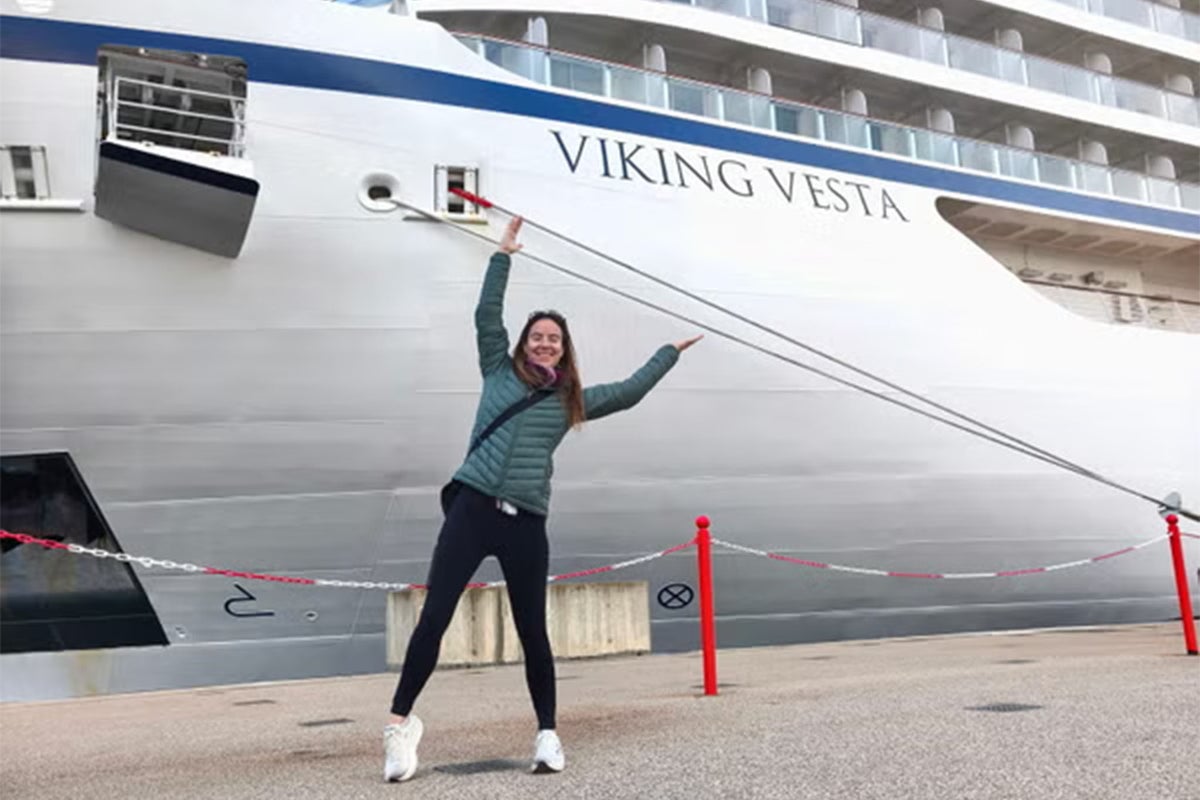
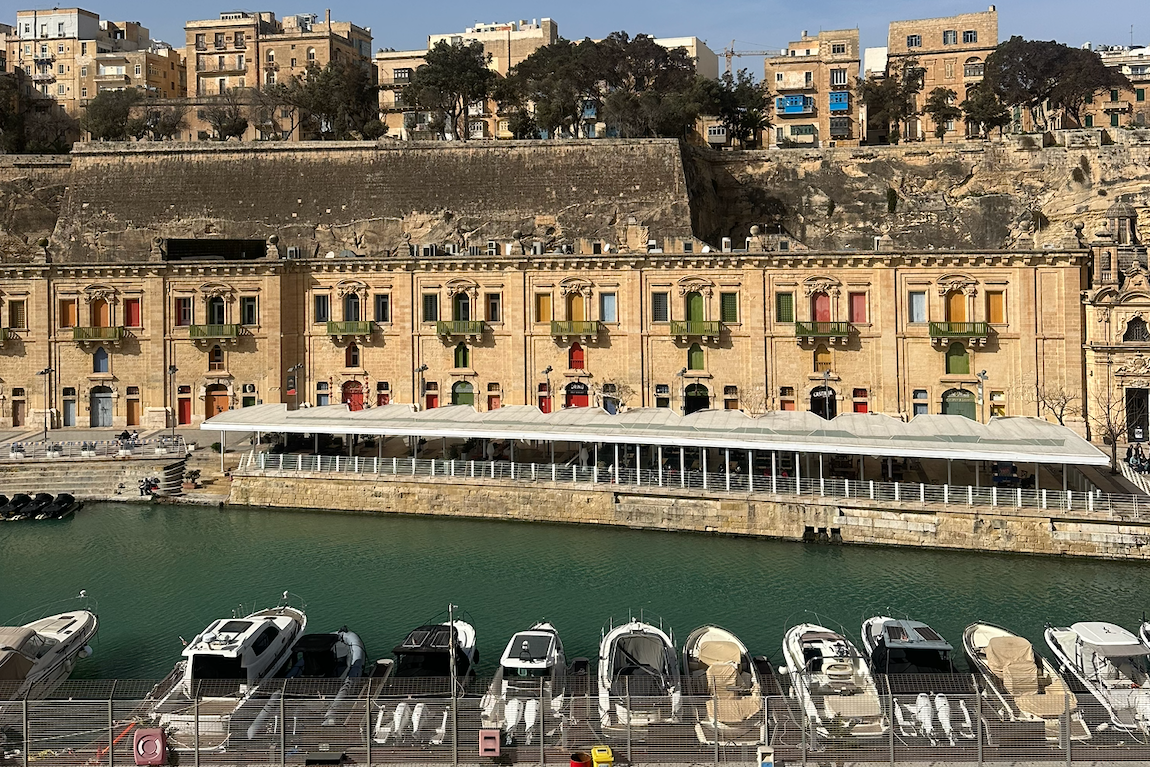
As I drew back the curtains, I was met with a familiar sight. The rainbow colours of Maltese boat houses greeted me, their burnished red, blue and daffodil-yellow doors bursting out of Valletta’s sun-spattered limestone dockside. They’re familiar because I live in Gozo, Malta’s smaller sister island, a place where these pretty wooden doorways are a regular feature of the isle’s rugged, sea-scoured coastline.
But I’ve never seen these particular, pristinely painted apertures before, and certainly not from the seven-metre-high vantage point courtesy of the balcony of my stateroom aboard the Viking Vestacruise ship.
I’m halfway through a 16-day adventure on the luxury sailing company’s newest ship, a 784-foot vessel, which has spent most of its first six months escorting guests on circuitous routes around the Mediterranean as part of Viking’s “Quiet Season Mediterranean” itineraries, designed to show off Europe’s most enigmatic destinations at less crowded times. Our itinerary departed from, and returned to, Barcelona, with scheduled stops in Marseille, Ajaccio, Rome (Civitavecchia), Valletta, Tunis, Algiers, Casablanca, Cadiz and Malaga.
Read more: 9 best cruises to tick off your travel bucket list
Before even stepping off the ship, the benefits of sailing at this time of year were already apparent. It seems that there’s as little ocean traffic as there are pedestrians in the Med in mid-January, resulting in practically empty docks and all but guaranteeing prime mooring spots like the one we’d received in Malta, steps away from the country’s capital.
So why am I on a cruise that spends a full 48 hours in the place I live – twice as long as any of its nine other port calls? Well, despite residing on an archipelago ideally situatedfor exploring the bounty of culture and natural beauty on offer from both Europe and North Africa (Malta is near-equidistant between Tunisia and Sicily), in my years here I’ve done neither.
As a sun-starved Brit, I’ve drunk the Maltese Kool Aid (better known as Kinnie), committed to hiking, scuba diving and sunbathing throughout the country’s impressively long summers, and been content to cosy up at home during Malta’s brief and balmy winters.
I ended up on this 316 sq km spit of land thanks to my mum, whose love of Malta’s history and climate – and Gozo’s rugged topography – convinced her to move here more than a decade ago. After endless visits, I soon settled here myself, and together we marvelled at the impossibly-built Unesco sites of Ggantija Temples and Hal Saflieni Hypogeum, scaled the hillside of the “Silent City” to get lost in its cinematic alleyways (Mdina was a primary location for early Game of Thrones seasons as well as Ridley Scott’s Gladiator films), and were mesmerised by the swaying fields of Poseidon seagrass blooming beneath the water’s crystal surface.
But once here full time, Malta quickly became “the place I lived”, its magic obscured by life’s daily routines, its warm waters, ancient buildings and vibrant festivals a mere wallpaper to the seemingly more pressing affairs of life and work. In short, I’d done what I’d always feared and was taking it for granted.
So here I was: halfway through a cruise covering every corner of the Mare Nostrum, hoping it would invigorate my outlook on my new homeland.
By the time the Viking Vesta coasted into Valletta’s Grand Harbour (the site of Jean De Vallette’s epic and unlikely victory over the Ottomans in 1565) on day six of the trip, I had fully committed to cruise life. I enjoyed a routine of sleeping in, gorging on a wildly diverse buffet breakfast (while scouring VesselFinder to snoop on our neighbours), then scooting down to disembarkation level to have facts fed to me. I was a lemming and I loved it.
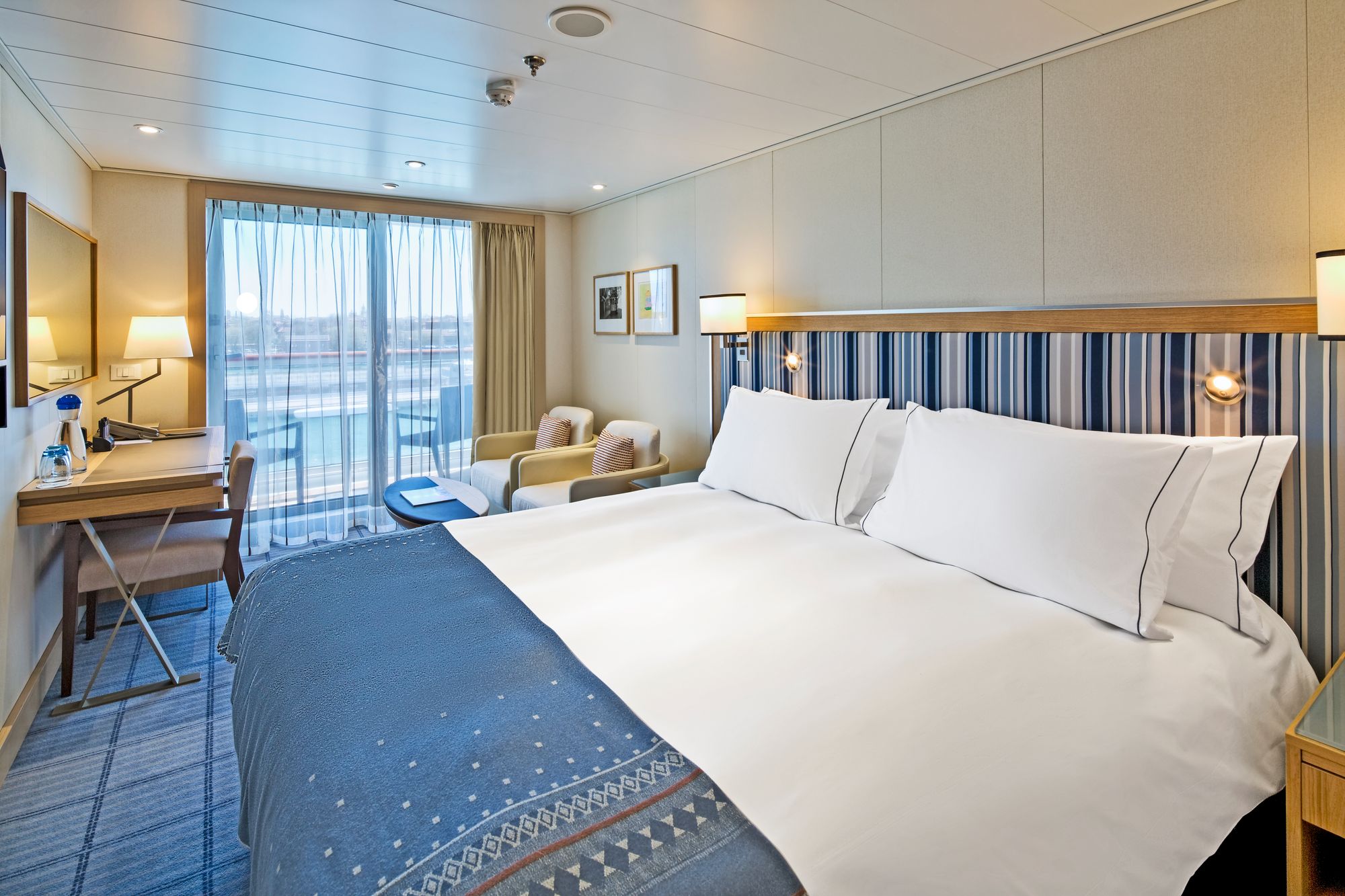
In my defence, the Vesta was a pretty seductive vessel. My “Deluxe Stateroom” was not only spacious (288 sq ft) and supremely quiet (no footfall was heard during my entire stay), but it came with a private veranda, underfloor heating in the bathroom and a mini bar that was replenished daily. When not spreadeagled on the king-sized bed catching up on Port Talks, I could be found in the snow grotto or steam room of the expansive Liv Nordic Spa, or losing at Scrabble in the stylishly Scandinavian atrium.
Mostly though, I was making my way through the whiskey list in the “Explorers’ Lounge”, a sunlight-flooded living space furnished with panoramic ocean views, nautically themed carpets, soft reindeer throws and artefacts from, among others, a 19th-century Norwegian botanist.
I couldn’t possibly be more relaxed, yet as I boarded the coach for our half-day tour around southern Malta, I felt a jolt of trepidation.
Read more: The best cruise ships to travel on in your lifetime
Everything felt immediately different. For a start, Storm Harry had been raging riotously across Europe, battering both the UK and the Med with 60mph winds. This not only caused the Vesta to veer off course (we’d already skipped Marseille and would eventually miss Algiers and Casablanca too) but caused the usually cartoonish baby blue, cotton ball-clouded Maltese skies to be swathed in a sheen of yellow muslin. Southerly winds had swept Saharan sand into the air and laced the heavens with a golden haze.
But Malta’s myths are but a footnote in the country’s long and storied history; it’s hard to visit – let alone live here – without its complex past seeping into your bones. If it’s not the skyline dominating structures created by the Knights of St John demanding attention – the Three Cities, Valletta, the Lascaris Towers – it’s the quiet reverence of 5,000-year-old megalithic temples, the remnants of Rome’s conquering expansion or the subtle scars left by multiple wars.
And while its history is both dense and dramatic, it’s something the tiny islands have in common with their worldly neighbours. The day before docking in Valletta, I’d been admiring the intricately-painted walls of nearly 3,000-year-old Etruscan tombs at the Necropolis of Tarquinia, just northwest of Rome. I’d listened, enraptured, as our local guide explained how the Etruscans were the source of much of Rome’s most recognisable iconography (gladiators, togas and political symbolism to name a few) before they succumbed to the empire’s might in 27BC.
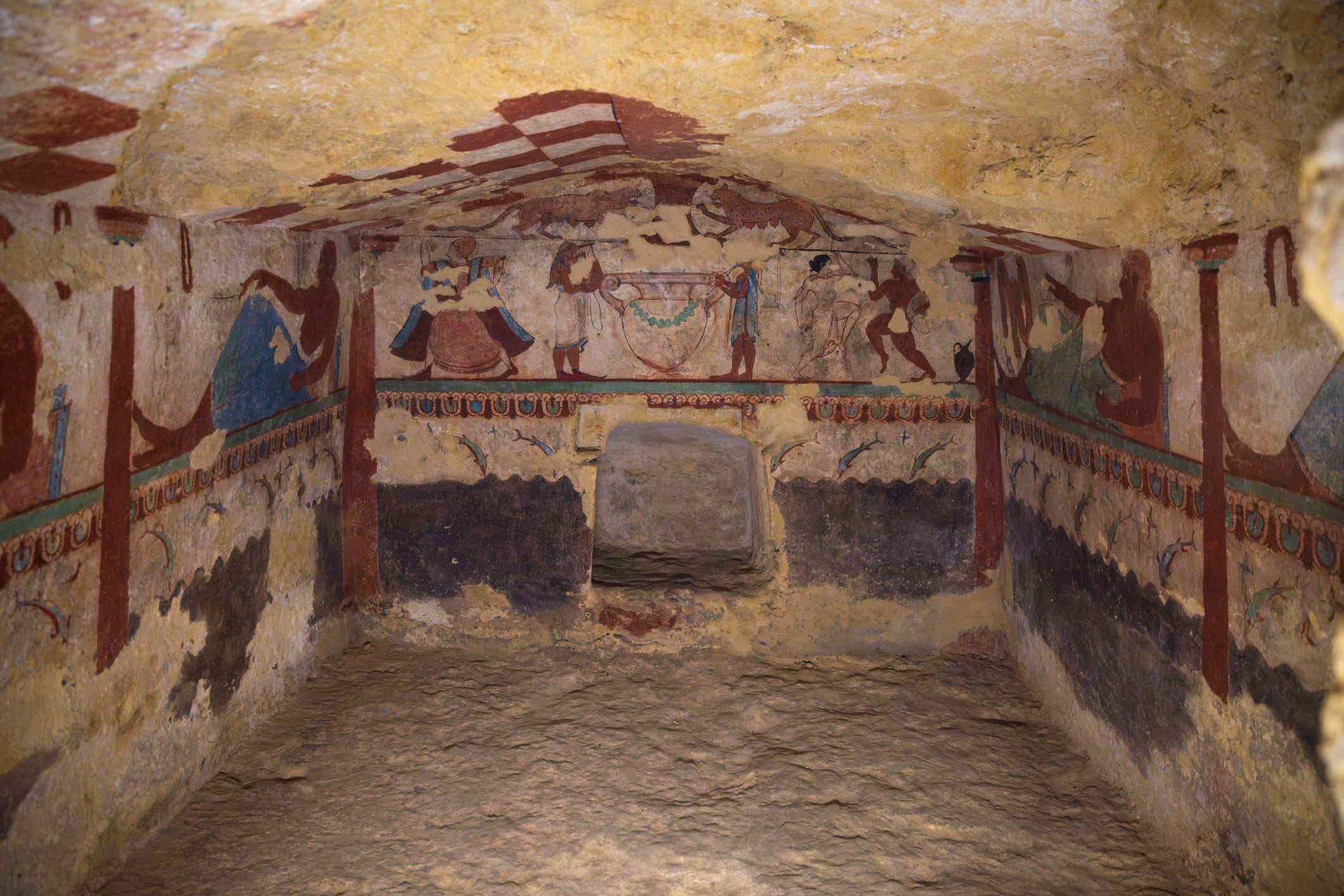
As I’d descended the damp steps into the cool earth of the Monterozzi hillside, I was reminded of St Paul’s Catacombs in Malta, where for around 1,200 years, Christian, Jewish and Pagan people were laid to rest in an interconnected warren of 30 hypogea spanning 2,000 square metres underground. In Tarquinia, an immense 6,000 burial sites were cut into the rock, over 200 of which were delicately hand-painted with decorations of bunting, wildlife and scenes of the deceased’s trade.
Tarquinia was to be the first of many port calls that would impress upon me Malta’s relevance in a dwarfing European continent. In Cagliari, the salt pans of Molentargius Saline Natural Park echoed Gozo’s most visited attraction (the chequerboard trays of Xwejni’s salt pans have been farmed traditionally for over 350 years) while the Phoenician origins of Cadiz and Carthage recalled the delicate remains of a rock-hewn temple cut into the hillside of Gozo’s cliff-clad Dwejra Bay. While wandering Corsica’s blustery, moor-like coastlines, I heard tales of its people’s sacrifice in the First World War, and was left hoping Malta’s critical role as the “Nurse of the Mediterranean” saved some of their number.
But much of this context was yet to come. On my second day in Valletta, I let my feet guide me through the undulating, honey-coloured streets of the walled capital, a city I thought I knew. I’d done everything here; nights out bar-hopping with friends along Strait Street, languorous long weekends in plush, gallarija-adorned Airbnbs and afternoons spent nibbling on tomato and onion-filled ftira in the Upper Barrakka Gardens, while ships danced around each other in the Grand Harbour. Yet this time was different.
The limited time in port became a blessing; it brought an urgency that made every second count. I revelled in the knowledge of the guide during the arranged excursion, but also used my free time to tick off my overdue to-do list. I visited the planetarium in the still-new Esplora Interactive Science Centre, toured the halls of the Spazju Kreattiv (a gallery-meets-cultural-arts-centre in Valletta) and meandered along the 500-year-old fortifications of Fort St Elmo, once a protective bastion and now a venue for music festivals and the home of the National War Museum.
By rights, the Maltese islands shouldn’t be big enough to warrant nearly the amount of history, culture and natural beauty they possess. It’s a Russian doll of a country, constantly revealing more. But thankfully, I was able to uncover yet another layer due to a trip that not only connected it more viscerally to its sometimes seemingly distant neighbours, but afforded me the luxury to explore it as a tourist: for the first time since I’d lived there, I had permission to stand and gawk and admire it with abandon.
Ally was a guest of Viking Cruises.
How to do it
Fares for a 15-night Malta, Morocco & the Mediterranean sailing with Viking Cruises on 27 December 2026 from Barcelona, visiting Marseille, Corsica (Ajaccio), Rome (Civitavecchia), Valletta, Tunis (La Goulette), Algiers, Casablanca, Seville (Cadiz) and Granada (Malaga), start at £6,195 per person based on current availability.
Prices include return flights from select UK airports, a 15-night voyage in a Veranda stateroom; in destination transfers; all on-board meals including wine, beer and soft drinks with lunch and dinner (plus no corkage fee); an excursion in each port of call; wifi (connection speed may vary); gratuities; access to the Nordic Spa; evening entertainment and enrichment talks. Book by calling 0800 319 66 60 or via viking.com.
Read more: Malta’s coastline is one of the Mediterranean’s most spectacular – here’s why
7 under the radar Mediterranean destinations for Easter
10 of the best last-minute spring break deals, from ‘kids stay free’ to ‘50% off’
The best new cruise ships launching in 2026 and beyond
Where is hot in May? Seven sunny holiday destinations to visit in Europe and beyond
Malta’s coastline is one of the Mediterranean’s most spectacular — here’s why