

Of all the impulsive purchases I’ve ever made, picking up a jump rope at the convenience store has probably been the best for my health (and my bank balance).
For just $2, I’ve found a way to enjoy cardio that fits in my back pocket.
It was partly a sense of nostalgia that made me take the jump rope to the checkout.
When I think back to my childhood self, I envy her seemingly boundless reserves of energy. I climbed, jumped, ran and played endlessly—all without getting tired or experiencing stiffness the next day.
There was also something else on my mind. A friend and walking buddy of mine has just had a hip replacement in her early 60s and—although I’m only 31—it’s got me seriously thinking about my bone health.
Watching her recover from this major procedure has inspired me to work harder to protect my bones long before I hit menopause, when hormonal changes start to affect bone health.
And with research showing that jump training can improve your bone mineral density, helping reduce your risk of developing osteoporosis later in life, it was just another reason to buy that jump rope.
Jumping is also a high-intensity, weight-bearing exercise, like running or dancing, and puts your joints under controlled stress while strengthening the supporting muscles and tendons.
Getting back from the store that day, I started jumping rope pretty much immediately, attempting to skip for 10-minutes straight every evening. Here’s what happened after a week.
1. It’s a great cardio workout
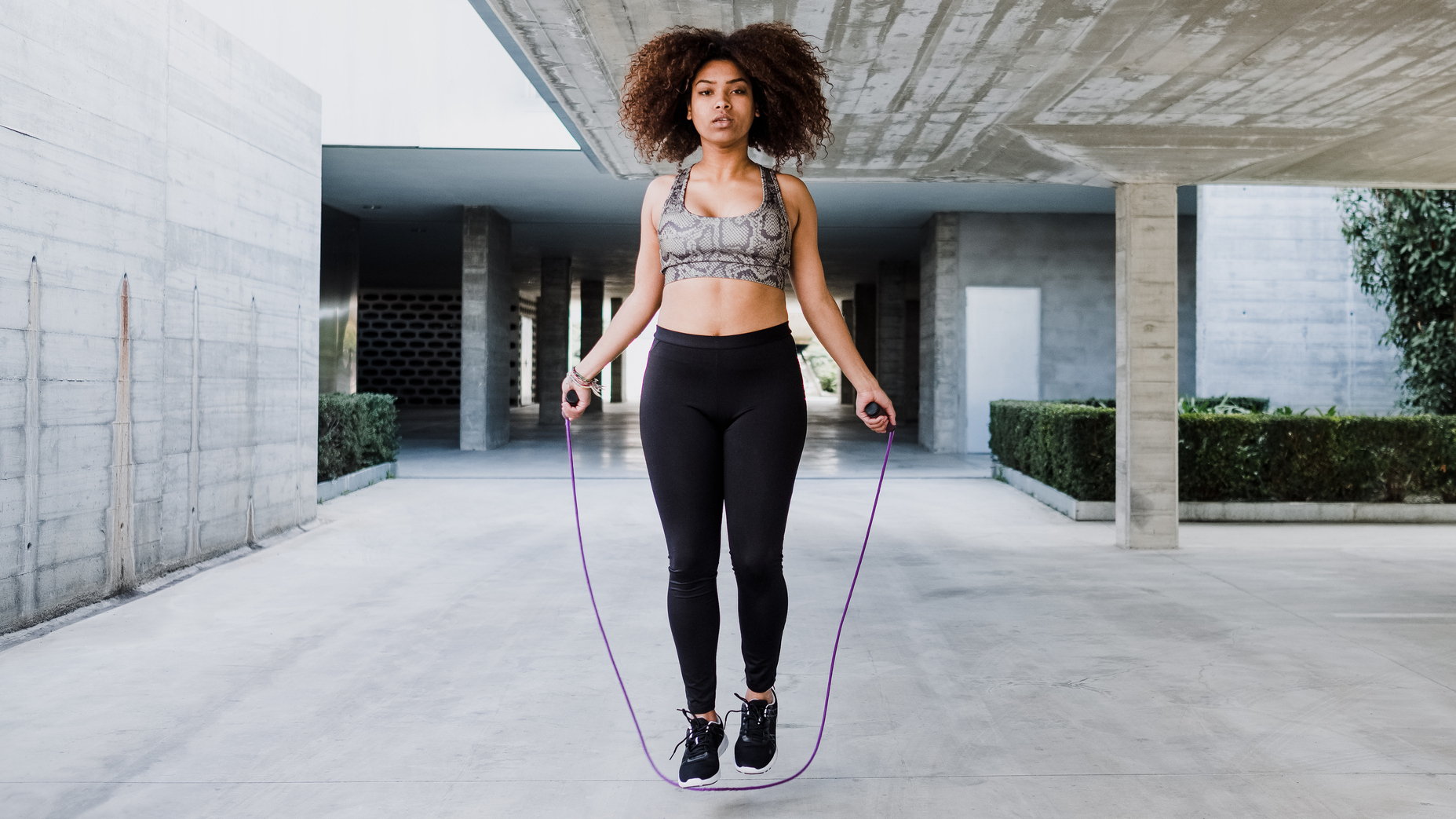
I generally shy away from cardio. I find it boring and repetitive, especially when working out on cardio machines at the gym.
The only exception to this rule is walking, which I do regularly for the benefits to my mental and physical health. Plus, my dog would be upset if I gave it up.
But that does mean I rarely attempt high-intensity exercise, and I was quickly reminded that jump rope gets intense quickly. I wasn’t prepared for how much I would sweat, or how quickly I would develop a stitch, or how tomato-colored my face would be after 10 minutes.
Despite that, I enjoyed myself immensely.
A piece of advice that comes up again and again when I speak to fitness professionals is that you should choose exercise that doesn’t feel like a chore.
Not only is jumping rope adding a new type of cardio to my routine, but it’s also adding a sprinkle of childlike joy into my day so I’ll keep coming back for more.
2. It’s sustainable
I have an energy-limiting illness, so I have less energy to use each day than an average person.
My illness means I have to be careful not to overexert myself and trigger a flare-up in my symptoms, or eat away at my depleted energy levels even further.
Most traditional cardio is too exhausting for me and I have to be conscious of when I do it to avoid wiping out all my energy.
I do my 10 minutes of jump rope in the evenings and habit stack with my daily shower to most efficiently use the last of my energy reserves for the day.
This has worked surprisingly well. I’ve noticed that I sleep better, recover faster, and have enough energy to do another session the next day.
3. It challenged muscles I wasn’t expecting it to
The day after my first session, I was surprised to feel aches in my shoulders and upper arms—surely, they didn’t do all that much?
I also felt the post-workout ache particularly intensely in my core, hamstrings and glutes. It wasn’t enough to slow me down for my next session but it was certainly noticeable.
I was curious to see if my experience was standard, so I did some reading.
A 2025 study took a small sample size and investigated improvements to muscle strength and cardiovascular endurance from jump rope training. They added in a single session, once a week and recorded progress over eight weeks.
The results highlighted that not only are there significant improvements in cardiovascular fitness with regular jump rope training, but test subjects also showed an improvement in lower-body strength, and some in upper-body strength, too.
I was surprised, but pleased that I’d be getting stronger, as well as fitter.
I also don’t have to go anywhere to work out; my own backyard is the perfect location for jumping rope, even in the rain.
As it’s only 10 minutes, it’s also a very small time commitment, and something to look forward to that I use to round off my day.
4. It challenged my coordination skills
I have a neurodevelopmental disorder called dyspraxia, which translates to poor coordination, impaired fine motor skills and general clumsiness.
I’ve had to work hard to improve my balance and dexterity, and I still struggle to achieve tasks others find easy—like patting my head while rubbing my tummy.
Even the simplest jump rope exercise was remarkably hard for me to get the hang of, which was extra frustrating when I knew I had been passable at it as a child.
I used to be able to do all sorts of patterns with my feet and the rope, all while chanting. Now, I could only manage six jumps in a row before I’d smack my feet, or get the rope caught in my hair.
I adjusted the rope a few times to make it a more appropriate length for my height and persevered. By the end of my first session, I could manage about 20 jumps in a row.
Now, a week later, it’s rare I’ll catch my feet at all.
I found the tangible improvement hugely motivating, and I’m keen to start learning different steps and techniques again.
5. It wasn’t as accessible as I expected
All you need to jump rope is a jump rope. Not true in my case. I was jumping on a hard surface—either asphalt or concrete—which offers more rebound underfoot than grass, and more stability because it’s not uneven like my lawn.
It does, however, put quite a bit of stress on the joints because it offers zero shock absorption. Ideal alternatives would be to jump on a rubber flooring—such as a running track—or on a mat that’s specifically designed for jumping rope, or wearing cushioned trainers, all of which can help absorb shock.
Because it’s a high-impact activity, those with breasts will need to wear a sports bra built for the task. I started, stopped after two jumps, and had to go and put one on—learn from my mistake!