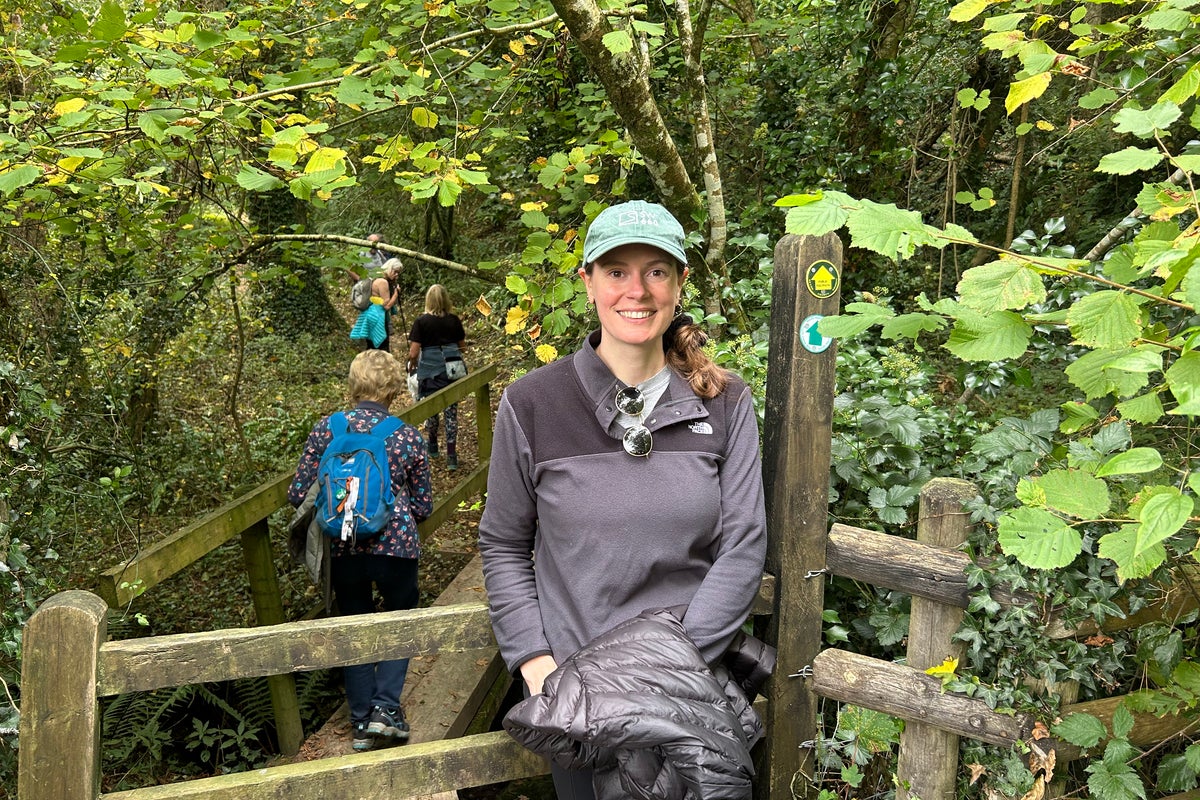
I'm walking through woodlands with pillar-straight coastal redwood trees standing proud on my right, looking like they've been planted on a grid. Old and sturdy oak, lime and beech trees rise above us on the left. Underfoot, the woodland floor is full of fallen acorns and crisp golden brown leaves lying among gnarled ancient tree roots intermittently poking up through the ground. In the distance, there's the unmistakable “choo” of a steam train whistling as it passes along the tracks below, hidden behind the greenery of the trees.
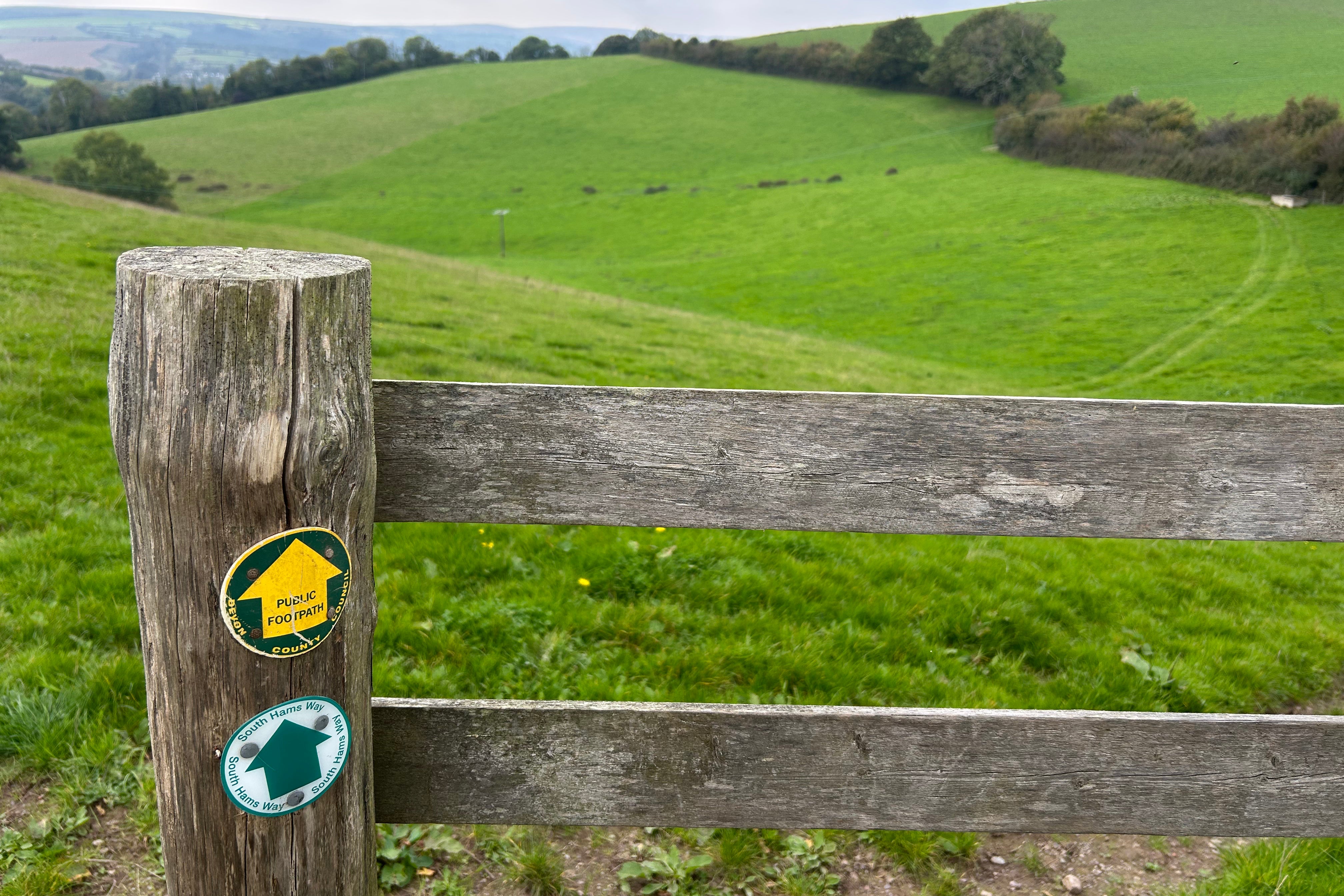
I’m on the newly opened South Hams Way, a 100-mile circular walking trail in south Devon, taking in an idyllic section of the British countryside. I can't help but recall William Blake's famous line about walking "England's green and pleasant land," from his poem "Jerusalem", and thinking really just how pleasant it is, made even better with the autumnal sunshine warming my face.
I've joined the South Hams Ramblers group on their official opening event of the trail on 11 October, walking the first section from Totnes to Buckfastleigh, a moderate 7.1 miles along footpaths, country lanes, fields and woodlands. The whole concept has been more than a year in the making, though the opening event was delayed by a month following amber weather warnings.
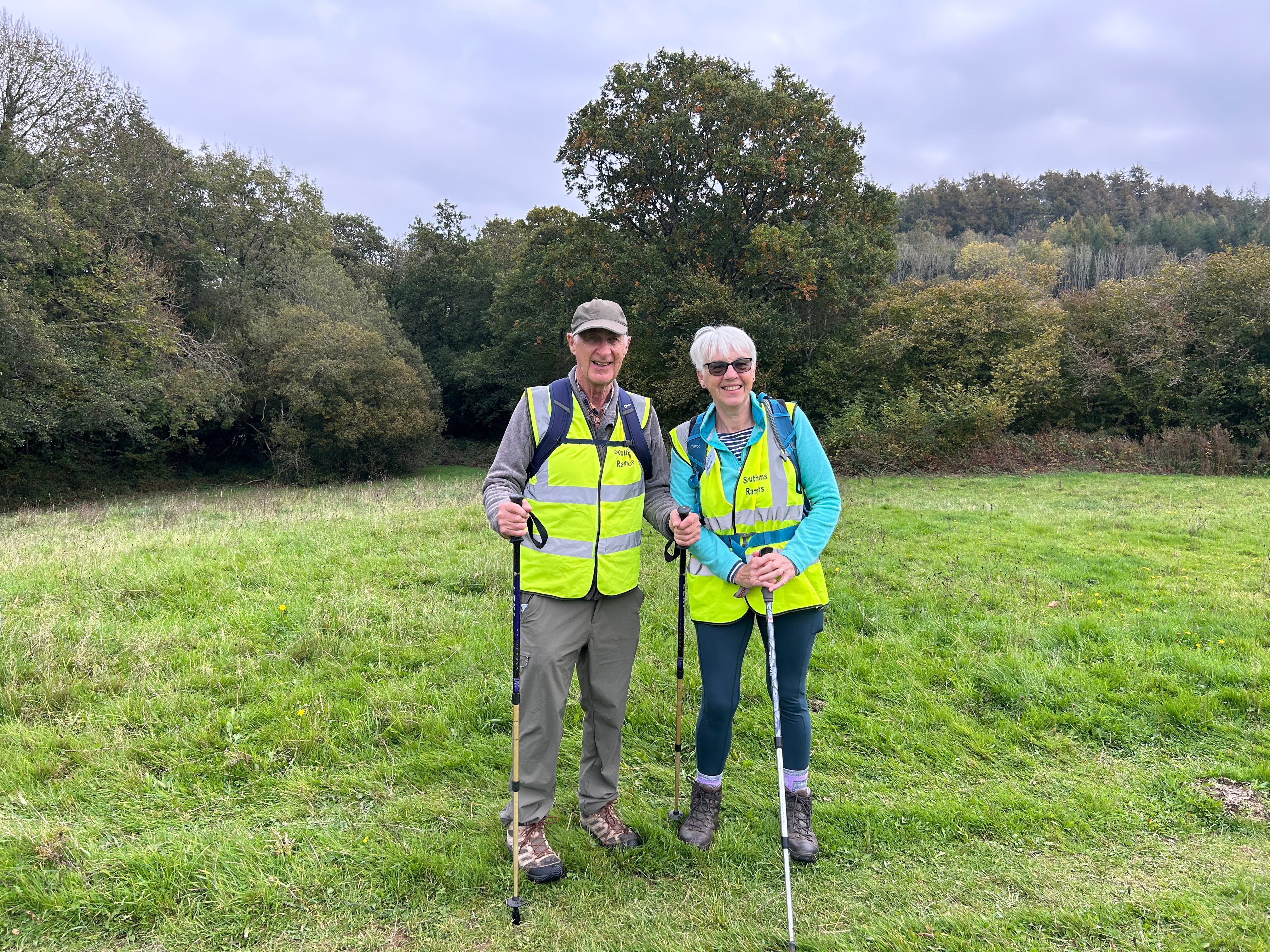
Before the walk, the trail is officially opened with a ceremony in Totnes' Borough Park, where the trail begins. "This is very English, isn't it?" my Scottish husband, Hugh, says to me just as the local councillor cuts the ribbon, proudly marking the trail open to everyone. Around us, there are at least 120 keen walkers, clad in outdoorsy waterproofs and walking boots and carrying trekking poles and backpacks, ready to take on the trail. Many of them have been involved in its creation and testing, so have actually stomped much, if not all, of it already. A couple from Canada, keen bikers and walkers on a two-month trip to the UK, had seen the opening walk event online and decided to join in.
It was here in the crowd that I noticed someone's walking backpack had at least 11 sewn-on badges (that I could see) of various trails, including the 109-mile Cleveland Way, which goes through the North Yorkshire National Park, and the 186-mile Pembrokeshire Coast Path along southern Wales. I hadn't appreciated there were quite so many recognised walking trails in the UK. My knowledge was limited to the South West Coast Path, the UK's longest trail at 630 miles, and a few others around the country, such as the Pennine Way, which runs for 255 miles from Derbyshire to the Scottish border; the Hadrian's Wall Path at 84 miles; and the 185-mile Thames Path.
What's special about the South Hams trail, though, is not only the scenery, but that it has been devised by walkers (the South Hams Ramblers group) for walkers. They created the guides and website and put up the 850 waymarkers, all as volunteers. The trail is split into 10 bitesize sections, beginning in Totnes, leading anti-clockwise up to Dartmoor, then southwards taking in 50 miles of the south Devon coast path around Salcombe and Dartmouth, and back into Totnes. The trail uses existing paths, which it links together, and covers five estuaries.
Read more: Want the Lake District all to yourself? Walk the Cumbria Way
The intention is to show off what south Devon has to offer and get more people out walking – a tonic for both physical and mental wellbeing. "We wanted to make another trail that people want to walk for a holiday," explains Debbie Board, the group's Walks Co-ordinator who has been integral in creating the new trail. "We know it will attract a lot of retired people, people on holiday and younger people who will want to do it quickly," she says. Walking it quickly, it can be completed in six or seven days (or even less) while it takes about 10 days or so to cover at a more leisurely pace.
"It's the variety of landscape this walk includes – coast path, moorland, river valleys and countryside – that sets it apart from other walks," she adds. We get a taste of this on the first section of the walk alone.
John Lloyd, who is also part of the South Hams Ramblers group and the creator of the trail's website, says walks like this one allow people to really get to know an area. "I thought I knew this place like the back of my hand," he says, adding that he's been visiting the area since the Seventies and has lived here for the past 30 years. "But really I didn't. It's not until you start walking it that you realise there's so much more to see."
Read more: This beautiful walking route inspired England’s most famous painting
The longest of the 10 sections is the final one, Dartmouth to Totnes, at 13.4 miles – almost double the length of the first section. This is followed by number four, Ivybridge to Noss Mayo, at 11.9 miles. "My favourite is number three, which goes to Ugborough Beacon on Dartmoor. That's also the hardest as it's quite steep," says Debbie.
We begin along footpaths, passing the River Dart, and on to the Dartington Estate, covering 800 acres that includes a sizeable 14th-century medieval house with Grade II Listed gardens.
After a not-so-quick coffee stop, we're soon within the grand-looking deer park, where many of the elegant animals are grazing together in small groups. It's dominated by a long and age-wobbled grey stone wall, and ancient trees stand proud along the path. We cross over the steam train track at Staverton and get our first glimpse of the historic South Devon Railway with a small ticket office adorned with historic signs advertising cigarettes, Fry's chocolates and Colman's starch.
There's a strong social side to the Ramblers Association, and everyone's keen to chat with new people. I can see why some people are being prescribed joining walking groups, not only for the fresh air and exercise, but also as an antidote to loneliness.
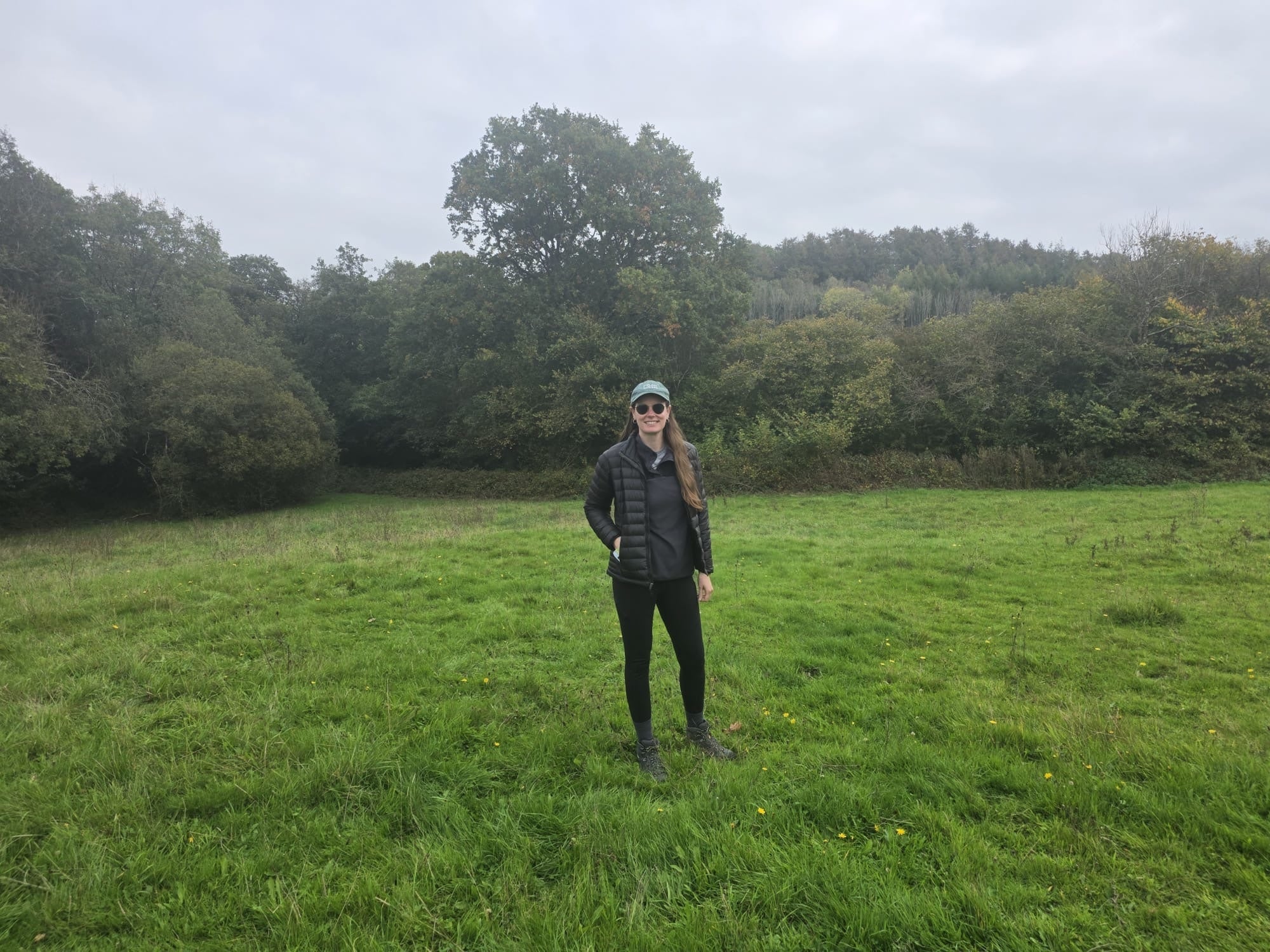
Lunch is a quick pit stop in a meadow, and everyone's come prepared with their own packed lunch (very British). The sun comes out as we sit on our jackets for a short rest.
Debbie says the South Hams Ramblers group has already got plans for their next project: a route between Salcombe in the south going northwards up to South Brent via the Avon Valley, which will be named the North South Link. "We're going to work on it once we've taken a breath after this," she says with a laugh.
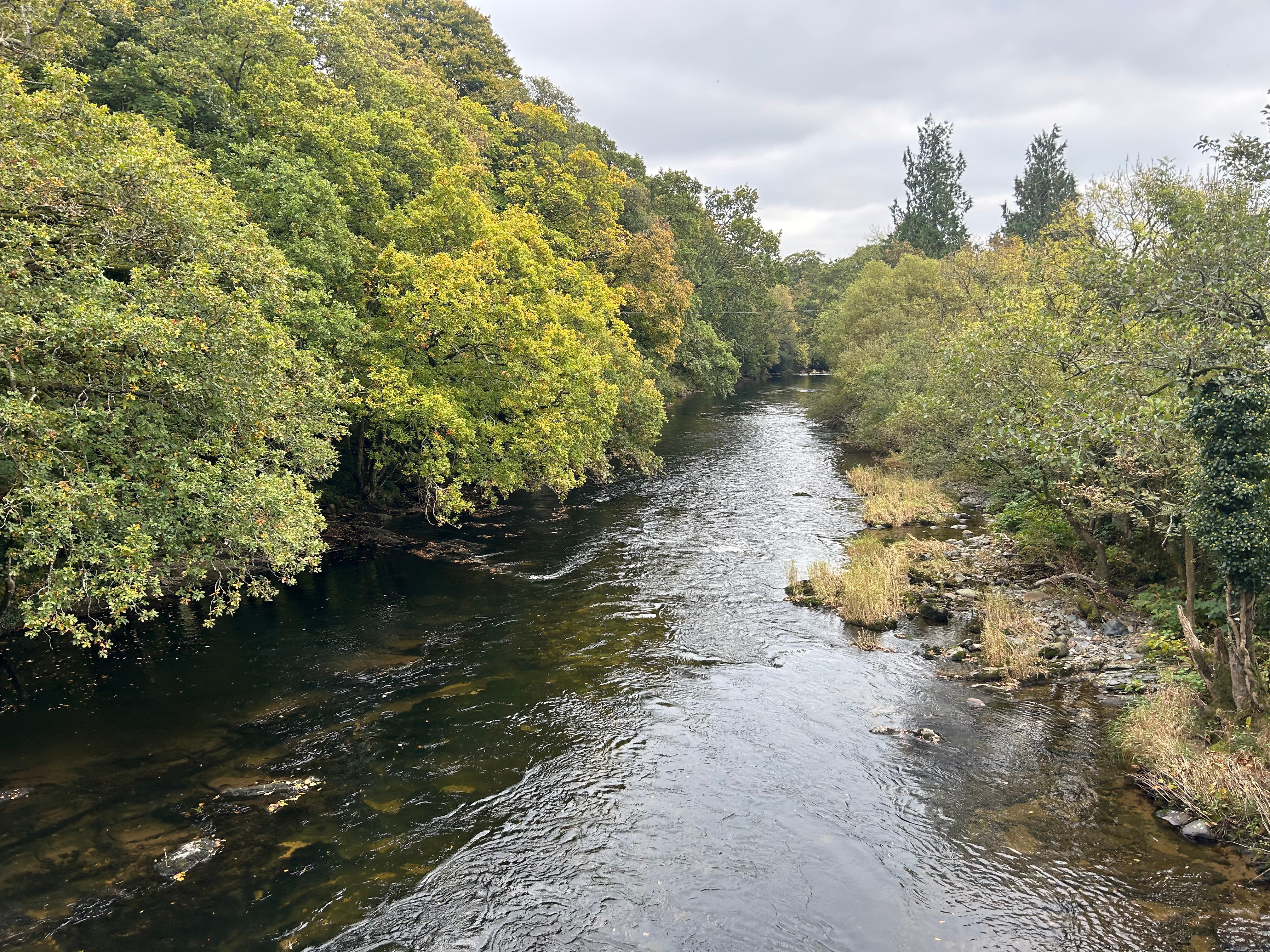
The trail continues along country lanes surrounded by rolling hills, lush green with vegetables grown by Riverford Organic, before heading down a steep field, over a stile and back into woodland, finding the River Dart again.
Read more: What I learnt wild camping in Dartmoor
It's 3pm when we arrive at the final destination of Buckfastleigh, with the walk taking just under four hours (including half an hour for lunch). The town is best known as the home of the eponymous drink, Buckfast (or Buckie), originally produced by monks in the Abbey and famous to many in Scotland and Ireland for its high ABV, caffeine content and relatively low price. The tonic wine is rarely drunk elsewhere.
At the finish line, walkers have gathered at Birdie's Cafe for cream teas, which are so popular they quickly run out.
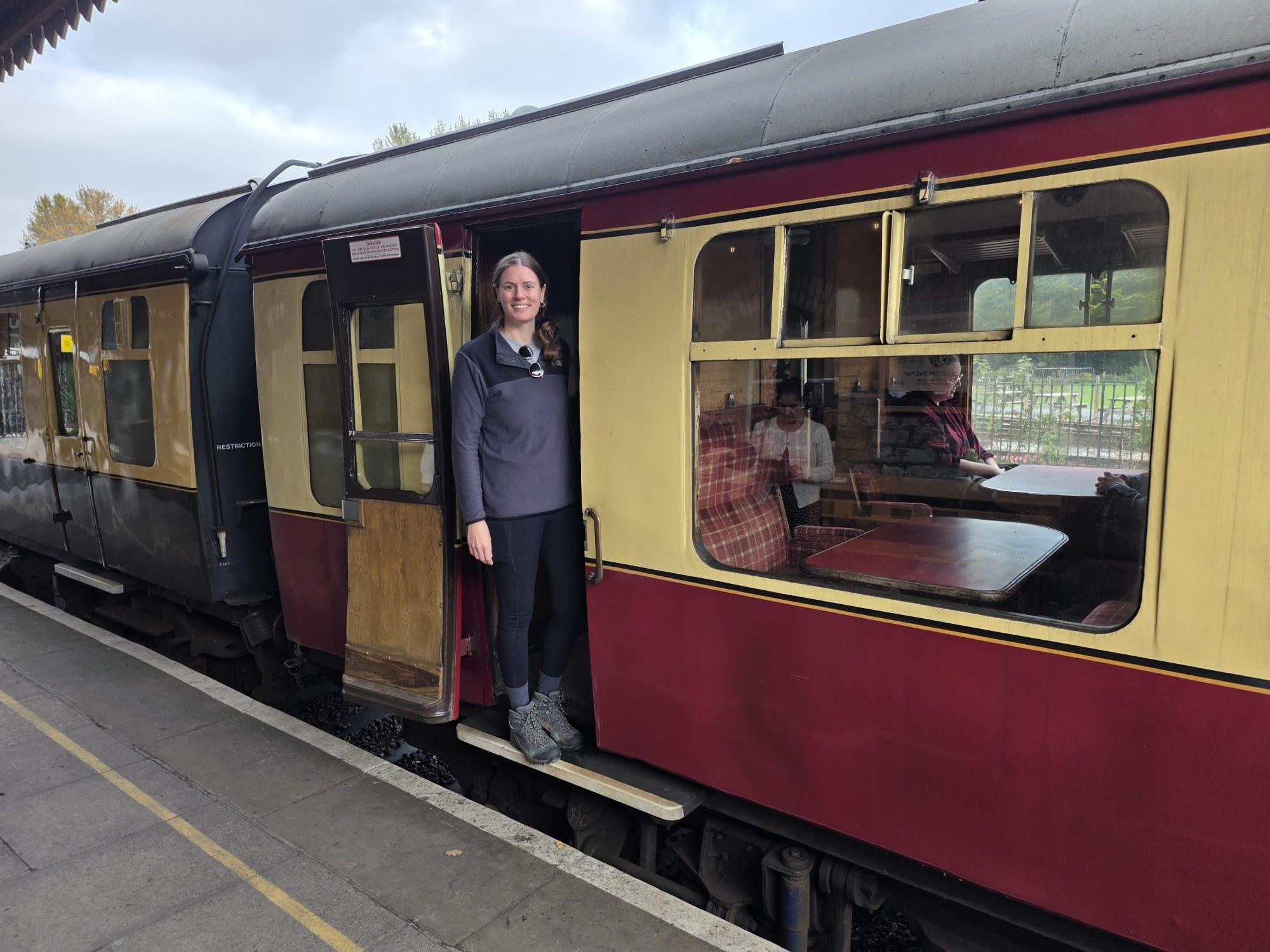
To head back to Totnes, there's the 88 bus, which runs every hour, or you can call a taxi. But the steam train is the most scenic and fun option. The entire station has been frozen in the 1950s with vintage signs and varying hues of beige, cream and caramel.
The outside of the carriages are a buttery yellow with burgundy trim, and there is even a dining carriage. Inside are tartan-covered wooden bench seats with high backs and red tables. I wish train carriages still looked like this, rather than the modern soulless grey schemes. We chug back to Totnes, often stopping without any obvious reason, giving us time to take in the scenery and the sheep moseying around the fields next to the tracks.
At home, it’s not long before I’m looking up rambling groups in my local area, inspired by John's sentiment that the only way of really getting to know a place is by walking it. Like Blake, I will walk more of England's green and pleasant land.
Read more: This new walking trail is the best way to see the Lake District without a car