

Google I/O is currently underway, and after sitting through a monotonous an exciting keynote address, I got the chance to demo some upcoming Android XR glasses and prototypes. Samsung and Xreal are seemingly two of the most dedicated players in the space, and I got to try both Xreal's glasses and the latest Google prototype, which the Samsung glasses are no doubt based on, giving us a look at how Android XR will span different types of eyewear.
Samsung was set to launch Android XR hardware last year with the Galaxy XR, but it's a large, bulky device you wouldn't want to wear around. This time around, the focus is on more compact glasses for everyday wear. These are the ones I got to play with, and while I can't wait for audio-only glasses to come around, I'm more excited about what Samsung and Xreal have in store when it comes to display glasses.
Xreal is unreal
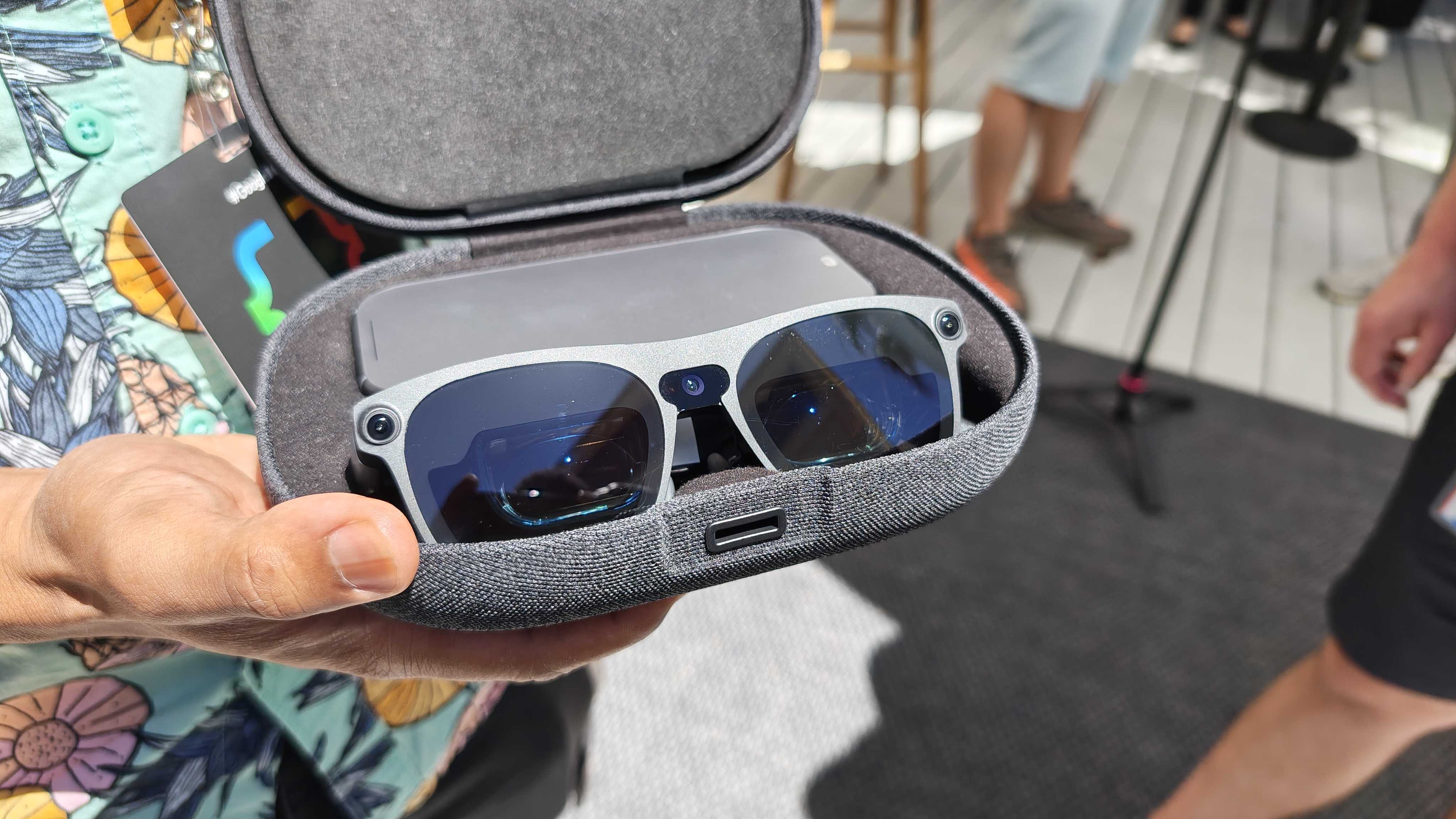
The first demo I got to try was arguably the more interesting one. Xreal teased its Project Aura glasses last year, and I was able to give them a spin ahead of the launch later this year. These glasses sport two OLED displays behind the lenses, one for each eye.
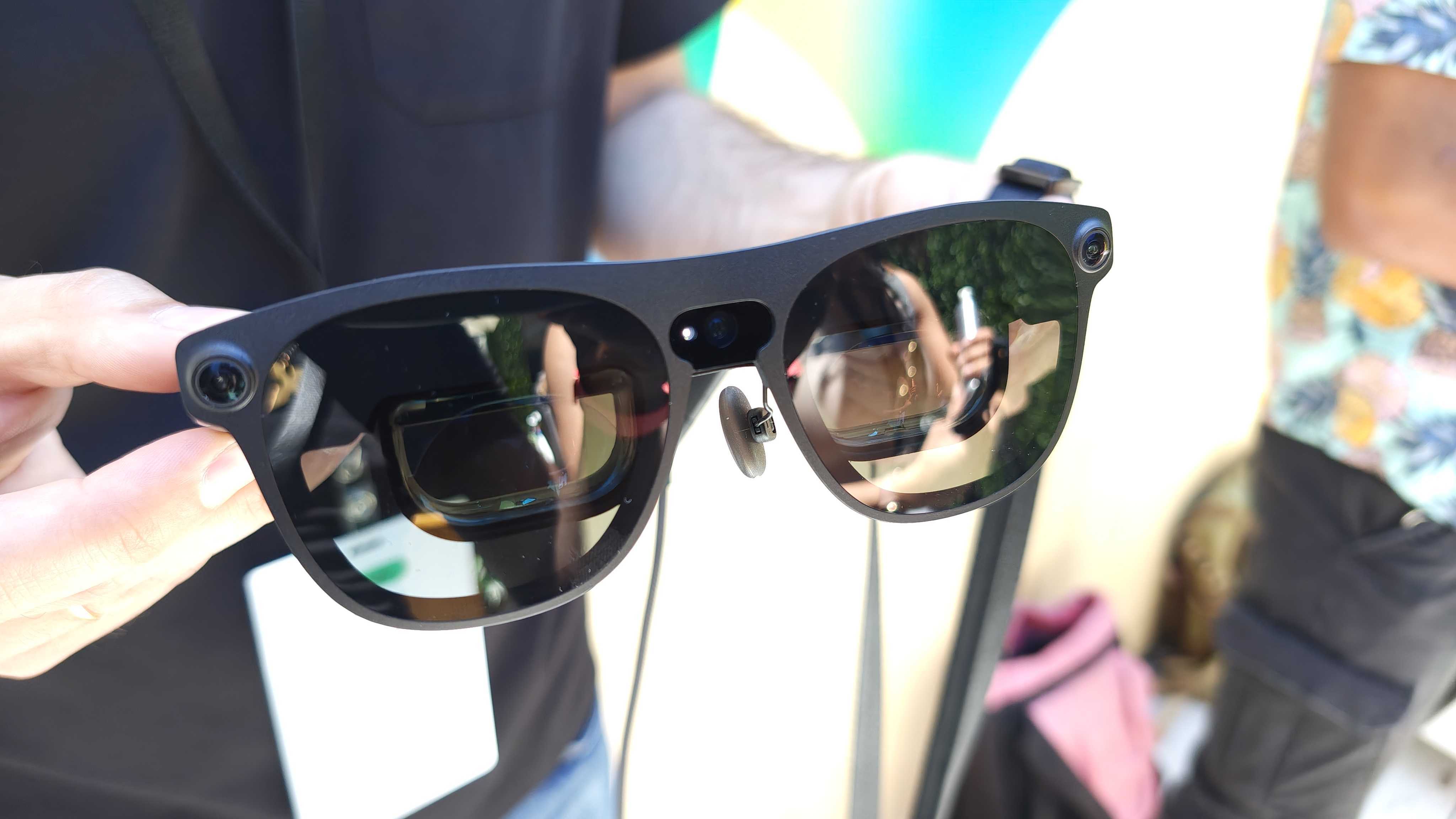
If you're familiar with Xreal products, the design here shouldn't surprise you. They're thick glasses that sit a little further from your face than usual, in order to give you room for the displays. It's a design I'm not a fan of from the outside looking in, but when they're on your face, you don't notice the difference.
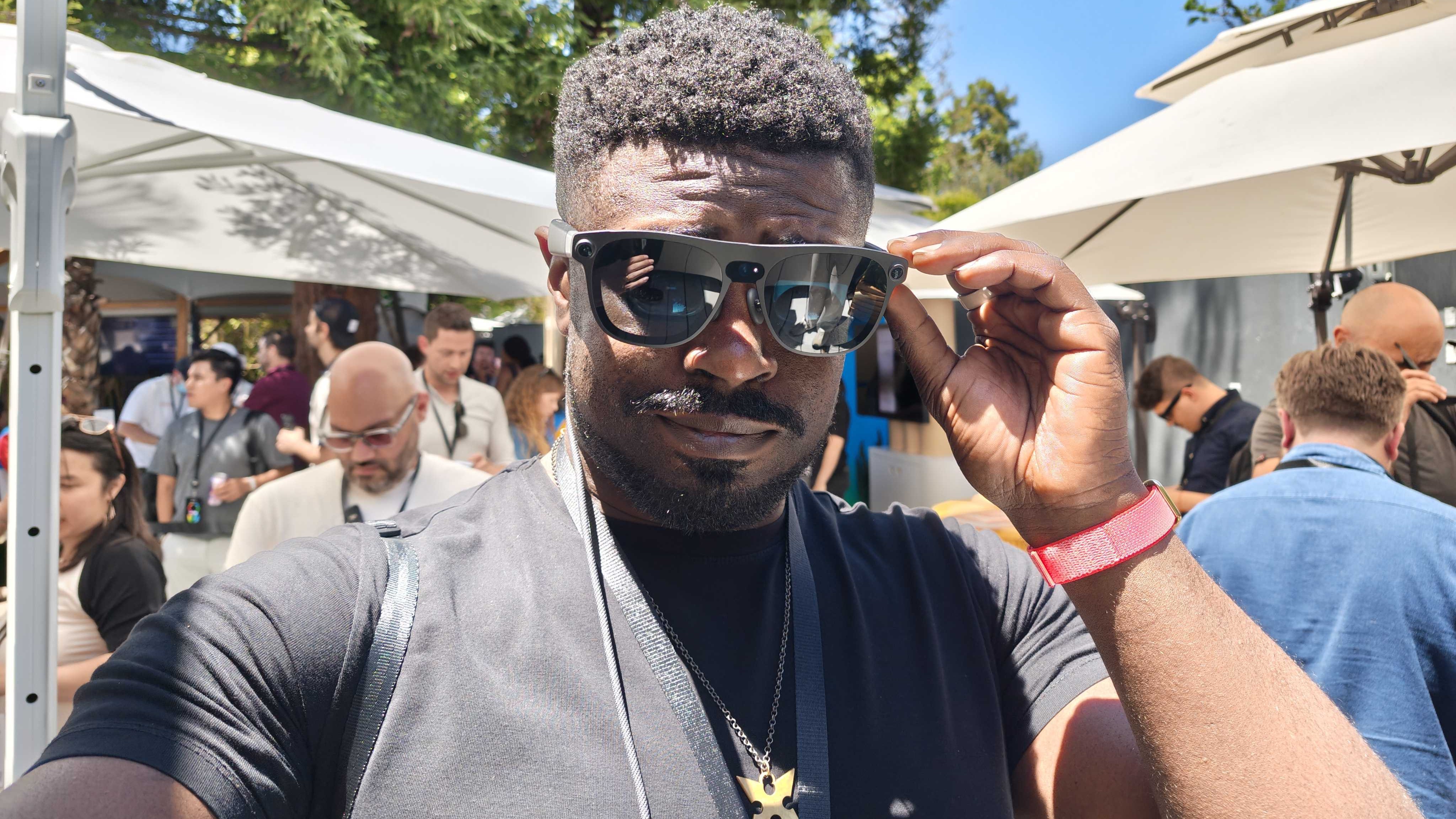
The Project Aura glasses have two cameras on either side of the lenses for perception and tracking, while the middle is for taking photos and videos. One temple holds all the buttons: volume rocker, Home/Gemini, and a dimming button to control the electrochromic dimming of the lenses.
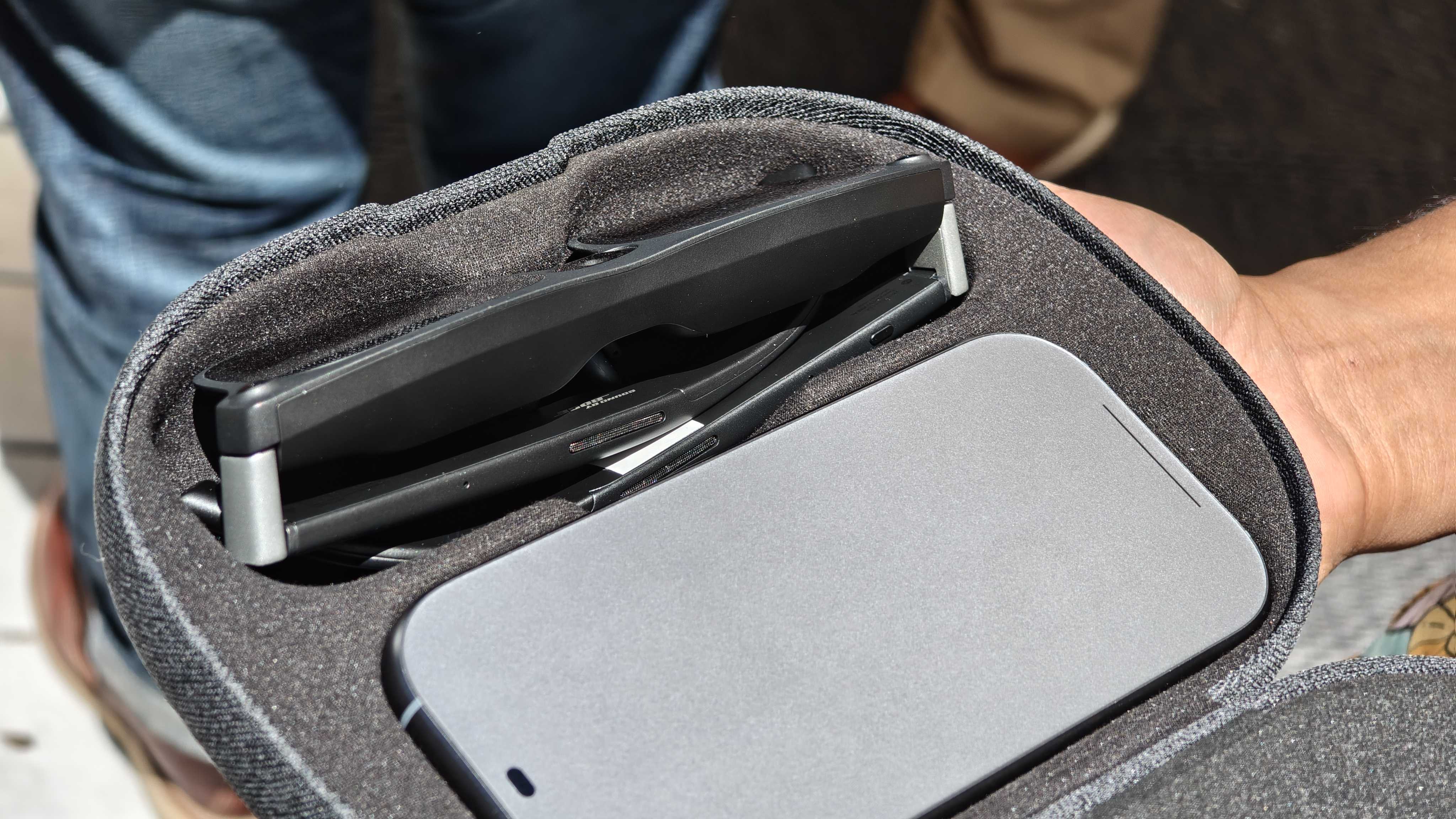
There's also a separate puck that connects to the glasses, which houses the battery and compute (it's powered by Snapdragon). I wasn't able to get solid figures on battery life, but you can probably get through a full movie while wearing them.
The puck also has a touch panel to control the glasses, which I thought was pretty clever. And in true Xreal form, you can plug in other devices like laptops and phones to display your windows and apps.
So, what was it like to use the glasses? Pretty cool actually! The visuals are better than I expected: Text is legible, colors feel plenty vibrant, and everything is super responsive. Aside from the puck, you can use gestures to control the glasses, similar to Galaxy XR. You pinch and drag to select, move, and resize objects.
Interacting with the Android XR UI feels intuitive and reminds me of the Quest 3, so I was able to pick it up quickly, swiping through and resizing apps.
I opened a trailer for the Spider-Man 2 video game, and at first, the video looked a bit washed out, which worried me. Then I adjusted the electrochromic dimming, which supports five levels. Eventually, the video looked super crisp and vibrant, as if I was watching it on my laptop's OLED display. I was thoroughly surprised at how good it was, and it even stayed in place against a wall as I moved around.
Second, I was able to play with an app created for the glasses using Antigravity. I basically used my hands to paint shapes in a 3D space by pinching my fingers together. I could change the colors of the "paint" and even alter the thickness by twisting my wrist. And again, it stayed in place as I moved around the space. I admit, this left me very impressed.
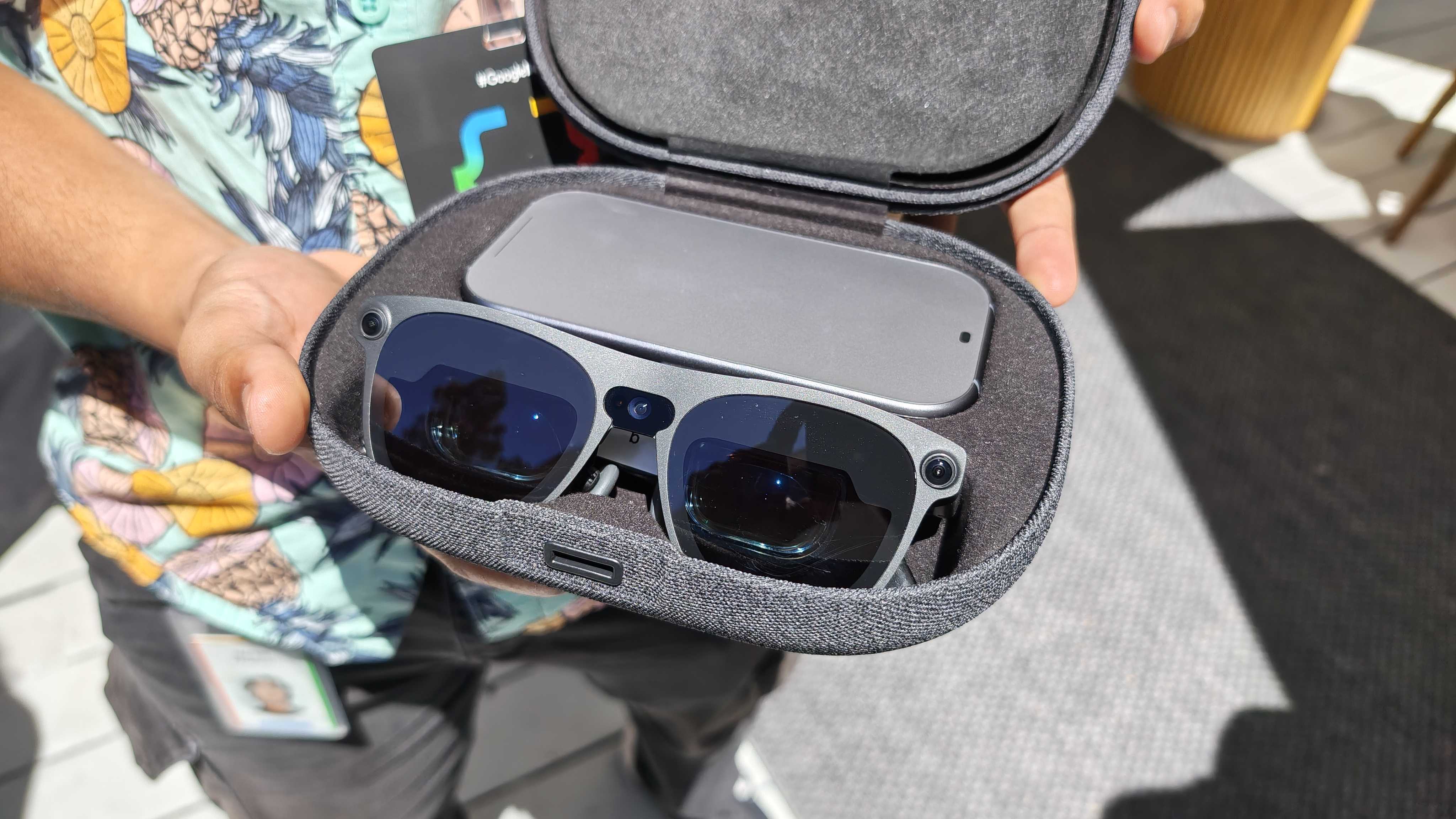
According to Xreal, Project Aura is a sort of in-between device, aiming to give us the power and utility of the Galaxy XR (hence, the external power puck), but in a more compact form factor like the Meta Ray-Ban Display Glasses. I never got to use Galaxy XR, but I was left more excited about display glasses than I ever was before.
Making a case for monocular display glasses
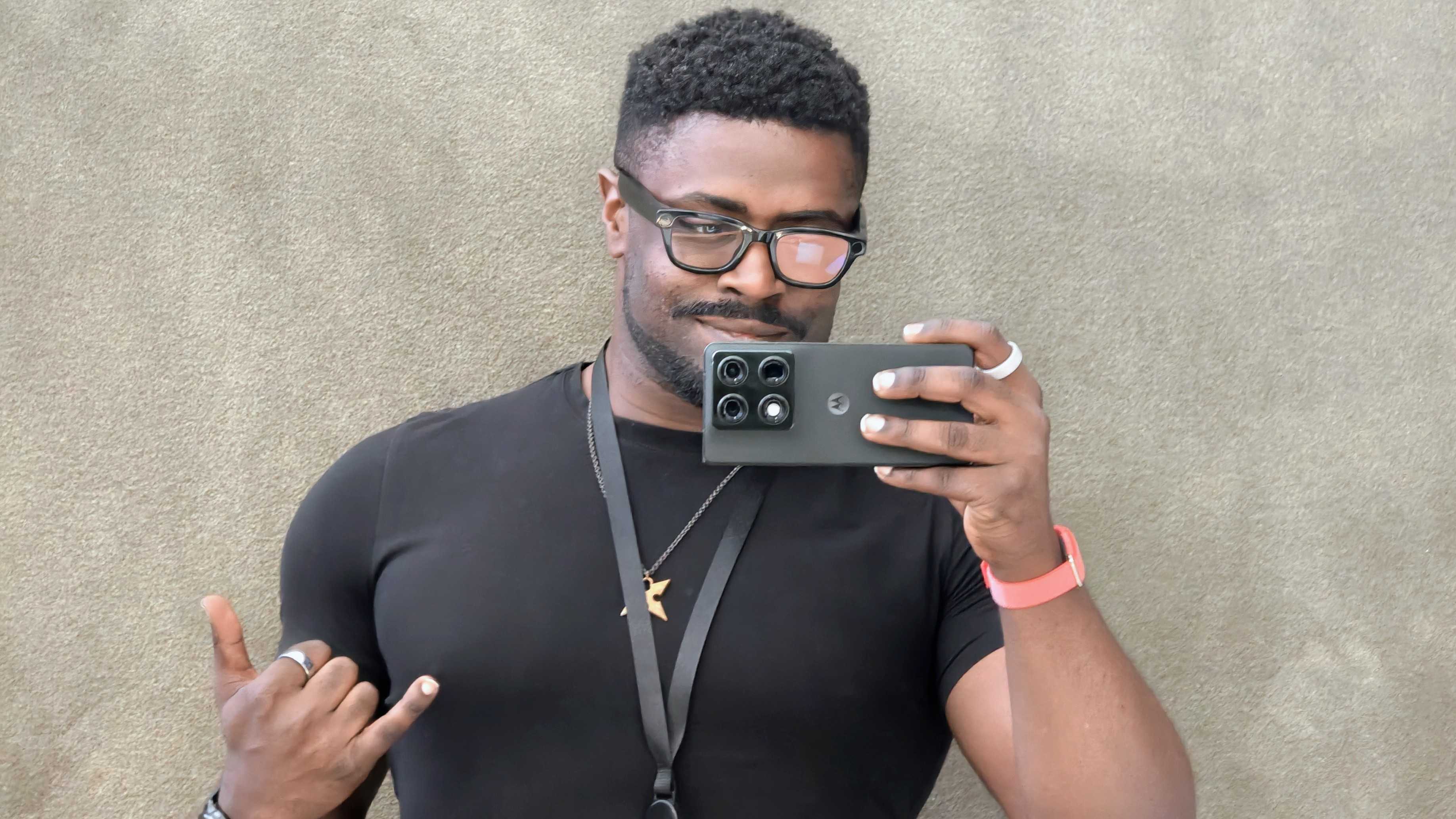
I also got to try Google's prototype monocular display glasses, which are used as a reference model for Samsung's upcoming glasses. This isn't my first time using them, but there were some new tricks I was able to try this time around. For instance, there are new widgets you can access and scroll through by swiping on the touch panel.
One widget is the Translate widget, which I opened with a tap and used to translate what someone was saying to me in Korean. And even as the person paused before continuing to speak, the glasses kept translating, which felt like a small but really useful component.
Additionally, I was able to take advantage of Nano Banana on the glasses—which feels a little crazy to do on glasses—but given their visual nature, I guess it makes sense. I was able to take a photo of myself with the glasses, then tell Gemini to put me in space with Neptune in the background. It took some time to generate (everyone was on the Wi-Fi), but a preview appeared on the glasses and on the paired Pixel.
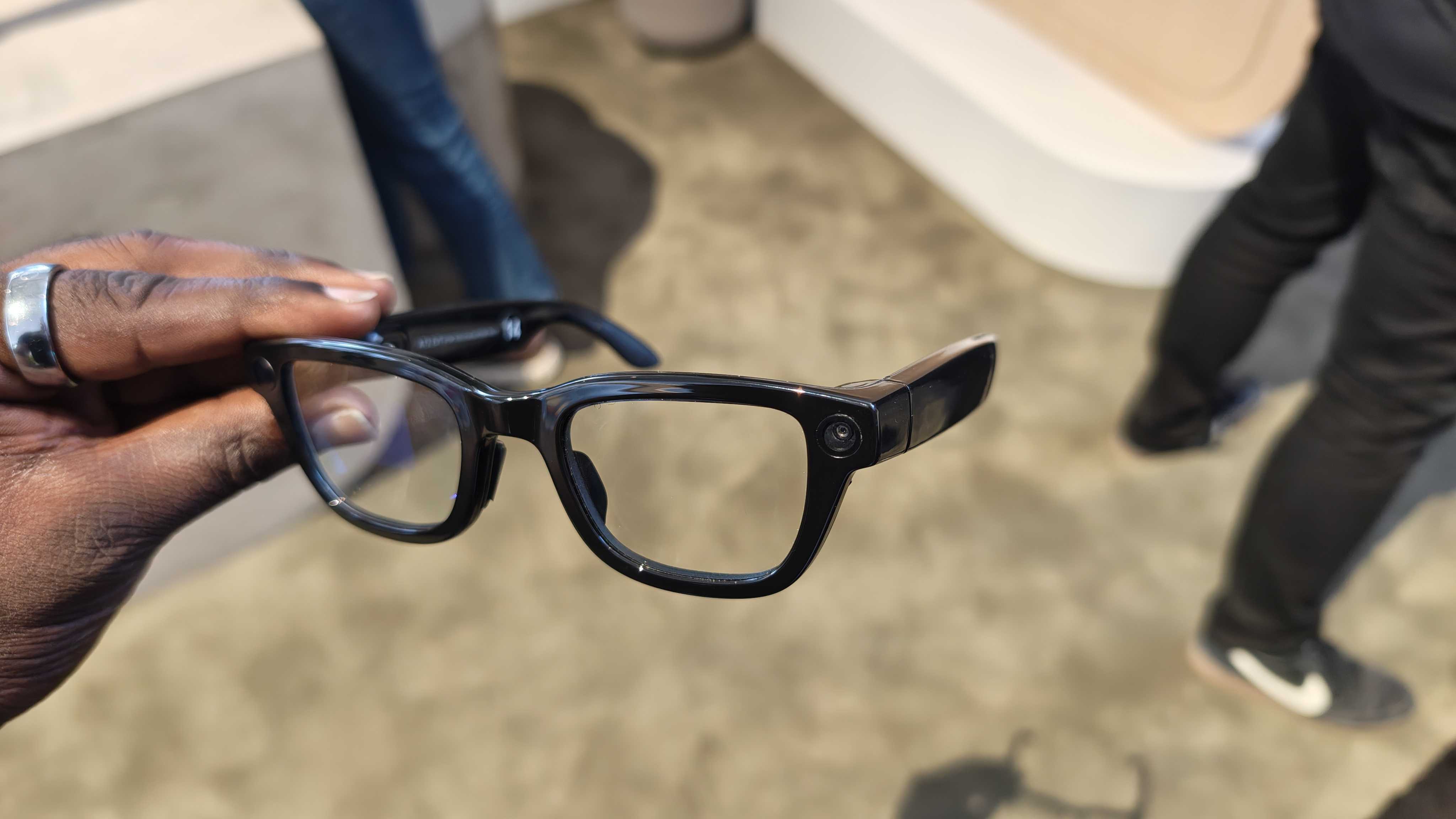
But even previously announced features like Google Maps integration is still impressive on monocular displays like this. It's cool to see a simple directions in your line of sight as you're walking, but tilt your head downwards, and the glasses will display a section of map so you can actually visualize where you're going as you go. I can see this being much more useful than glasses just barking directions at you.
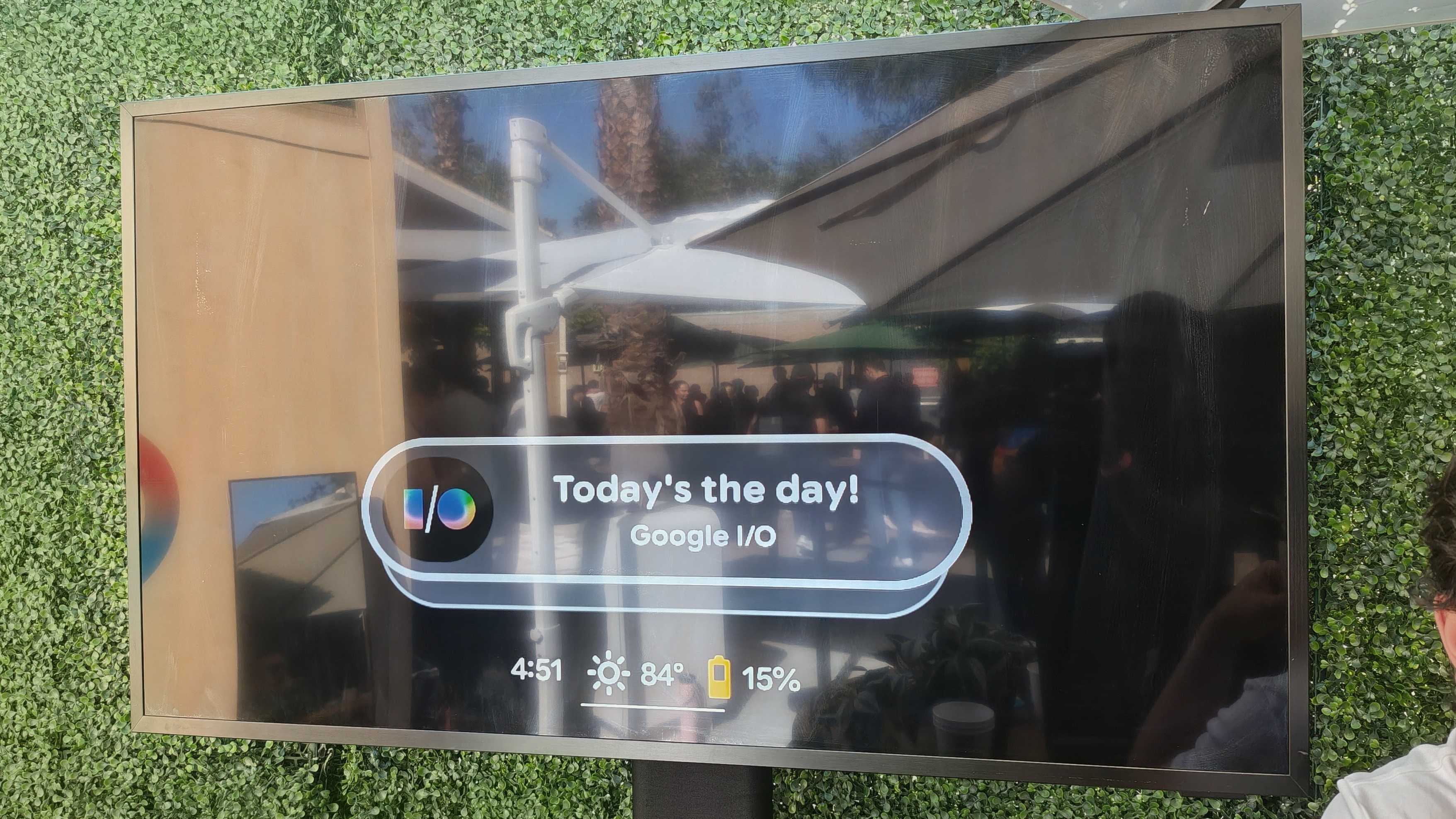
It may take some time to get used to the single display, which sits on the right lens, but your eyes adjust fairly quickly. And unlike dual-display glasses like Project Aura, information is displayed in a much simpler way so as not to overwhelm you.
The singular display option feels like a nice medium between audio glasses and full-on XR glasses, and I'm really excited to see how Samsung and others incorporate them into various designs. I still feel like audio glasses are more my speed, but my experience at Google I/O left me much more open to display glasses.
Both Xreal and Samsung are expected to launch their glasses later this year. Let's just hope they're not priced out of reach.