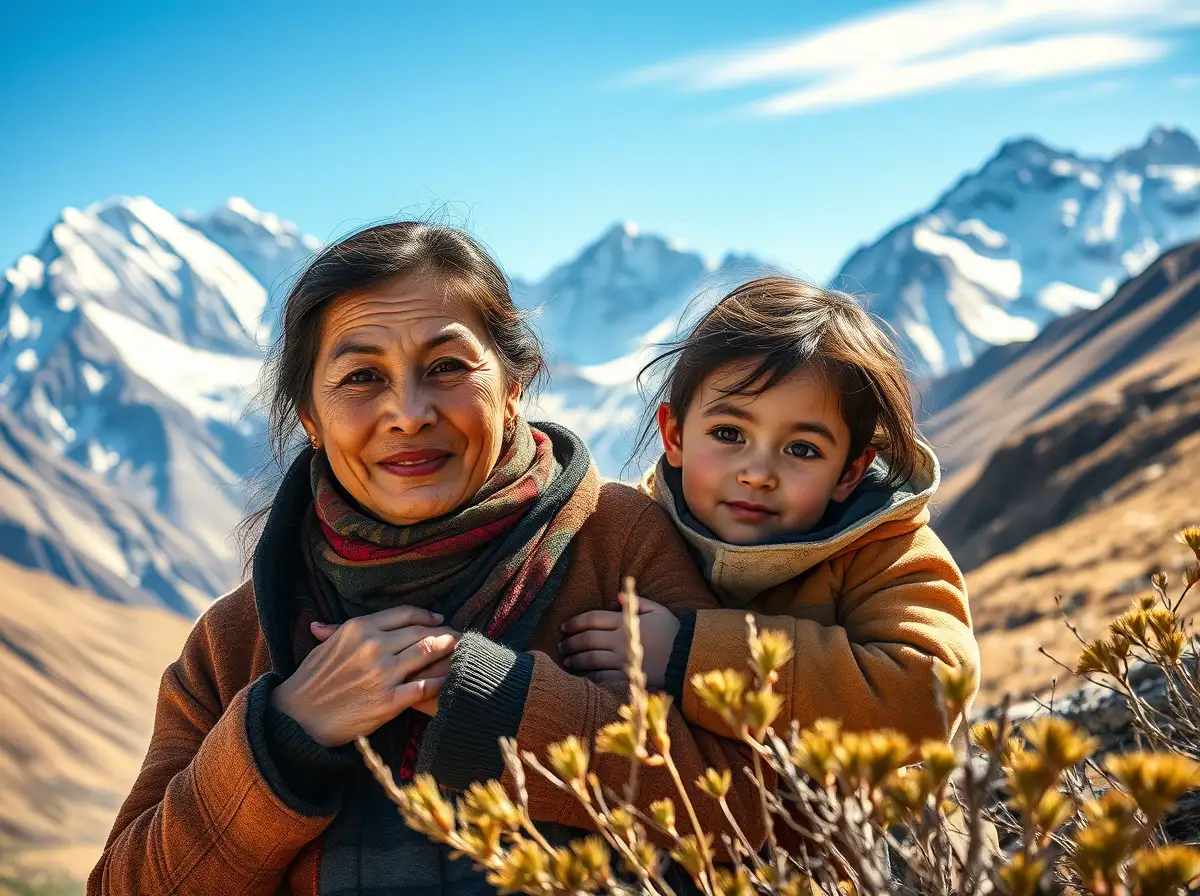
Human evolution is far from over. Scientists say our species remains to adapt to shifting environments, with evidence of these biological changes written into our bodies over generations. One of the clearest examples arrives from the Tibetan Plateau, where communities have successfully adapted to life in situations that would be challenging for most people.
Several mountain climbers who travel to high elevations face altitude sickness, a condition triggered by minimized atmospheric pressure and lower oxygen availability. At such heights, every breath offers less oxygen to the body, making it challenging for tissues and organs to function normally. Yet populations living on the Tibetan Plateau have flourished in these oxygen-poor conditions for thousands of years. Researchers state that over 10,000 years of continuous settlement in the area have led to physical changes that support residents to cope with an environment that would otherwise cause hypoxia.
“Adaptation to high-altitude hypoxia is fascinating because the stress is severe, experienced equally by everyone at a given altitude, and quantifiable,” anthropologist Cynthia Beall of Case Western Reserve University in the United States told ScienceAlert.
“It is a beautiful example of how and why our species has so much biological variation.”
Scientists Investigate How Tibetans Thrive in Low-Oxygen Conditions
Beall has spent years examining how humans react to life in low-oxygen environments. In a study published in October 2024, she and her colleagues found several physiological traits in Tibetan populations that enhance the body's ability to transport oxygen through the bloodstream.
To better understand these adaptations, the researchers analyzed reproductive success, a significant indicator of evolutionary fitness. Traits that enhance survival and reproductive results are more likely to be passed to future generations via natural selection.
Women who successfully give birth pass on their genetic characteristics to their children. Those offspring may inherit traits that improve survival and reproduction, elevating the chances that such characteristics become more common over time. Scientists explain this process as natural selection. Although the concept is straightforward, its results can sometimes appear unexpected.
Study Examined Hundreds of Women Living Above 3,500 Meters
For the study, Beall and her team examined 417 women between the ages of 46 and 86 who had spent their complete lives living in Nepal at elevations surpassing 3,500 meters (11,480 feet). Researchers recorded the number of live births for every participant, ranging from none to 14, with an average of 5.2 children, while also collecting a range of physical and health measurements.
Among the elements analyzed were hemoglobin levels, the protein in red blood cells responsible for carrying oxygen throughout the body, as well as oxygen saturation levels, which shows how much oxygen is bound to hemoglobin.
Balanced Hemoglobin Levels Linked to Greater Reproductive Success
The findings disclosed an intriguing pattern. Women with the highest number of live births did not have exceptionally high or low hemoglobin levels. Instead, they tended to have hemoglobin values that were average for the group while maintaining high oxygen saturation.
As per the researchers, this combination seems to optimize oxygen delivery without causing the blood to become excessively thick. Thickened blood can position additional extra on the heart because it is more challenging to pump efficiently.
“Previously we knew that lower hemoglobin was beneficial; now we understand that an intermediate value has the highest benefit,” Beall stated.
“We knew that higher oxygen saturation of hemoglobin was beneficial; now we understand that the higher the saturation, the more beneficial. The number of live births quantifies the benefits.
“It was unexpected to find that women can have many live births with low values of some oxygen transport traits if they have favorable values of other oxygen transport traits.”
Cultural Factors Also Influence Reproductive Outcomes
The researchers cited that biological adaptations are not the only factors impacting reproductive outcomes. Cultural and social influences also have an important role. Women who begin having children at a younger age and remain in long-term marriages normally have more chances for pregnancy, increasing the likelihood of a higher number of live births.
Even after accounting for these elements, however, physiological traits remained strongly linked with reproductive success. Women whose biological traits most closely resembled those spotted in healthy populations living at lower elevations tended to have the greatest reproductive results.
The research was published in the journal Proceedings of the National Academy of Sciences.
Source : ScienceAlert
FAQs:
Q1. Why is the Tibetan Plateau important to scientists?
The region has low oxygen levels that create significant environmental stress. This makes it an ideal place to study human adaptation and natural selection.
Q2. What is hypoxia?
Hypoxia is a condition in which the body's tissues do not receive enough oxygen. It can occur in environments with low oxygen availability, such as high mountains.