The market’s attention has been captured by the meteoric rise of companies powering the artificial intelligence (AI) boom. Semiconductor and software firms have seen their valuations soar as they build the digital infrastructure for this new era.
While this initial pick-and-shovel phase has created immense wealth, it has also pushed valuations to levels that leave many investors seeking a more grounded entry point. This raises a critical question: After the initial AI gold rush, where is the sustainable value?
As the foundations of AI are laid, a second, more practical wave is beginning to form. This next phase of the revolution will not be confined to massive data centers; it will unfold on every desk in every office around the world.
For businesses to truly harness the power of AI, they will need a new generation of intelligent, secure, and powerful hardware. This sets the stage for a massive corporate upgrade cycle, creating a compelling opening for the legacy companies that build the tools of modern work. In that vein, HP Inc. (NYSE: HPQ) is positioning itself squarely in the path of this trend, offering a unique, value-driven way to invest in the tangible application of AI.
Rebuilding the Office: HP's AI-Powered Arsenal
The shift towards AI-powered business operations makes a hardware refresh cycle not just likely but inevitable. The concept of the AI PC is central to this transition. Running AI applications directly on a user's device provides critical advantages for businesses, including superior data security by keeping sensitive information off the cloud, faster performance for real-time analysis, and reduced data latency.
As companies compete on efficiency, equipping their workforces with these next-generation tools will become a necessity, driving a multi-year replacement cycle for a global fleet of commercial computers.
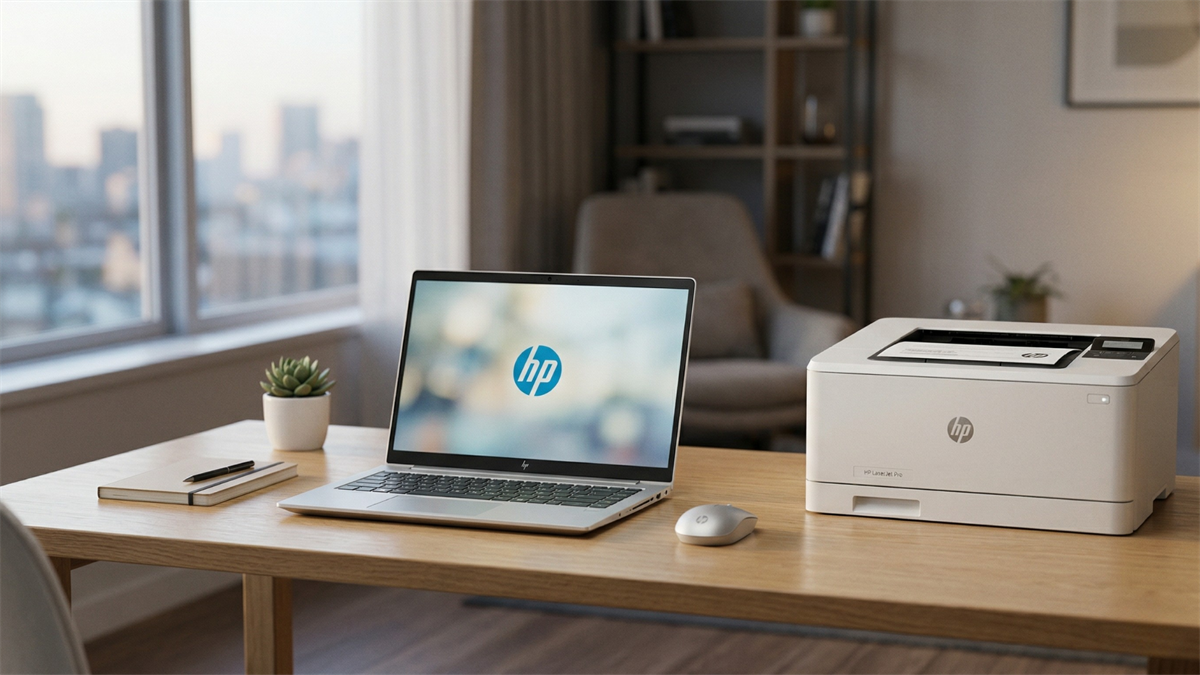
HP has moved aggressively to meet this coming demand, using its recent HP Imagine 2026 event to unveil a blueprint for the AI-powered workplace. This strategy is built on several key innovations:
- AI-Powered Commercial PCs: HP is now shipping a new portfolio of high-performance PCs engineered for demanding local AI workloads. This move is not happening in a vacuum; key competitors like Dell (NYSE: DELL) are also seeing strong momentum in that space, which validates the immense scale of the impending hardware trend and confirms that market-wide demand is building.
- Quantum-Resistant Security: In a forward-thinking move, HP introduced a new LaserJet printer portfolio with quantum-resistant security. This feature is designed to protect against the complex cyber threats that could emerge with quantum computing. For corporate buyers, where security is a top priority, this positions HP as a trusted partner capable of future-proofing their infrastructure—a key differentiator that can command premium pricing.
- An Intelligent Ecosystem: With software like HP IQ, the company is creating a connected experience that allows its devices to work together intelligently. This goes beyond a one-time hardware sale, creating opportunities for higher-margin software and services revenue while increasing customer loyalty within HP's ecosystem.
Why Wall Street's Caution Creates Opportunity
While HP builds hardware for the future, its stock valuation appears rooted in the past. This disconnect is where the investment opportunity lies. HP’s price-to-earnings (P/E) ratio stands at a modest 7.5 in late March. To put that into perspective, that number is a fraction of the S&P 500's average P/E ratio, which often sits above 20. This suggests that HP's stock trades at a significant discount compared to the broader market.
Beyond its low valuation, HP offers a powerful income component. The stock currently provides a solid dividend yield of 6%, or $1.20 per share annually, backed by a 15-year track record of consecutive dividend increases. HP has also demonstrated a commitment to shareholder returns through a significant stock buyback program. This shareholder-friendly approach contrasts sharply with the current consensus analyst rating of Reduce, with only two of 17 analysts covering the stock assigning it a Buy rating. Much of this caution stems from near-term headwinds, such as cyclical memory chip costs that pressure profit margins across the industry.
Furthermore, a notable level of short interest indicates that many are betting against the stock. However, for bullish investors, this can be a positive sign. High short interest creates the potential for a short squeeze, in which positive news can force short sellers to cover their positions, rapidly driving the stock price higher. This pessimistic sentiment is the primary reason for the stock's undervaluation, creating an opportunity for patient investors to buy into a solid company before the market recognizes its long-term AI catalyst.
A Unique Blend of Value, Income, and Growth
The widespread integration of AI into the business world is no longer a distant forecast; it is an active transition, and HP is supplying the essential tools for it. The company's strategic pivot toward AI-native PCs and enterprise-grade security positions it to capitalize on a durable, long-term growth trend that could redefine its revenue and profit streams for years to come.
The investment case rests on three solid pillars: (1) a clear strategic pivot into a massive growth market, (2) a fundamentally undervalued stock trading at a discount to its peers, and (3) a robust and growing income stream for shareholders.
While short-term market sentiment remains cautious, the underlying fundamentals tell a different story. For investors seeking a sensible, high-yield entry point into the next practical phase of the AI revolution, HP offers a compelling combination of value, income, and long-term growth potential that is increasingly difficult to find in today's market.
Where Should You Invest $1,000 Right Now?
Before you make your next trade, you'll want to hear this.
MarketBeat keeps track of Wall Street's top-rated and best performing research analysts and the stocks they recommend to their clients on a daily basis.
Our team has identified the five stocks that top analysts are quietly whispering to their clients to buy now before the broader market catches on... and none of the big name stocks were on the list.
They believe these five stocks are the five best companies for investors to buy now...
The article "HP Is Positioning Itself for the AI Gold Rush's Second Act" first appeared on MarketBeat.