On a recent stroll through trendy East London, 25-year-old operations associate Jay Dix noticed something uncanny: everyone was dressed just like him. Every matcha-carrying creative was parading a canvas tote bag from the U.S. budget grocery store Trader Joe’s, treating it with the reverence of a 24-karat gold Labubu doll.
“I was getting nods from fellow Trader Joe’s wearers on the street in London,” says Dix. “It’s like a members' club.” He had been collecting bags from the grocery store since 2022, on his annual visits to family in Los Angeles, and believed he was ahead of the curve. “I hate to be the 'I knew about them before they were cool person, but now everyone’s got them.’”
More than a social symbol, Dix says he was drawn to the bag because of its sturdiness. He praises its capaciousness, strong handles and chic design. “It’s an immense quality tote bag,” he adds. “It’s perfect as an overnight bag, or for summer when you want to pack picky bits and a blanket.” The merchandise has only deepened his affection for the store itself: he calls the Trader Joe’s shopping experience “a bit of a dream,” listing his favorite treats, including French onion soup-flavored popcorn and key lime pie tea cookies.
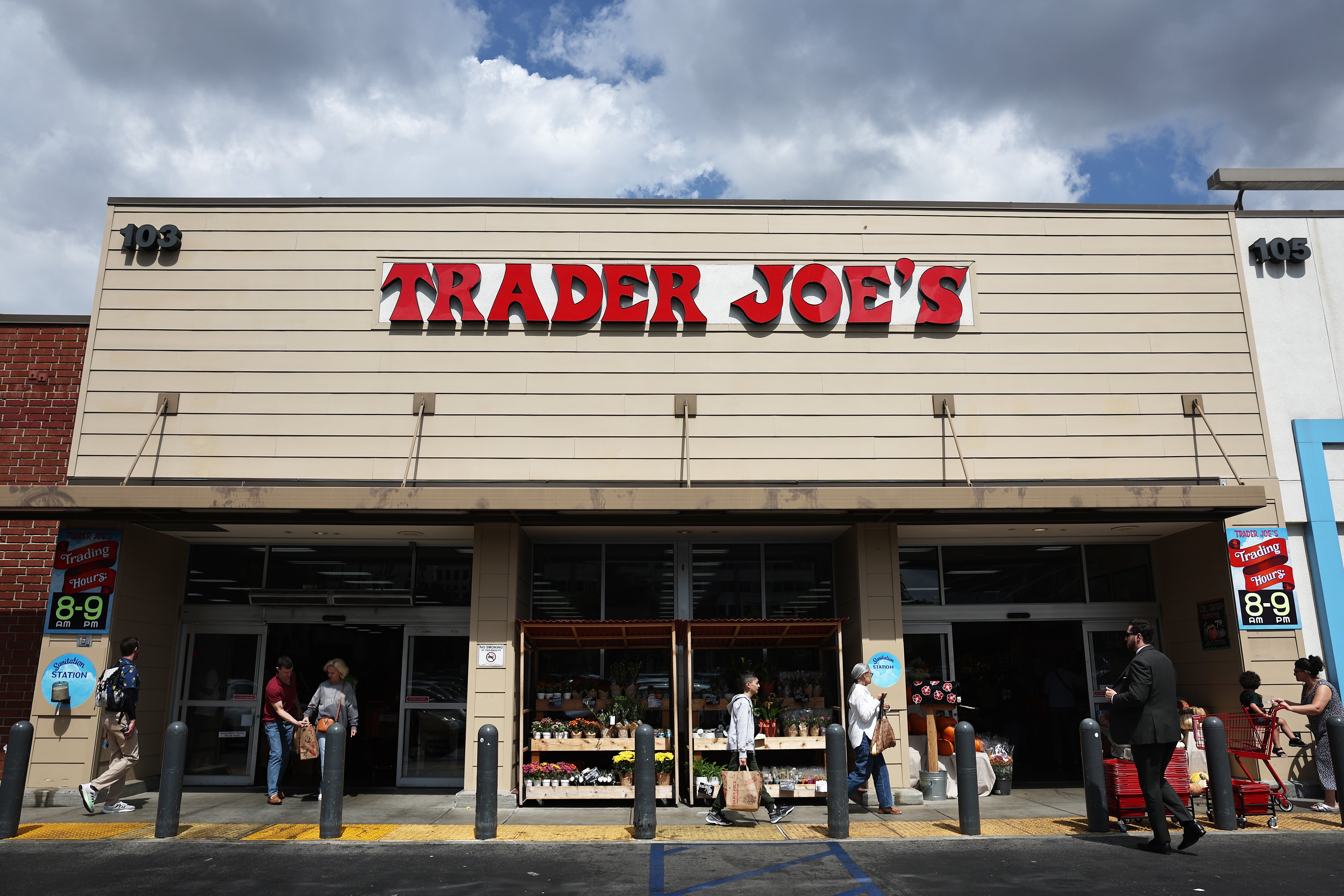
It’s a curious trend considering that Trader Joe’s, which has more than 600 stores across 43 states, does not have a single branch in the U.K. The craze for the bag itself has snowballed, with shoppers paying five times the retail price to secure one on eBay or begging their friends who visit the U.S. to score one (or several) on their behalf. Rare bags, such as the mini tote collection, have become collector's items among the TJ’s connoisseurs and are sometimes resold on eBay for more than $100. The trend has gone further than tote bags, too: Brits traveling to the U.S. now arrive armed with checklists of Trader Joe’s products to try and carefully curated snack pairings, compiled from blogs, Reddit threads, and YouTube videos created by devoted fans. Trader Joe’s isn’t a grocery store anymore; it’s an influencer. So how did we get here?
The Trader Joe’s appeal, in the U.K. at least, is a perfect storm of internet culture and modern consumerism. Estelle Keeber, a social media trends expert, tells me that the popularity of the bag taps into the psychology of scarcity, when something feels exclusive because it’s hard to get (on one side of the pond, anyway). “It gives off an effortlessly cool, ‘I travel, I know things’ kind of vibe,” Keeber tells me. “It’s also part of that wider trend of Brits wanting a piece of American culture here. You can’t just walk into a shop to buy one, and that makes it even more appealing.”
Tote bags are having a real moment in general. Particularly in London, the brands that you affiliate yourself with — via the logos displayed on your cotton holdall — have become a sartorial signifier of who someone is, or who they want to be. The rough social subtext goes like this: if you carry a bag from the Edwardian Marylebone bookshop Daunt Books, then you're well-read. A New Yorker tote has a similar effect. Donning merch from the U.K. record store Rough Trade will tell everyone you believe Vinyl is King. Garb from the popular matcha shop, Blank Street, will prove you’re down with Gen Z. The list goes on.
Trader Joe’s crept into that tote bag hierarchy to offer something new. Daniel Levine, a consumer and trends expert based in Oregon, tells me that Trader Joe’s symbolism in the U.K. speaks to a trend surrounding “imported exclusivity,” signifying that you are clued up on international internet culture. “It’s become the ultimate ‘if you know, you know accessory,’” he adds. “The bag says: ‘I'm in on the American joke. I'm worldly, but in a low-key, non-flash way.’”
Founded in Monrovia, California, in 1967 by the late Joe Coulombe, Trader Joe’s was initially envisioned as a counter to 7-Eleven convenience stores. Inspired by Coulombe’s travels in the Caribbean and a desire to make the store stand out, the first branch in Pasadena was given a nautical theme with marine objects, including fish netting, a ship’s bell and a rowboat. Employees wore Hawaiian shirts and Bermuda shorts. From there, the recipes at Trader Joe’s got more inventive as the years went on, exclusively selling its own-brand products and quirky snack options (peanut butter-filled pretzel nuggets, anyone?).
Trader Joe’s, as a brand, represents a specific version of American culture that Brits are fascinated by. Levine points out that this aesthetic is more “analog and old-timey” compared to U.K. grocery stores, which try to make their logos and store experiences extra digital. “UK grocery stores seem locked in a relentless high-tech war for loyalty, with Nectar points, clubcards and price matching,” he explains. “Trader Joe's has none of that.”
The nostalgic Americana aesthetic that comes with Trader Joe’s is a big part of the draw. Sophie Tighe, a strategy consultant living in London, said she bought her bag in 2019 because it reminded her of a “Martha’s Vineyard, Cape Cod, that kind of beachy vibe.” Tighe thinks that Trader Joe’s is the “best shop ever” and visits every time she goes back to the U.S., having lived there for a year during university. “I see so many people wearing them in London, but theirs are in such better condition,” she says. “Mine is so raggedy.”
Whether it’s nostalgia or aesthetic, a trend only becomes a global one when the subconscious human desire to belong starts to kick in. What you wear, drink, eat, or carry around with you will tell the world little details about you – and others will follow suit. “People use brands to show belonging, whether that’s being part of a trend, a lifestyle, or a set of values,” says Keeber. Attaching yourself to a brand, then, becomes less and less about the product it’s selling, and more about your personality.
There is, of course, only one Trader Joe’s. This type of cult obsession feels unlikely for another U.S. supermarket, let alone one in the U.K. (I cannot imagine a bunch of New Yorkers trotting around wearing bags-for-life from the British store, Tesco). As Levine points out: “You don't see Londoners clamoring for a Kroger or Safeway bag.”
He pauses. “Actually, I could see the bags from Wegmans becoming the next big thing…”
Apple fans perplexed after launch of $230 iPhone sock
The sparkling ‘Blue Mellon’ 9.51-carat diamond that just sold for millions at auction
Gordon Ramsay is wrong – ‘Mounjaro menus’ do work
Costco recalls nearly 1 million bottles of prosecco
Paris Jackson reveals drug use has left her with a perforated septum
Five ‘dodgy’ Black Friday sales tactics that retailers use to mislead consumers