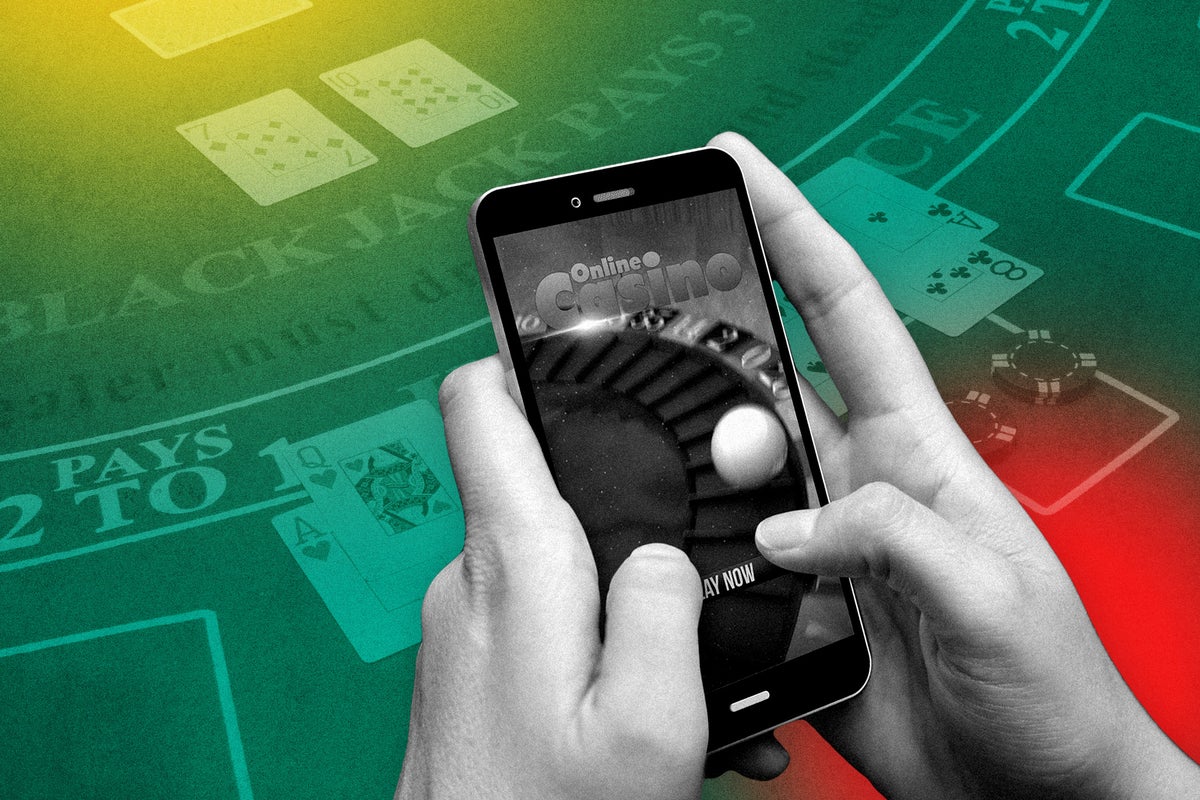
Blackjack continues to be one of the most popular casino games worldwide, with a huge range of variations available to play online.
Part of the reason that blackjack is so popular is that it is easy to learn, and while it requires both luck and strategy, players can quickly adapt to playing online and taking advantage of the full range of options at their fingertips.
Simply put, blackjack is a card game in which players compete against the dealer to have a hand closer to the value of 21, without going over that number.
It sounds simple, and it can be easy to get the hang of, but there are various things to learn before playing on online blackjack sites.
Below, we aim to help new players understand how to play blackjack, covering key terms, popular variations, the rules of blackjack and basic strategies to use online.
How to win at blackjack
The main objective of blackjack is to beat the dealer by having a hand value closer to 21 than the dealer’s.
However, you have to do this without going bust – this is the term given to a hand in which the total value exceeds 21.
The player does not need exactly 21 to win – they just need a hand that is higher than the dealer’s hand, but under 21.
Card values in blackjack
Now that you know how to win at blackjack, another one of the first key things to understand when learning how to play is the different values of each card.
We’ve provided a quick breakdown of card values below:
- Number cards (2-10): These are simply worth the same as the number of the card. So, a 3 is worth three, an 8 is worth eight, and so on.
- Face cards (Jack, Queen, King): These cards are all worth 10.
- Ace: An Ace can be worth 1 or 11 , depending on which benefits the player’s hand more.
How to play a hand of blackjack
If you want to know how to play blackjack at online casinos, here is a step-by-step guide to the process of playing a typical hand from start to finish.
1. Placing bets: Players begin by placing their bets on the table before any cards are dealt.
2. Dealing the cards: Each player and the dealer receive two cards. The players’ cards are dealt face-up, while the dealer has one card face-up (the “upcard”) and one card face-down.
3. Player’s turn: Players have several options on how to play their hand.
They can hit, which means asking for an additional card, or they can stand, which means keeping the current hand and end their turn.
Alternatively, they can double down, which means doubling the initial bet and receiving one final card.
If they are dealt two cards of the same value, they can split them into two separate hands and play them individually.
The final option is to surrender, which means to forfeit half your bet and end the hand (though this is only available in some games).
4. Dealer’s turn: After all players have finished, the dealer reveals their hidden card and plays their hand according to the house rules. Generally, the dealer must hit if their hand totals 16 or less and must stand on 17 or higher.
5. The outcome: If the player’s hand is higher than the dealer’s without exceeding 21, they win.
If the player exceeds 21 (busts), they lose, but if the dealer busts, any remaining players automatically win.
What is a blackjack?
A blackjack is the name given to a specific hand where the player’s first two cards total 21 (an Ace and a 10-value card). In this instance, the player wins immediately unless the dealer also has a blackjack, in which case the hand is tied.
5 key strategy points for blackjack beginners
When discussing how to play blackjack for beginners, it can help to know some beginner-friendly strategy tips to help players improve their chances of winning. We have listed some such tips below.
- When to hit or stand: Players should hit when their hand is low (for example, between 12 and 16) and they should stand on higher hands (17+), especially when the dealer shows a low card.
- Doubling down: Players should double down on strong hand, such as 11, when the dealer has a weak first card.
- Splitting pairs: Players should always split Aces and 8s, but never split 10s or 5s.
- Avoiding sucker bets: You should be warned against insurance bets, as they usually aren’t beneficial for the player.
- Bankroll management: Preserve your budget until you’re more experienced. When playing blackjack online use free games or casino bonuses to ensure you’re not betting much of your own funds.
Key terms every blackjack player should know
When learning how to play blackjack, it helps if you become familiar with a few common terms. We have compiled a list of these below.
Bust: Exceeding 21 and losing the hand.
Push: A tie between the player and the dealer, resulting in no win or loss.
Upcard: The dealer’s face-up card.
Hole card: The dealer’s face-down card.
Popular variations of blackjack
Blackjack has several popular variations, including versions such as:
European blackjack: In this version, only two cards are dealt to the player initially, with the dealer getting one card until all players finish their turns.
Spanish 21: This game is played without 10s in the deck, but with more player-friendly rules, like the option to surrender late on.
Rules for the dealer
As well as rules relating to the players and general play, there are specific blackjack rules for the dealer too. The dealer’s role is fairly self-explanatory, but in addition, they must follow strict rules, hitting on 17 or less and standing on 17 or higher.
These rules affect the game’s strategy, particularly in relation to player decisions, as the player must always keep in mind the likelihood of the dealer being forced into standing or hitting on the next round.
Blackjack payouts and odds
Basic payouts work in fairly standard ways in blackjack. A standard win is a simple 1:1 payout, in which you win the same amount as your bet. For example, if you put down a £5 bet, you’ll receive a total of £10 back, earning a £5 profit.
Traditionally, if you are dealt a blackjack, that lands you with a 3:2 payout, so you win 1.5 times your bet.
The odds of winning a particular bet depend on the cards you’ve been dealt so far, and you must also be wary of your odds of going bust.
For example, if your cards total 15 at one moment, the probability of going bust with the next card is ranked at 58 per cent.
Remember that all casinos apply a house edge, so the dealer will always hold the advantage and have greater odds of winning than you.
A typical house edge for blackjack is around 0.5 per cent.
Summary: How to play blackjack
Blackjack is a game of skill and chance. Understanding the rules, using basic blackjack strategy, and managing your bankroll responsibly increases your chances of enjoyment and success.
Remember there are key details you need to know before playing blackjack online.
These include card values, dealer rules and the process of the game.
Beginners should start by using free online blackjack games to build confidence before playing for real money.
Bear in mind some of the common blackjack tips for beginners, as well as some basic blackjack strategies, while playing, and above all remember to gamble responsibly and make use of safer gambling tools if necessary.
Responsible gambling
Gambling is only a form of entertainment, not a way to make money, so remember to never wager more than you can afford to lose, and take steps to remain in control of your budget.
The first of these steps should be to have a budget in mind and stick to it – remember to never chase your losses either.
If you need to, you can make use of responsible gambling tools that are available on gambling sites – these include self-assessment calculators, deposit limits, loss limits, self-exclusion and time-outs.
Apply the same principles whether you’re playing blackjack online, online roulette, online slots, or any other form of gambling.
If you wish to seek help for gambling-related issues, there are several charities and healthcare providers who offer support and information:
We may earn commission from some of the links in this article, but we never allow this to influence our content. This revenue helps to fund journalism across The Independent.