
With heatwaves set to continue through the summer, your bedding could be the difference between staying at a comfortable temperature at night, and feeling like you’re sleeping in an oven. For a more comfortable night’s sleep, it’s worth paying attention to the duvet’s tog rating (which stands for thermal overall grade).
Contrary to what you might think, the tog rating doesn’t refer to the thickness or weight. Instead, its tog actually means “how much heat it traps”, explains Hannah Shore, head of sleep science at Mattress Online. “The higher the tog, the more heat it traps and therefore the warmer the sleeping environment.”
Much like a mattress, pillow or bedding set, what makes a tog ‘right’ depends on the sleeper. Ultimately, Shore says there’s “no right or wrong answer”, and that what rating you opt for will largely “depend on how much of a hot sleeper you are”. That being said, you “might need different tog duvets for different seasons”, she suggests.
If you’re finding that your current duvet is making you too hot, particularly now summer’s in full swing, think about swapping it for duvet with a summer-specific tog. To find out what this would be, as well as how the tog rating system actually works and what options there are out there, I spoke to a number of experts.
Here’s everything you need to know about tog ratings and how to choose the right one for you.
Read more: Best summer duvets, tested on warm nights
How does the tog rating system work?
The tog rating system ranges from one (the lowest) to 15 (the highest). Most duvets come with a tog rating that indicates how warm the duvet will feel. These are standardised because every brand should use the same test.
While you might think a thicker and heavier duvet will be warmer and have a higher tog rating, this isn’t necessarily the case. “A seven tog feather and down duvet may look more plump and thicker than a seven tog polyester duvet; however, as the tog rating is the same, they will provide you with the same level of warmth,” Shore explains.
Read more: Best fans, tried and tested
How to choose the right tog rating
Your duvet tog will depend on the season and whether you’re prone to overheating. “We are all different, and some people are naturally more prone to overheating, so they might prefer a [lower] tog with windows open (even in winter) and minimal central heating in the bedroom during the day, while others need more warmth to sleep optimally,” says Dr Nerina Ramlakhan, physiologist and Land of Beds sleep expert.
Many duvets are available with different tog ratings. For instance, the top pick in our review of the best duvets, the Dorma full forever duo duvet comes with either a 4.5, 7.5, 10.5, 13.5 or 15 tog rating (£105, Dunelm.com), so you can choose which one will suit you best.
What is the best tog duvet for summer?
In the midst of a heatwave, many of us will be looking for a lower tog. As Shore explains, you should opt for a seven tog duvet or below in the summer. “If you find yourself struggling to sleep due to being too hot, or constantly sticking a leg out of the duvet to try and cool down, then try a lower tog duvet,” she advises. For people who are more affected by seasonal temperature changes, she suggests opting for a 4.5 tog or below in the summer.
Dr David Garley, GP, sleep specialist and director of The Better Sleep Clinic, explains that it’s important we don’t overheat in bed: “When you move from the wake phase to the sleep phase in your circadian rhythm, it’s marked by a drop in your core body temperature, around a half to one and a half degrees, so you want to be cool so you can make that transition.”
Simba summer hybrid duvet
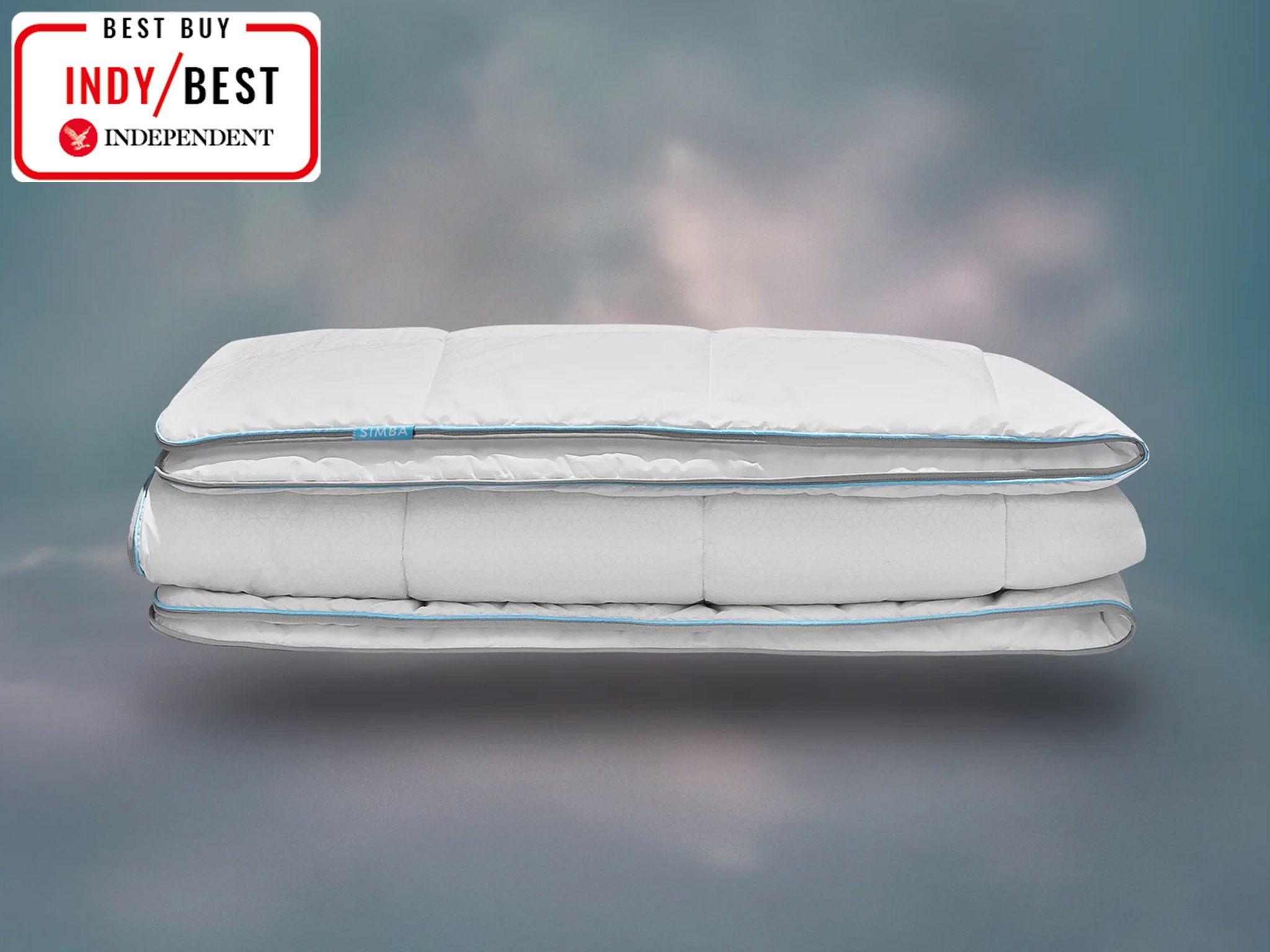
Dubbed the best summer duvet in our review, Simba’s summer hybrid covering has a tog rating of 4.5. The fabric is designed to “regulate your body temperature by absorbing and dissipating excess heat” our tester Sarah Jones explained, which proved effective in a heatwave. It kept Sarah “cool without making us feel cold”. She added: “Even during a muggy, no-breeze night, where sleep usually feels impossible, we didn’t wake up drenched in sweat or tossing around trying to find a cool spot.”
Buy now £179, Simbasleep.com
If you sleep hot, Dr Ramlakhan says “layering up can be a good option, so you can throw layers off”. She also suggests using a cooling device: “I always recommend a fan and a menthol stick that you can use on your forehead, so the fan’s blowing onto your face intermittently cools the brain down, artificially creating the illusion of being colder than you actually are.”
The duvet cover is also important when it comes to preventing overheating, as Dr Garley says that a too densely-stitched duvet covers can be hot.
What is the best tog duvet for winter?
It’s recommended to use a seven tog duvet or above during the winter. But, if you are particularly susceptible to temperature changes, then you should go for a 10.5 tog or above, and a 7.5 tog in spring and autumn. This isn’t a hard and fast set of rules, though, as they may vary depending on each individual's temperature.
Feeling cold at night can mean “it takes more time to fall asleep” and “cause muscle discomfort and even arthritic pain in older people, which inhibits sleep and causes more awakenings”, says Dr Ramlakhan. With this in mind, it’s well worth investing in a duvet that will help to keep you warm on chilly winter nights.
Dunelm Dorma full forever 15 tog winter duvet
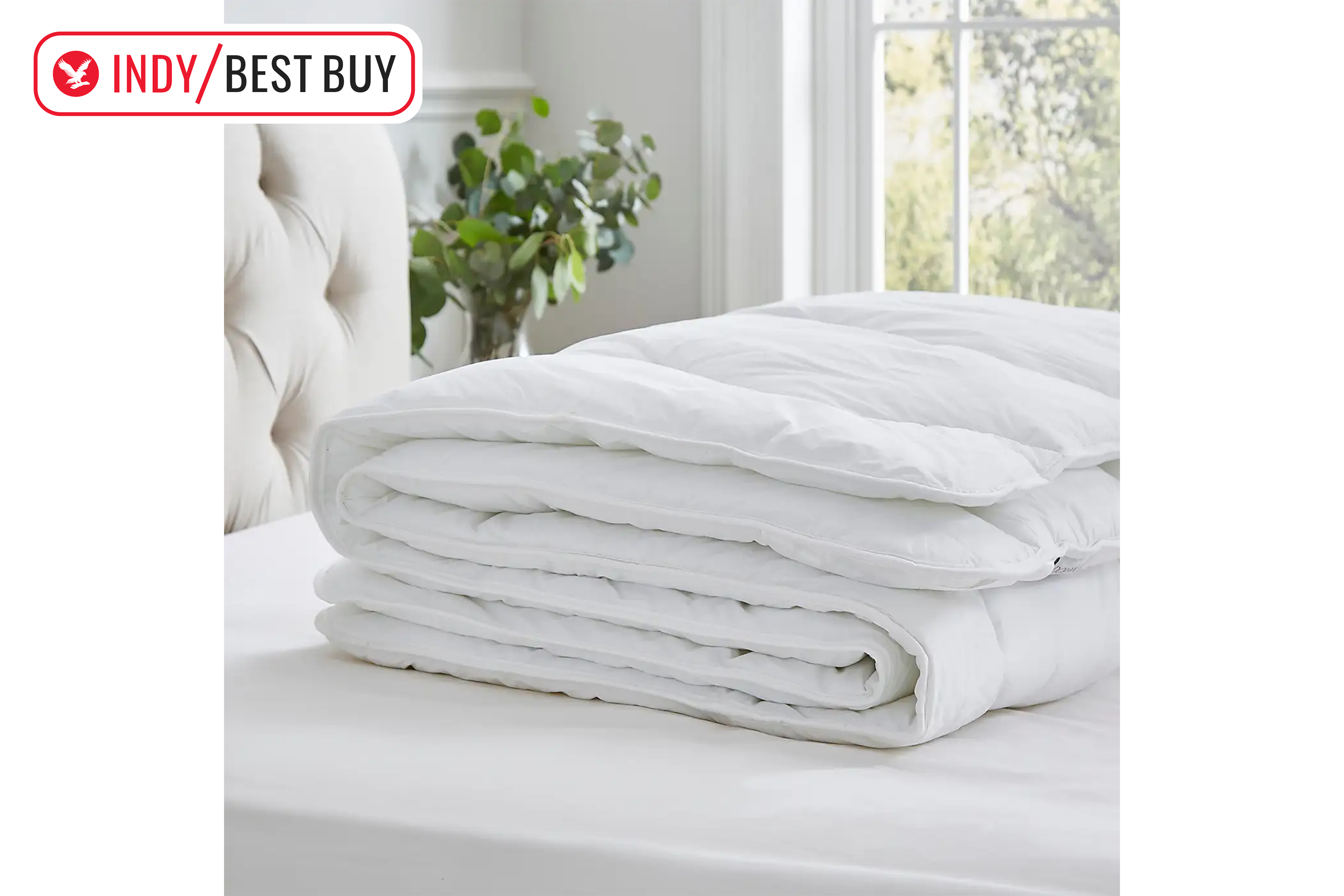
In our review of the best winter duvets, the Dunelm Dorma full forever came out on top. Sleep expert Sarah Jones tested the 15 tog, which “provides excellent warmth”. She notes that “while it is synthetic, it has a down-like feel and even has the classic rustle sound you’d expect from a natural filling.” It “feels weighty, which adds to the snug feeling of being enveloped, but also means it has a pleasingly chunky look when on the bed (hotel-level luxury at home is always a bonus)”, she praised.
Buy now £85, Dunelm.com
Do I need a duvet for every season?
Having multiple duvets isn’t always practical, and some brands offer all-season options. Simba’s hybrid three-in-one duvet (£349, Simbasleep.com) was dubbed the best duvet for all seasons in our review of the best duvets, and comes as a seven tog duvet for spring and a 3.5 tog duvet for summer, which you can put together in the winter.
As an alternative, you may want to consider layering. Shore suggests a “flat sheet, then a mid-range duvet (around 7.5 tog), then a blanket over the top, so you can just peel back or off a layer depending on the temperature”.
If you share a bed with someone else who has different warmth preferences, Dr Garley suggests wearing “thicker pyjamas” or “trialling two single duvets”. Similarly, Shore recommends also trying a dual tog duvet, such as the Silentnight yours and mine duvet (£49.99, Amazon.co.uk). These have different tog ratings for each side.
Read more: Best portable air conditioners, tested
How does the tog affect breathability?
While “natural materials usually tend to be slightly more breathable than synthetics when it comes to fabrics”, the higher the tog rating, the less breathable a duvet tends to be, regardless of the filling material, Shore says. “The higher the tog, the more air is trapped underneath [the duvet], the less heat escapes and therefore the warmer you are,” she explains.
Meet the experts
- Dr Nerina Ramlakhan – Physiologist, Land of Beds sleep expert and author of Tired But Wired , Fast Asleep , Wide Awake and The Little Book of Sleep
- Hannah Shore – Head of Sleep Science at Mattress Online
- Dr David Garley – GP, sleep specialist and Director of The Better Sleep Clinic
Read more: 12 best mattresses, tested by experts