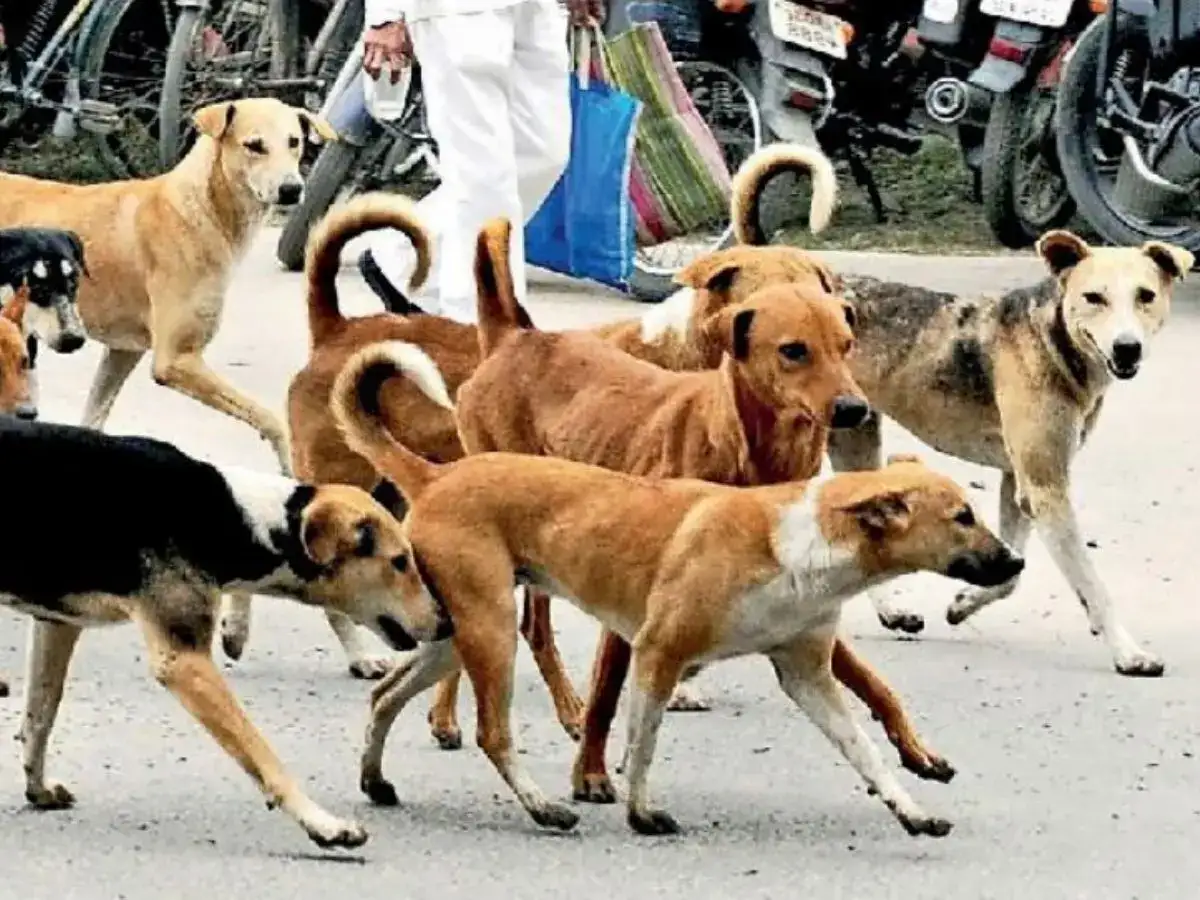
In a country where stray dog debates often spiral into fights between residents and animal lovers, one township in Ghaziabad has turned Ward No. 100 of the Ghaziabad Municipal Corporation into what officials say is the first civic ward across Uttar Pradesh’s 17 municipal corporations to achieve 100% sterilisation of community dogs, TOI reports.
The ward, largely made up of Shipra Sun City in Indirapuram, did not get there overnight. Residents say the journey involved months of surveys, heated discussions, mistrust, rescue teams, feeders, RWAs, NGOs, dog catchers — and even dogs clever enough to repeatedly escape sterilisation teams.
But today, many residents say the atmosphere in the township feels calmer than it did a few years ago.
How did Shipra Sun City sterilise all community dogs?
According to TOI report, councillor Sanjay Singh said the breakthrough came after a special dog-monkey committee was formed by the Shipra Sun City Owners Association.
The committee included both RWA members and animal welfare supporters — two groups that often clash during stray dog disputes.
Instead of working against each other, they began planning together.
Over six months, residents and officials surveyed 12 lanes of Phase 1 and identified 182 community dogs. The data was then shared with the Ghaziabad Municipal Corporation, which began phased sterilisation drives with support from animal welfare organisations including PFA, PETA and AIWB.
Of the 182 dogs identified, 102 were sterilised through the corporation’s programme. The remaining dogs, residents said, were adopted and sterilised privately by individuals or NGOs.
Why were residents and animal feeders working together?
People involved in the process say the biggest change was not just sterilisation — it was communication.
Initially, there was deep mistrust between residents troubled by dog attacks and people who regularly fed or cared for community dogs.
Committee member Ranjan Thakur said both sides slowly began understanding each other’s concerns, allowing the issue to be discussed “threadbare” for perhaps the first time in the township.
Dog feeders also helped authorities identify the exact locations, behaviour patterns and health conditions of dogs in the area.
According to committee member Vinda Chavre, the group realised that dogs were usually fed late at night and early morning in crowded movement zones — times when aggression and bite complaints were reportedly higher.
Feeding points were later shifted away from busy areas.
Were community dogs also adopted by residents?
Yes — and residents say that became a major part of stabilising the situation.
Animal welfare volunteer Dinesh Saini told TOI that more than 80 community dogs were eventually adopted and sterilised.
He himself adopted five dogs.
Residents adopting community dogs reportedly had to sign an undertaking under Animal Birth Control (ABC) Rules stating that the animals would not later be abandoned.
One of the names repeatedly mentioned by residents was Prabha, a local resident who had adopted nearly 25 community dogs before her death.
Her sister, Vidya Jaganath, told TOI, that the responsibility for those dogs was later taken over by the family, with the animals eventually shifted to a shelter home in Noida run by them.
Did sterilising stray dogs reduce conflicts and dog bite fears?
Several residents believe it did.
Lalit Pandey, who lives in Windsor Nova apartment, said arguments, police complaints, FIRs and tensions over community dogs were once common inside the township.
“There are many who still have FIRs lodged against them over the issue of community dogs,” he said, adding that bringing both sides together took significant effort.
Residents also say the dog population has now become more stable.
Nitin Mishra, a resident of Regal Apartment and father of an eight-year-old girl, said there was a time when he did not allow his daughter to play outside because of fear of dog attacks.
“Things have improved,” he said. “In the recent past I have not heard of any dog bite cases.”
Was the process completely smooth?
Not even close.
Councillor Singh recalled one dog in Lane 2 that repeatedly disappeared every time the dog-catching squad arrived.
“It took a week and five attempts before the animal was finally caught and sterilised,” he said.
But residents involved in the project say moments like these became part of a much larger effort — one where people who once argued daily over stray dogs eventually ended up coordinating together.
And in a country where stray dog conversations often collapse into outrage online, Shipra Sun City’s experiment stood out for a different reason: people kept talking to each other long enough to finish the job.