The first time I saw Bibhuti Nayak, he was being repeatedly kicked in the balls by a stranger on a TV documentary. The stranger was Paul Merton, whose Channel 5 series Paul Merton in India had taken him to Mumbai to meet some of the city’s most telegenic oddballs. At first glance, Bibhuti seemed to fit perfectly into this category. As Merton’s confidence grew and his kicks achieved a sure-footed snap – he’d kept his shoes on at Bibhuti’s insistence – the Indian man, observed with some pride by his 12-year-old son, slipped into what I can only describe as a kind of blissful trance.
Although his eyes were open and he was guiding his assailant to a peak of violence with a gentle, soft-spoken encouragement, it was clear that Bibhuti had travelled to a place where pain – and vanity and decorum and all the things that bind a man to his self – simply did not exist.
Watching this transformation unfold on my TV screen, entrenched as I was in my unremarkable English life, I found myself drawn to this man. Bibhuti accommodated Merton’s assault with such grace – shifting his stance to expand the target zone, accepting each kick with a benign smile – that my concerns for his safety and for his mental health were surpassed by admiration and even a degree of envy. I wanted to know what made him tick, and whether I could learn from him a route out of my own personal funk.
The following day I wrote Bibhuti an email. He replied promptly, and with good humour. He then began, quietly and with no motive of reward, to change my life.
That was six years ago. A lot has happened since then. I got married to the girl I once sat next to in primary school. I lost my brother to cancer and stood alongside my father as he battled against the same disease. I fulfilled a lifelong dream by becoming an author. My friend from across the seven seas – as Bibhuti enjoys describing himself – has been with me through every up and down. I can’t quite explain where our bond came from, or predict the future effects it might have on us. All I can say with certainty is that without him I wouldn’t be who I am.
In our initial email exchanges Bibhuti was guarded, bemused by the interest I showed in him. When it became clear that my intentions were sincere he took pleasure in relating to me his story. One of six children, he’d left his rural home in the eastern state of Orissa at the age of 12 because his parents could no longer afford to feed him. He lived on the streets, sustaining himself with odd jobs including selling cow dung cake (a rudimentary source of fuel for cooking) and working as a waiter in hotels while he completed his education. After earning his finance degree he went to Mumbai at the age of 21, and spent his first year there sleeping rough while seeking the dream of prosperity that lures so many Indians to the city.
With the tenacity that I would come to expect of him he worked his way up from a daily-wage labourer on construction sites to a sales executive, then to accountant and manager in an engineering firm. Eventually, and by a quirk of chance familiar to the lives of so many Indians, he became a respected journalist, writing for the Times of India. This came about because an editor had read Bibhuti’s report of one of the records he had broken and liked his writing style.
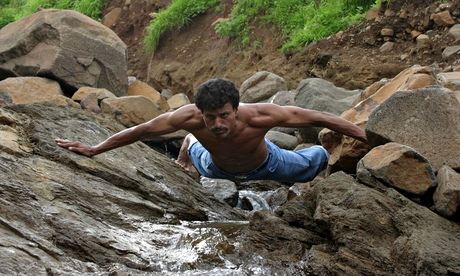
Bibhuti has been breaking records since 1998. He currently holds more than 20, under the banners of Guinness and Limca, its domestic Indian variant. His first – re-enacted for that Paul Merton documentary – was to be kicked 43 times in the unprotected groin by four of his martial arts students. No prior record existed, so Bibhuti could have easily stopped at a more modest number. But he doesn’t do things by half measures, and this is one of the qualities I admire most in him.
That first taste of success led to more records, ranging from the outlandish (having three concrete slabs broken over his groin with a sledgehammer) to the comparatively prosaic (fingertip push-ups, sit-ups and one-armed cartwheels). Bibhuti’s desire to test his own limits grows more fervent with each passing year.
From the very beginning of our relationship, our email and telephone conversations provided a valuable source of emotional sustenance. I first realised how important I’d become to Bibhuti when my brother died in 2011. I didn’t tell Bibhuti about it for some months, not wishing to bother him with my problems; his response was to berate me for not telling him sooner. He wanted to share the burden, and give me soothing words. “It is my duty as your friend,” he said, “to take good care of you.” I felt terrible then for offending him, but also comforted by the thought that a man thousands of miles away was looking out for me.
The care-giving has always been mutual. Whenever I heard about an injury or a setback in his training (he told me casually how he’d broken a leg while practising for a record attempt) I’d be beside myself with worry and would seek swift assurances that he’d take better precautions in future.
Perhaps it was the distance between us – physically and culturally – that gave us a fast-track to intimacy: it’s easier to express care and share secrets from the safety of our respective corners of the world. We’d tell each other things we wouldn’t have mentioned face to face for fear of breaking some taboo.
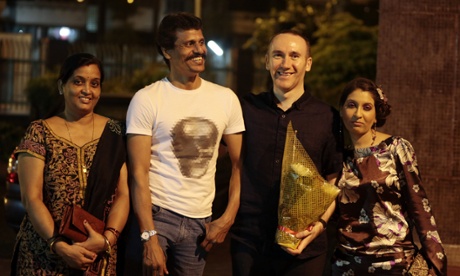
Thus Bibhuti came to share the journey I embarked on when, as a white non-Muslim, I fell in love with a Muslim woman I had known in childhood. When things got difficult, his gentle reminders of the heart’s durability were enough to keep me going. In return, I was called upon to give my advice when Bibhuti’s son began to lose his focus on his schoolwork. Bibhuti respected my opinion, and I rose to the challenge of being his counsel.
It is Bibhuti’s lack of cynicism that allows me to be myself with him. And I find this lack of cynicism all the more inspiring given the challenges he has faced. As he described it in our early emails, to be an Indian is to be constantly embattled by the brute forces of poverty, social injustice and the obscurity that inevitably darkens the life of one individual within a nation of a billion-plus. A way out of that obscurity is inconceivable for most. If you’re not a cricketer or a Bollywood star, then you’re nothing at all. It’s your destiny to remain anonymous and unacknowledged, to bow your head and wait for the rewards that the next life will bring.
But Bibhuti always had other ideas, and record-breaking became his outlet. In a nation full of unsung heroes, the idea that respect and reputation can be achieved as a record-holder has proved seductive; record-breaking has become a national obsession. It’s fitting that the world’s largest democracy should embrace this most democratic means of rewarding the efforts of those whose desire for recognition is usually disproportionate to their talent. So you’ll find among the annals of Indian records such feats as the world’s longest ear hair, the most hugs given in one hour, and the most worms eaten in 30 seconds.
Bibhuti is scornful of these. For him, record-breaking is an extension of his personal philosophy and a channel for the abilities he has mastered over years of training. Having taken up karate as a teenager, he dedicated himself to the pursuit of physical excellence and developed a mental strength that allows him to conquer pain.
When he chanced on a copy of the Guinness Book of World Records on a street stall during his first weeks in Mumbai, he had his lightbulb moment. He would put the skills he’d learned to good use, by attempting the unthinkable. In succeeding, he’d provide a potent example to his fellow downtrodden of what was possible through grit, determination and a necessary leap of faith.
Bibhuti is 50 now, and as recently as June he set another three records back to back, all within the span of half an hour. He asked for my words of support in the run-up to the event. On the day of the attempts I was a nervous wreck, waiting in agony until the message came through that he’d succeeded. He managed 71 alternate squat thrusts in one minute, 252 one-leg martial arts kicks in one minute, and 75 normal squats in one minute.
When I ask what motivates him, Bibhuti gives this simple reply: “I do what I do to show the common man that there is happiness on the other side of pain.” It’s a message which I reflect on whenever I face a challenge in life.
We have spent a few weeks together over the course of my two visits to Mumbai to date. On my last visit Bibhuti took me up to the roof terrace of his house and showed me how to hold myself. My posture and my breathing were all wrong and this was why I slept poorly and lacked energy. He told me to lie down on the floor and he proceeded to massage me. Feeling his hands on me, working my neglected joints back into line, I realised that love can be a gift freely exchanged between men, and that it can genuinely heal.
Later, on my last night with him in India, we watched a football match together. It was Mumbai City’s inaugural season in the newly formed Indian Super League and Bibhuti had secured free tickets because he knew the owner of the stadium. As the game wore on, Bibhuti grew quiet and solemn. Words began to fail me, too. We knew the time was fast approaching when I’d have to leave, and we didn’t know when we would see each other again.
When the game was over he drove me back to my hotel. We said our goodbyes in my room and we embraced. I told him I loved him and, to my surprise, he said it back. Then he left. I broke down and wept.
Twenty minutes later I received a text from him. He was still parked outside the hotel. He’d been crying, too, and couldn’t make the drive home until he’d collected himself. A man who could break a baseball bat over his shinbone had been broken by the prospect of my leaving.
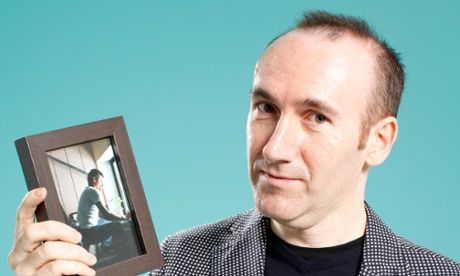
I keep a photograph of Bibhuti by my desk. I took it on that last visit: he is sitting on the steps of his home, writing notes for one of the six articles he files daily. He looks restful, at peace; but behind his eyes can be detected a deep sorrow for the struggles he has endured. A sorrow I have somehow, by a twist of fate, been able to provide some consolation for. I look at this photograph whenever I need a reminder that life is harder for others than it will ever get for me, and that life is full of riches that cannot be measured in any other currency than human friendship. That is what knowing Bibhuti has given me. Our friendship may have seemed improbable at first, but now I can’t imagine my life without it.
Man on Fire, Stephen Kelman’s novel inspired by Bibhuti Nayak, is published by Bloomsbury at £12.99. To order a copy for £10.39, go to bookshop.theguardian.com. To read the Observer’s review of the book, click here