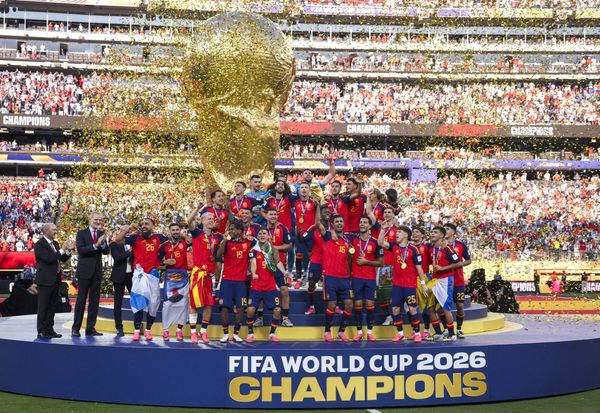
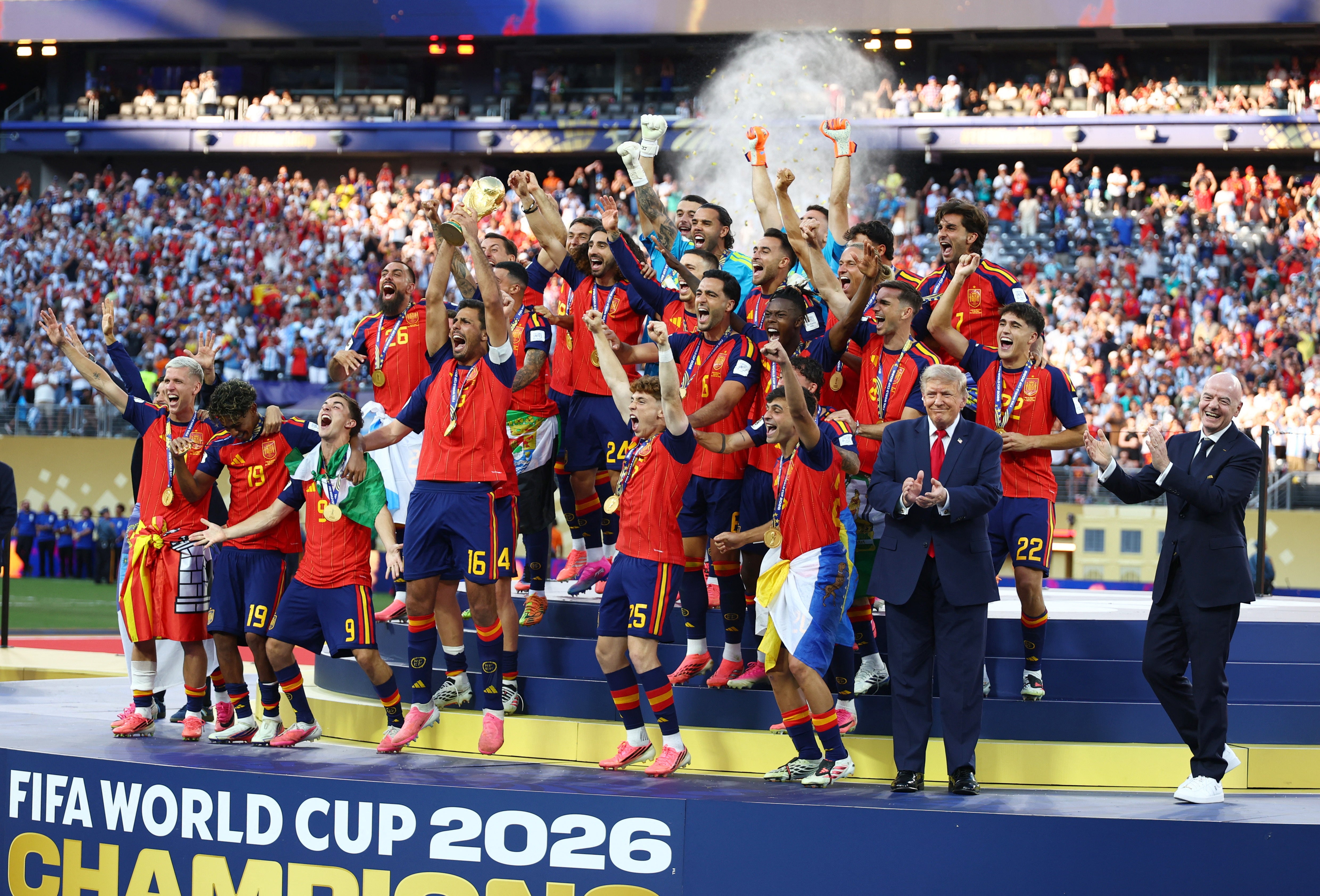
As the final whistle blew in New Jersey, Spain secured a World Cup triumph that briefly felt so inevitable, despite being almost two decades in the making.
16 years after winning their first World Cup, La Roja have a second star above their crest, courtesy of an infallible performance from Luis de la Fuente’s side in the 1-0 win over Argentina.
It was a scoreline that flattered the Albiceleste, despite the fact that Spain did not create as many chances as they could have given their dominance of the ball.
Argentina were poor on the whole, with even the genius of Lionel Messi unable to save them this time as a timid, abject performance played right into Spain’s hands.
Argentina could barely keep the ball, with their midfield and attack largely anonymous as Spain began to dominate. While the defence held firm during normal time, the attack was almost non-existent as the holders became the first team to ever have no shots after 90 minutes of a World Cup final.
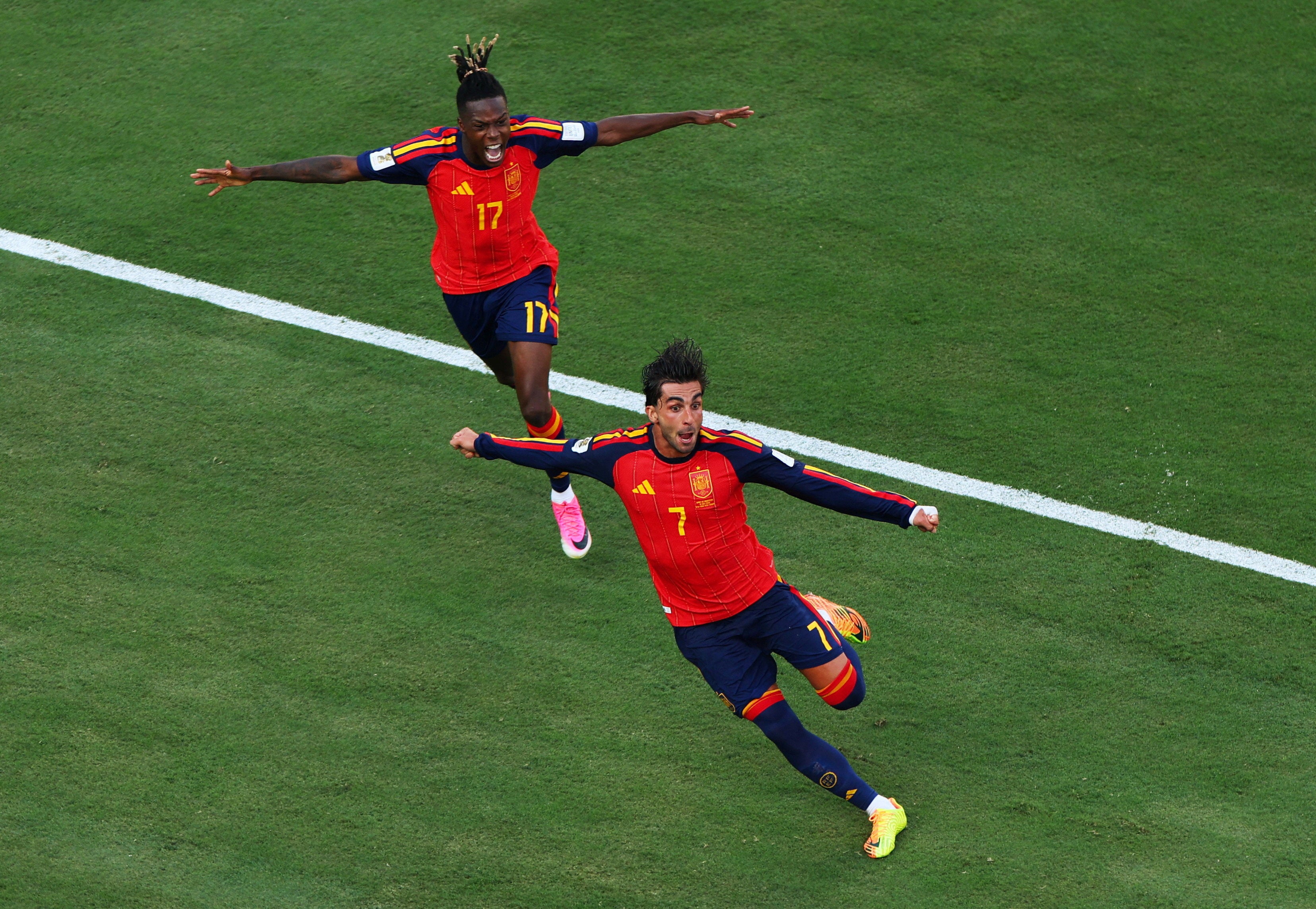
In the end, Enzo Fernandez’s ridiculous red card proved their undoing, and Spain needed no invitation from there. Rodri, Pedri and Nico Williams were particularly impressive, and the winger ombined with Ferran Torres to win it, his cushioned header setting up the Barcelona forward to rifle in an accomplished half-volley in extra time.
It was no more than Spain deserved, while Argentina’s anti-football performance also got its just desserts. But while Argentina were undeniably poor, this was more than just an off-day for one team. Rather, it was also an imperious display from a side that have proved themselves the best in the world in recent years.
Spain’s triumphant Euro 2024 campaign was similar to this World Cup, La Roja growing into the tournament before a brilliant display in the semi-final against France marked them out as clear favourites. These displays were partly down to having an exceptionally talented group of players, but they were also made possible by a clear footballing idea provided by an equally as gifted manager.
Of course, this is not a new idea. After the Euro 2024 campaign, De la Fuente spoke of having built “a team that was recognisably Spain”. Tiki-taka as we knew it was no more, but the manager – who had previously managed Spain teams at junior levels – had tinkered with it to develop his own brand. Tiki-taka 2.0, perhaps.
Spain’s dizzying ability to keep the ball is still a hallmark of their way of playing, and it was on show throughout the 120 minutes of Sunday’s final. The skill and composure of Aymeric Laporte and Pau Cubarsi is pivotal to a team who insist on playing the ball out from the back, while the role of the full-backs to serve as extra men in the final third, to “join from deeper lines” when necessary.
That was on show when Porro grabbed an impressive second in the win over France, and it could be seen today as himself and Cucurella operated in both wide and more central areas in the final third, with Porro picking up the ball inside the winger before delivering the cross that led to Torres’ goal. Rodri is the man tasked with keeping things ticking in the middle, but this is a Spain side who like to be more direct when possible.
In Dani Olmo, they have a capable attack-minded midfielder for more central areas, while Lamine Yamal is the obvious focal point on the wing. While he was unusually quiet in New Jersey, it only needs one moment to make it count. De la Fuente has previously spoken about “generating overloads in different areas of the pitch”, and Yamal and Porro did this repeatedly throughout, eventually leading to the winner.
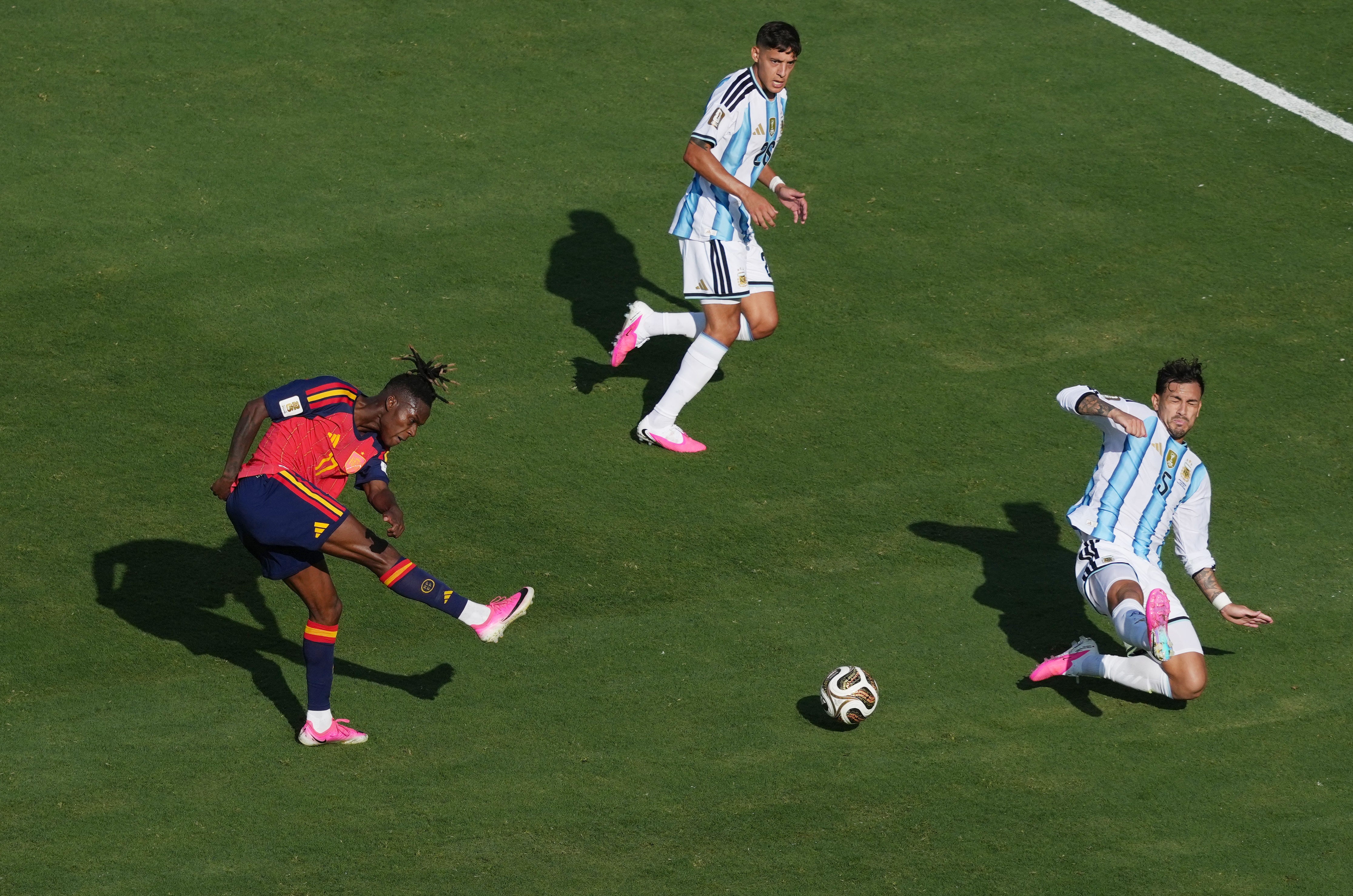
At the same time, Alex Baena had struggled on the other wing and De la Fuente eventually decided to introduce Nico Williams as he returned to an even more direct way of playing. The Bilbao man also helped change the game, almost opening the scoring himself and seeing a goal disallowed before grabbing the assist for Torres.
It was an attacking display that showed that Spain can hurt teams “with possession, with positional attacks built with many passes”, but while they impressed with the ball at their feet, the win over Argentina was also notable for their defensive display, and indeed how it aids the attack.
This is a side that is set up to win the ball back as quickly as possible, and Rodri was the main instigator in New Jersey he terrorised the Argentina midfield, sweeping up every loose ball.
His team-mates certainly contributed too, with none of the Argentina midfield able to get a sniff in possession as Fabian Ruiz, Dani Olmo and the back four also carried out beautifully co-ordinated their counter-pressing.
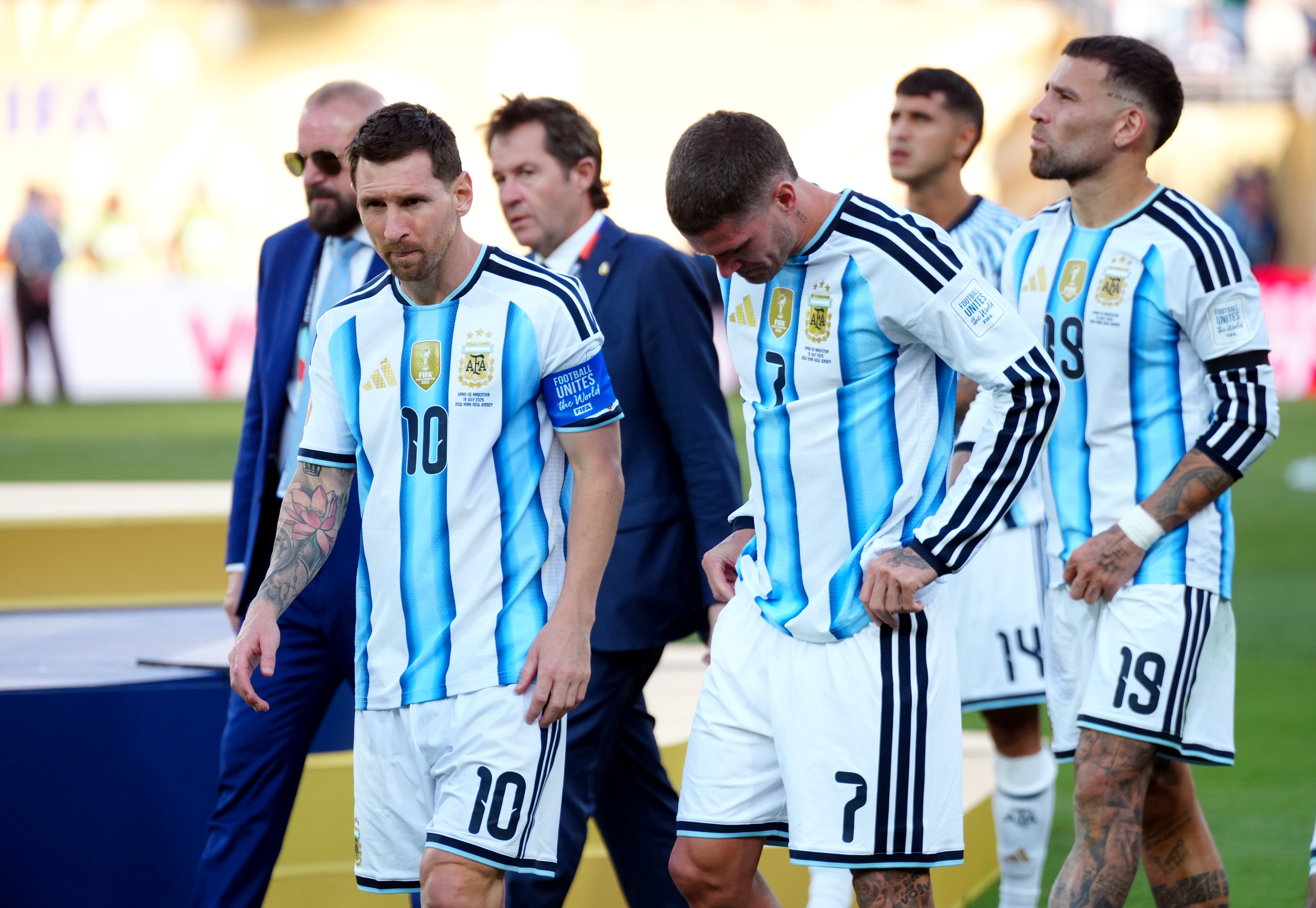
It meant that Argentina were stifled in what was a lesson in how to nullify opposition attackers, with even Messi struggling as Julian Alvarez, Nico Gonzalez, Alexis Mac Allister and Fernandez were unable to get into the game in forward areas. Spain were not threatened once in normal time, and were barely troubled in extra time either.
And while De la Fuente could have been unhappy with a lack of clear-cut chances for his side at one point, Argentina’s defensive display seemed to just be delaying the inevitable, and the Fernandez red card made a likely win feel like a certain one, even if it did require Torres to deliver the finishing blow.
In the end, it was a near-perfect display from La Roja as they won a second World Cup, with the country’s pre-eminent footballing ideal once again serving as a platform for success on both the European and world stages, as it did between 2008 and 2012. Since then, many teams have tried to imitate that great side. In blending it ideas with his own, De la Fuente has taken Spain to the promised lance once more.