Linsey Ewing's relationship with words began long before publication credits or structured creative programs entered the picture. According to Ewing, reading and writing were constants throughout her life, shaping not only how she learned but how she understood the world around her. Her academic path followed that devotion closely, grounded in English and Western literature, with advanced study continuing toward doctoral work. "I'm a lifelong journaler and meticulous note-taker, someone who instinctively records observations, ideas, and fragments long before they become formal creative output," she says.
Although writing was always present, Ewing explains that fiction arrived later, emerging in the mid-2010s through a structured creative challenge that emphasized consistency over perfection. She explains returning to the exercise multiple times before completing a full manuscript, an experience that taught her as much about endurance and process as it did about storytelling. That first completed novel, Variations on the Theme of Goodbye, eventually became her debut publication in 2021. Since then, she has released work on a steady cadence, with new projects continuing to develop on a multi-year timeline. Reflecting on that period, Ewing notes that learning how to finish was as significant as learning how to begin.
Over time, Ewing began to recognize patterns in her own creative process that extended beyond personal practice. From her perspective, many aspiring writers and artists are not lacking ideas, but rather clarity around structure, timing, and momentum. "That realization crystallized when fellow writers asked for my guidance on completing their own projects," she says. "One early collaboration, which involved long-term accountability and incremental progress, reinforced my belief that creative blocks are often situational rather than permanent."
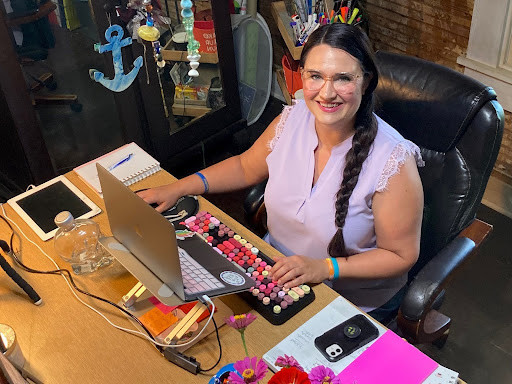
That philosophy now informs the creative coaching work Ewing offers today. She currently supports creators through several structured programs she developed based on her own process, beginning with "Living Write." According to Ewing, the program focuses on helping participants complete a draft by building realistic routines around handwriting practice, scheduling, workspace preparation, and progress tracking. Rather than prescribing rigid output targets, the program emphasizes alignment between creative goals and daily life, with deliberate space for rest and acknowledgment along the way.
Once a draft exists, Ewing explains that the work shifts from creation to discernment. Her second program, "Edit Sober," addresses the revision phase, which she views as emotionally distinct from drafting. From her perspective, effective editing begins with distance. Participants are encouraged to step away from their work, return with fresh eyes, and move through revision systematically, cleaning language, identifying patterns, and reorganizing material based on what serves the project. Ewing frames revision as an act of clarity rather than correction, where decisions are made intentionally about what belongs and what does not.
For creators who feel stalled at any point in the process, Ewing offers a longer-term, individualized program called "Finish It." She explains "Finish It" as an accountability-based coaching framework designed to support creators over several months as they move from uncertainty toward completion. According to Ewing, this work centers on three core areas: mindset, time structure, and planning for what comes after the work is finished, allowing clients to make progress without forcing urgency. "The goal is not pressure," Ewing explains. "It's a steady forward movement that fits real life."
While her background is rooted in literature, Ewing does not limit her framework to a single medium. She hosts a weekly online creative session where participants gather simply to work alongside one another, regardless of format. From her perspective, the underlying challenges of creativity, hesitation, overthinking, and interruption tend to appear across disciplines. She believes that addressing those shared obstacles allows creators of different kinds to benefit from similar structures and habits.
In addition to her coaching programs, Ewing also works directly with writers and creatives through writing and editorial services, supporting projects at various stages of development. From her perspective, close editorial work offers a different kind of insight, one that allows her to meet creators inside the work itself, rather than around it. She explains that this combination of coaching, accountability, and hands-on editing gives her a fuller understanding of where creative momentum tends to stall and how it can be restored.
As she continues to expand her educational offerings, including introductory creative writing resources and guidance around publication pathways, Ewing remains focused on helping creators build sustainable relationships with their work. "Writing is often treated as something you should do alone," Ewing says. "But progress usually happens when someone is willing to sit with the work and take it seriously with you."