Tulsa, Oklahoma-based Helmerich & Payne, Inc. (HP) is a premier global provider of high-performance contract drilling solutions and technologies for the oil and gas exploration and production sector. It is valued at a market cap of $3.8 billion.
Companies valued at $2 billion or more are typically classified as “mid-cap stocks,” and HP fits the label perfectly, with its market cap exceeding this threshold, underscoring its size, influence, and dominance within the oil & gas drilling industry. By combining physical drilling assets with cloud-based optimization platforms and trained operational crews, HP provides precision wellbore placement, automated equipment control, and enhanced operational efficiency that helps energy producers lower their extraction costs and mitigate safety risks in high-pressure drilling environments.
This energy company is currently trading 6.4% below its 52-week high of $41.82, reached on May 19. Shares of HP have rallied 12% over the past three months, considerably outperforming the Invesco Oil & Gas Services ETF’s (PXJ) 7.4% uptick during the same time frame.
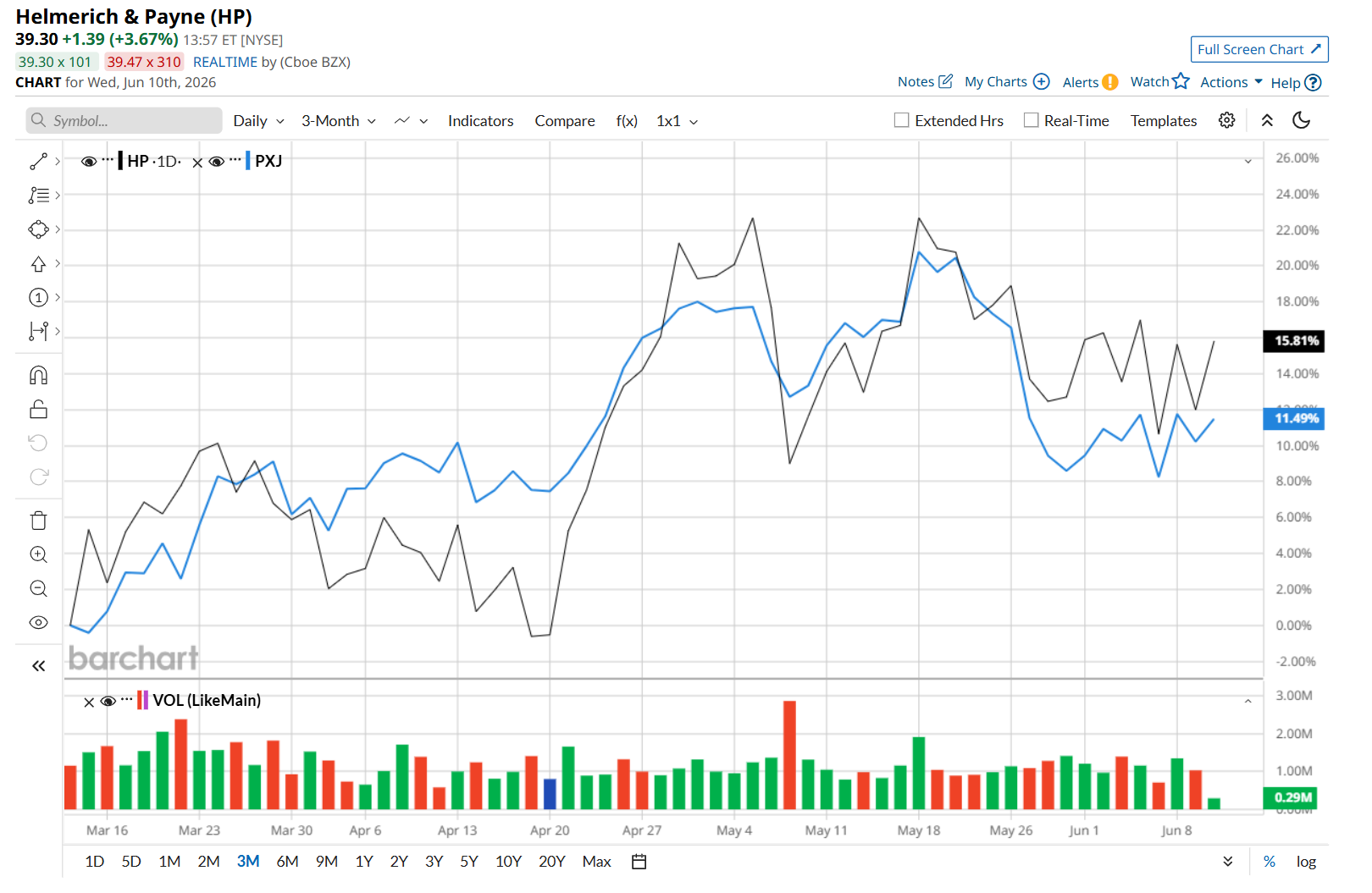
In the longer term, HP has soared 107.4% over the past 52 weeks, significantly outpacing PXJ's 72.3% return over the same time period. However, on a YTD basis, shares of HP are up 36.5%, lagging PXJ’s 47.4% rise.
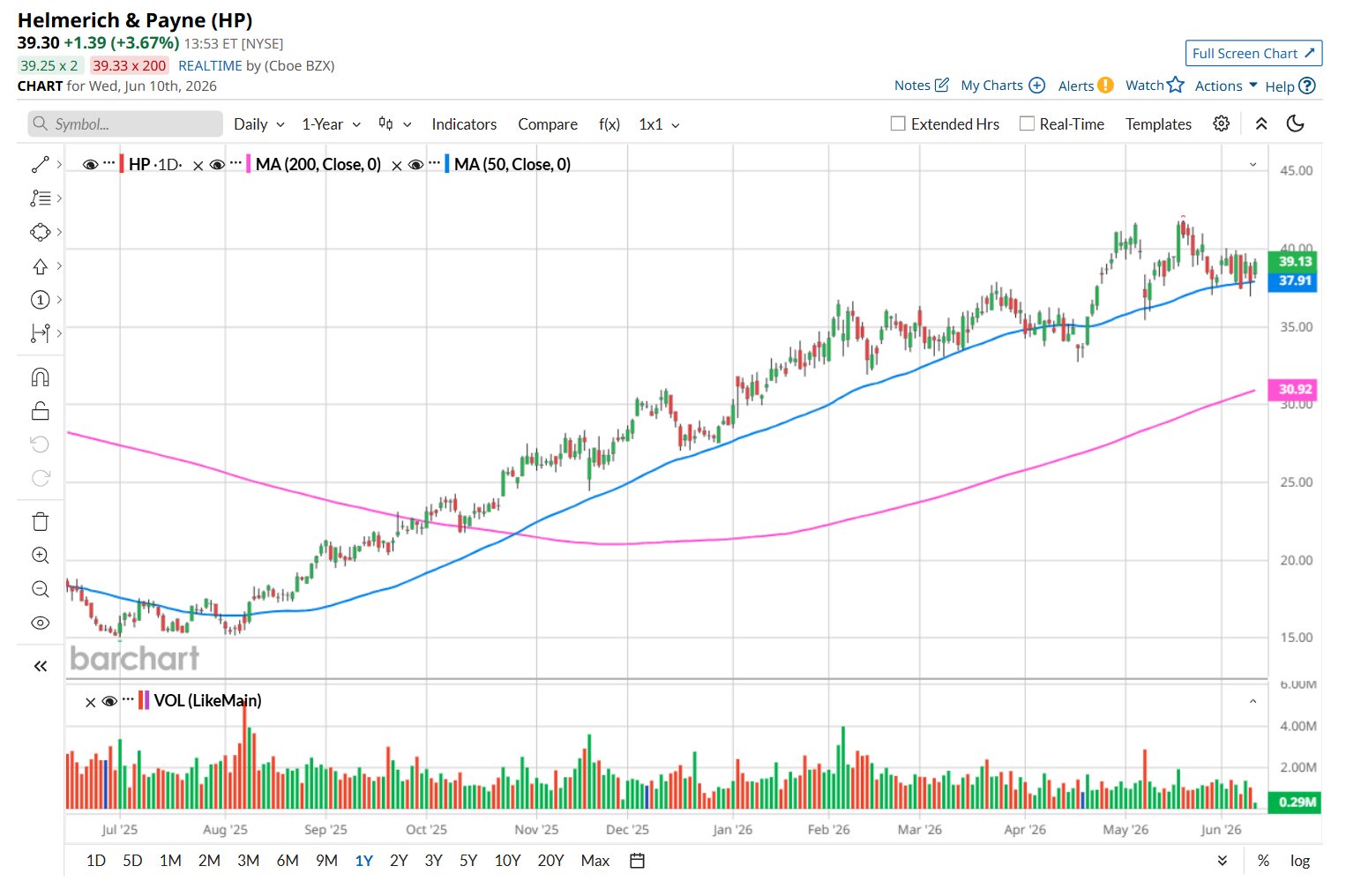
To confirm its bullish trend, HP has been trading above its 200-day moving average since late September 2025 and has remained above its 50-day moving average since early August 2025, with slight fluctuations.
On May 6, HP delivered weaker-than-expected Q2 earnings results, and its shares plunged 7.4% in the subsequent trading session. The company’s revenue fell 8.2% year-over-year to $932.4 million, missing analyst estimates by 1.5%. Moreover, its adjusted loss of $0.38 per share also fell short of consensus expectations. HP’s quarter was marked by operational disruptions stemming from conflict in the Middle East, which contributed to the company’s underwhelming performance. Management cited increased costs and rig suspensions in Iraq and Bahrain, along with supply chain constraints, as the primary drivers behind the underperformance.
In the competitive arena of oil & gas drilling, HP has underperformed its rival, Nabors Industries Ltd. (NBR), which rallied 204.5% over the past 52 weeks and 89.8% over the past 52 weeks.
Given HP’s recent outperformance, analysts remain moderately optimistic about its prospects. The stock has a consensus rating of "Moderate Buy” from the 16 analysts covering it, and the mean price target of $42 suggests a 6.8% premium to its current price levels.