
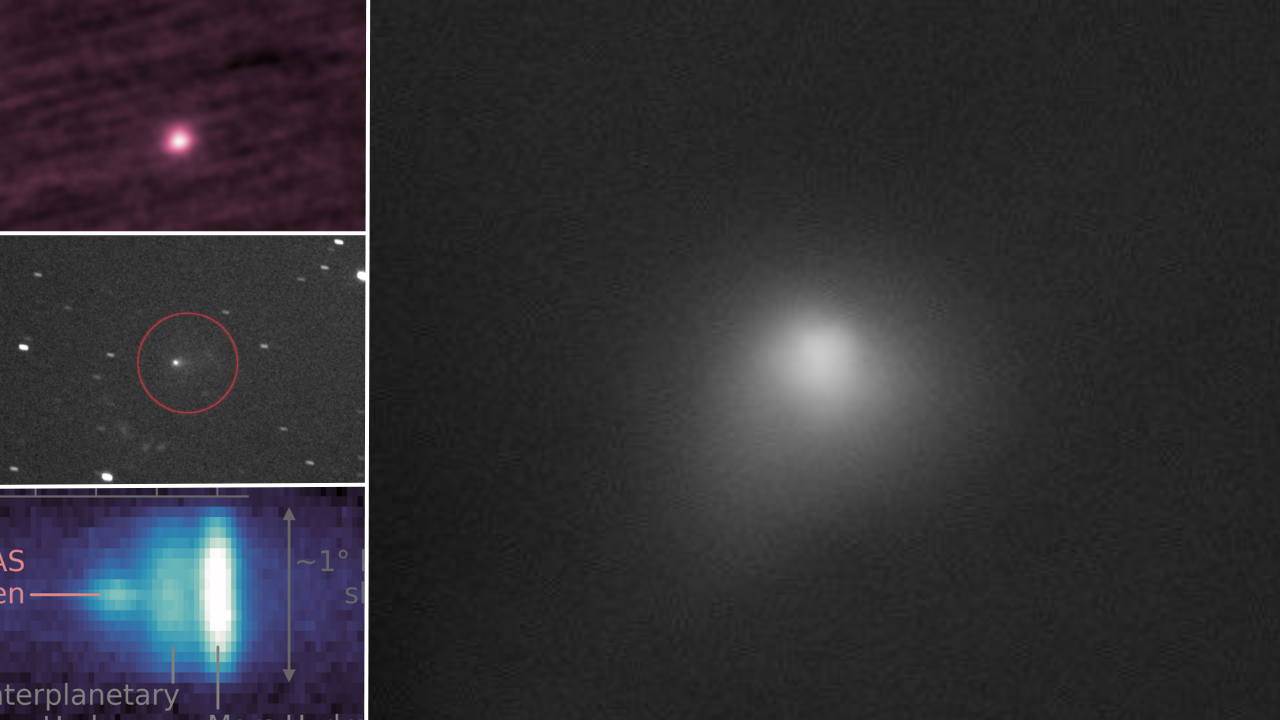
It came from outer space. Interstellar space, to be precise. From somewhere beyond the influence of our sun, possibly from one of our Milky Way galaxy's most ancient stars, one that formed long before our own sun and solar system. We may never know for sure.
Interstellar comet 3I/ATLAS was discovered on July 1, 2025, by the NASA-funded ATLAS survey (Asteroid Terrestrial-impact Last Alert System) in Chile, a network of telescopes that scans the entire sky multiple times each night looking for moving objects that might pose a threat to Earth. Within hours, astronomers around the world were thrilled by the discovery: the object appeared to be the third-known interstellar object to pass through our solar system, behind 1I/'Oumuamua in 2017 and 2I/Borisov in 2019.
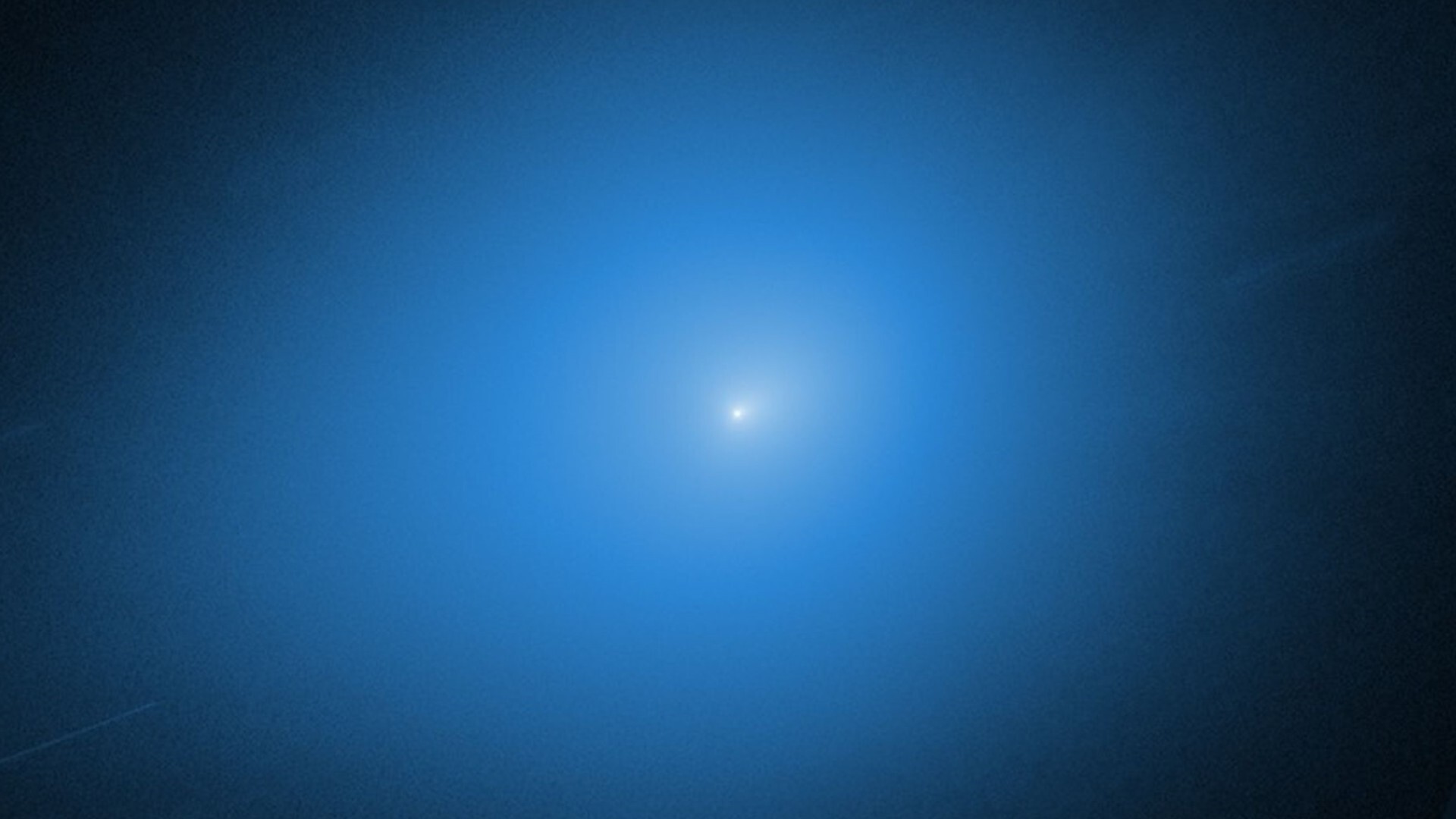
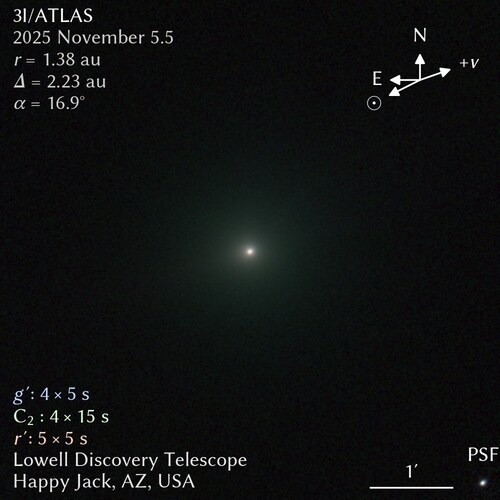
Such visitors offer astronomers a rare opportunity to study objects that may be unlike anything found in our own cosmic neck of the woods. But within months, observations from some of Earth's most powerful telescopes as well as multiple spacecraft and observatories in orbit revealed 3I/ATLAS to in fact be much like comets from our own solar system: it appears to have an icy nucleus surrounded by a coma, a bright cloud of gas and dust that sublimates away from the nucleus as the comet approaches the sun and warms up.
Nevertheless, in what may be indicative of the post-truth age and influencer-dominated media landscape we now live in, a feeding frenzy of sensationalism and misinformation sprang up around the comet throughout the latter half of 2025. Claims that 3I/ATLAS might be an alien spacecraft or some form of extraterrestrial probe spread rapidly throughout social media within weeks of its discovery.
Cable news channels caught on. Kim Kardashian published a viral request on X imploring acting NASA administrator Sean Duffy to spill the "tea" on the object. Even members of the U.S. Congress got interested, writing letters to implore NASA to release whatever data it may have on the comet.
How, or why, did this interstellar comet generate such mainstream interest and capture the public imagination throughout 2025? Where did all of the sensational claims come from?
"It all came during the shutdown"
For one, it came down to timing.
Qicheng Zhang, a postdoctoral fellow at the Lowell Observatory in Arizona and author of a study of the comet's brightness as it approached the sun earlier this year, said that because 3I/ATLAS was discovered months before its closest approaches to the sun and Earth (unlike the previous two interstellar objects), there was much more of an opportunity for misinformation to spread.
"That seems to have given it a whole lot of extra time for conspiracy theorists to run wild and drum up attention before their unsubstantiated predictions are disproven to the extent they can ever be and people lose interest," Zhang told Space.com.
Another aspect of the timing of the comet's discovery centered on the fact that the U.S. government was shut down from Oct. 1 to Nov. 12 as Congress deliberated over funding appropriations for the 2026 fiscal year. During that time, many NASA operations were paused, including most public affairs agencies that would normally issue press releases and answer questions from the media and the public.
But during that time, the comet was also racing through the solar system. On Oct. 2, NASA's Mars Reconnaissance Orbiter took images of 3I/ATLAS with its HiRISE camera, which, given the instrument's resolution, were thought to be the best opportunity astronomers had to nail down an estimate of the comet's size.

In the vacuum of any official information from NASA, unofficial theories flourished, particularly ones that accused the space agency of using the shutdown to hide the "true" nature of the comet, said Larry Denneau of the University of Hawaii, who discovered 3I/ATLAS.
"Unfortunately, it all came during the shutdown," Denneau told Space.com. "And so that created its own complications, because the folks out there, who, you know, are conspiracy bent, thought NASA was trying to hide something."
In fact, when asked about why the comet became such a mainstream topic throughout 2025, most of the sources Space.com spoke to had one singular answer: the Frank B. Baird, Jr. Professor of Science at Harvard University, Avi Loeb, who served as the chair of Harvard's astronomy department from 2011 to 2020.
"The public laps it up"
In July, just weeks after the comet's discovery, Loeb published a non-peer-reviewed paper on the open source repository arXiv, arguing that the comet's characteristics suggest it might actually be alien technology. Loeb later wrote that images of 3I/ATLAS were "held hostage for bureaucratic reasons at NASA" during the shutdown.
The claims spread like wildfire, and within weeks, the comet was dominating headlines and social media feeds. But many astronomers were baffled by the attention 3I/ATLAS was receiving.
"It doesn't help that we have a Harvard professor who's out there, you know, saying that this thing could be an alien spacecraft or this doing all of this weird stuff," Denneau told Space.com. "That's a whole thing in itself. Why is Avi Loeb doing that? It's kind of a mystery to some of us in the field," Denneau added.
Mick West, a science writer who has published books on how to debunk sensational claims, echoed the comet's discoverer. "It's because of Avi Loeb," West told Space.com. "His unremitting push, combined with the gravitas of his Harvard professorship, makes it an easy sensational story for the media. He has many technical critics who point out (with the math) that it's almost certainly just a comet.
"But that's boring, so the media goes with 'Harvard astrophysicist says alien probe' and the public laps it up."
Space.com reached out to Loeb to ask why he thought the comet captured so much public interest throughout the year.
"My explanation for the viral interest in 3I/ATLAS involves its anomalies, as listed in my essay," Loeb said via email. "My essays received more than 5 million views over the month of November, and my interview on the Joe Rogan Experience received more than 7 million views for the same reason."
Loeb previously wrote that "seeking scientific data is key to learning the truth" in a blog post criticizing NASA for not releasing its data on 3I/ATLAS during the government shutdown. "By staying curious and humble while collecting clues in this detective story, science brings us together. When egos get in the way, politics and social media set us apart."
"Not too much is unusual there"
As more imagery and observations of 3I/ATLAS continue to be made, scientists aren't focused on these anomalies, but instead say the comet appears to be just that: a normal comet.
"You kind of know the signatures that you're looking for; we were quick to be able to say, 'Yep, it definitely behaves like a comet,'" Nicky Fox, associate administrator of NASA's Science Mission Directorate, said during a Nov. 19 press briefing during which the agency released imagery of 3I/ATLAS. "We certainly haven't seen any technosignatures or anything from it that would lead us to believe it was anything other than a comet."
Other astronomers have said the same. "We can see how much of each particular gas the comet is emitting and compare it to the gas coming out of solar system comets," Zhang said in a Lowell Observatory statement this month. "And so far, those ratios fall within the fairly typical range that we're seeing for solar system comets. So, not too much is unusual there."
Likewise, a new study published in Research Notes of the AAS based on observations by two different interplanetary spacecraft, NASA's Psyche spacecraft and Europe's Mars Trace Gas Orbiter, was able to calculate the non-gravitational acceleration 3I/ATLAS exhibited as it approached the sun caused by gases escaping its frozen shell. It found that 3I/ATLAS behaves as scientists expect a comet should.
"The results are pretty typical of ordinary comets, and certainly not record-breaking," lead author T. Marshall Eubanks told SpaceWeather.
But in a blog post in November 2025, Loeb criticized the "violent insistence of comet experts" that argued the acceleration was caused by this ordinary outgassing, "rather than thrusters on a spacecraft."
"Always an uphill battle"
The mainstream interest in 3I/ATLAS appears to have waned, but Earth-based telescopes and space-based observatories continue to study the comet.
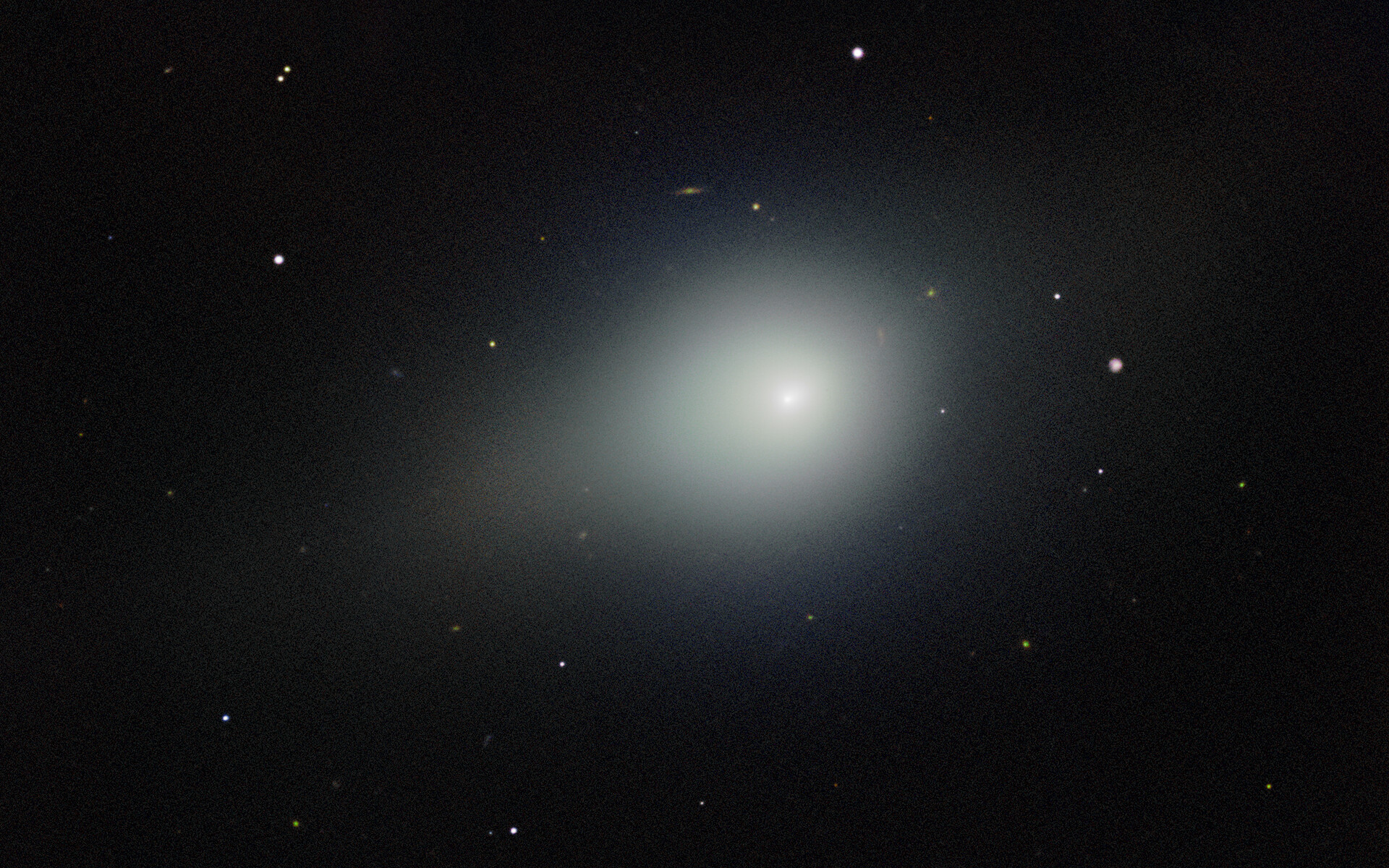
Scientists working with the Gemini North telescope in Hawaii captured new images of the comet just after its close pass with the sun in late November.
Two European X-ray observatories, XMM-Newton and XRISM (a joint project with the Japanese space agency JAXA), recently captured images of the comet, revealing X-rays streaming out for nearly 250,000 miles (400,000 kilometers) around 3I/ATLAS's nucleus.
But as more data continues to be collected about the comet, it's unlikely these observations will make the types of headlines that 3I/ATLAS generated earlier in the year. The possibility of alien visitors from afar is far easier to understand than photometric analyses of cometary outgassing, and for decades, science fiction has encouraged us to keep our eyes to the skies not for conducting routine science, but in the search for signs of intelligent life out there in the vacuum of space.
Unfortunately, it truly appears that what made 3I/ATLAS such a popular topic throughout 2025 is the fact that one scientist with an impressive list of credentials made claims of possible alien technology, claims that landed him on television and podcasts, but that clouded the real, hard science being done to learn about the third-known object to fly through the solar system from another star.
"The misinformation is much easier to produce and much harder to squash, and so it's just always an uphill battle," Denneau told Space.com. "But you know, we're all doing what we can do right?"