
In early January, the official Twitter account of the U.S.-led coalition against the Islamic State (ISIS) cited recent airstrikes carried out by Iraqi Air Force (IQAF) F-16s against the group as evidence that the IQAF has “the skills needed to perform” its mission.
The IQAF intermittently strikes suspected ISIS targets in the north of the country. The coalition frequently highlights these strikes, likely at least partially because reports over the past two years have questioned Iraq’s ability to maintain and operate its F-16s.
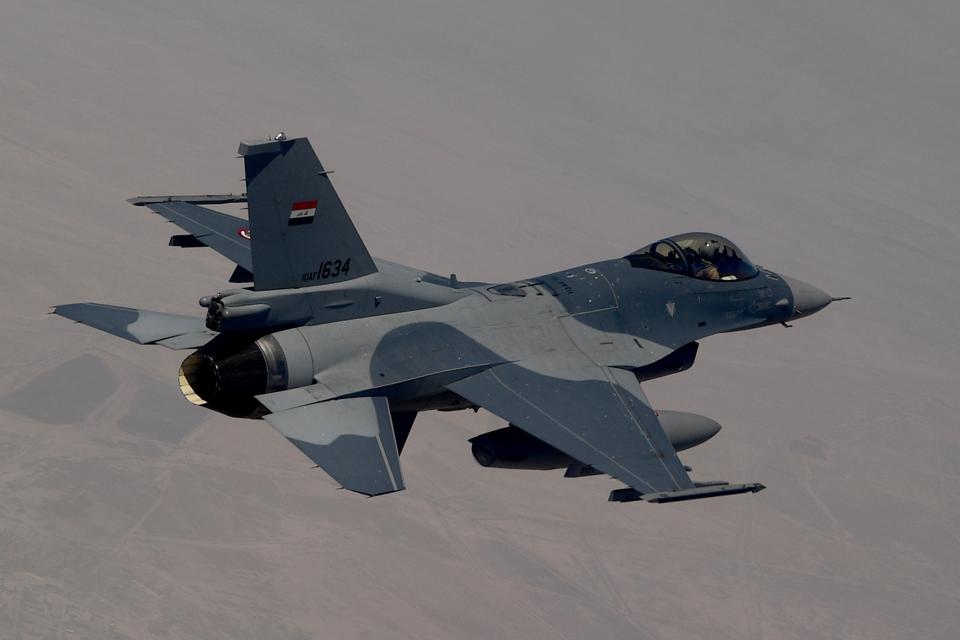
While comparably simple planes like the sturdy Russian-built Su-25 Frogfoot ground attack aircraft are relatively easy for the Iraqis to maintain, the F-16s are far more complicated. Iraq has 34 F-16IQ Block 52 fighters, which are based in Balad Airbase in the country’s western Anbar province.
Technicians from Lockheed Martin were previously based in Balad to help Iraq maintain that fleet. However, they were evacuated in early January 2020 during heightened tensions between the United States and Iran. They were evacuated again in May 2021 due to the continued threat of rocket attacks from Iran-backed militias in Iraq.
Numerous reports from 2020 and 2021 suggested that significant numbers of F-16IQs had become grounded, with the Iraqis even rumored to have been cannibalizing some jets for spare parts to keep others flyable. It seemed the future of the most advanced fighters the new IQAF had acquired in the post-Saddam Hussein era was bleak.
The multi-billion dollar sale of these jets to Iraq in the 2010s was described as a “gesture of goodwill and a good-faith effort to give Iraq the military it needed to defend itself”. Consequently, the U.S.-led coalition has a vested interest in highlighting the continued operations by these jets in the face of such serious questions about their operability and the IQAF’s capability to independently suppress and combat the continued ISIS threat to the country.
These strikes are not insignificant and may signal that there is still some hope for the future of the IQAF’s premier jet fighter.
“Iraqi Air Force F-16s, Iraq’s most capable strike aircraft, continued to perform missions despite the departure of U.S. contractors from Balad Air Base last quarter,” noted the latest Lead Inspector General Report for Operation Inherent Resolve (the U.S. military’s campaign against ISIS), that covered the quarter July 1, 2021 to Sept. 30, 2021.
During the same period, the report added, “the Iraqi 9th and 11th Fighter Squadrons, which operate Iraq’s F-16s, flew more than 270 sorties, of which 9 percent were combat sorties and 91 percent were training sorties.”
“This included Iraq’s F-16s employing 30 500-pound and two 2,000-pound bombs in support of eight counter-ISIS missions,” it added.
Furthermore, “all combat sorties originated or were planned as deliberate strike missions, but that some developed into dynamic target taskings, or unplanned strikes on targets, following takeoff.”
That Iraq could manage this without on-site technical support from Lockheed contractors is noteworthy.
“The Iraqi Air Force’s F-16 fleet has been able to maintain a steady if still low tempo of deliberate pre-planned strikes while gradually reducing reliance on US contractor support,” Alex Almeida, an Iraq security analyst at energy consultancy Horizon Client Access, told me. “In particular it seems they’ve been able to pick up some of the pre-planned strike missions against static ISIS sites (bed-locations, caves, caches) that the Coalition used to conduct.”
“The issue going forward will continue to be integration and fusion of ISR (Intelligence, Surveillance, Reconnaissance) into the cumbersome Iraqi strike planning cycle and ability to conduct time-sensitive dynamic strikes, which is still limited to the IQAF’s fleet of ISR/light strike turboprops,” he added.
While undoubtedly formidable aircraft, F-16IQs aren’t necessarily the best option for the IQAF’s requirements for now and the foreseeable future. As with their Egyptian counterparts these F-16s have limited air-to-air capabilities, since the U.S. did not supply Iraq with AIM-120 AMRAAM beyond-visual-range-air-to-air-missile, which means they can’t live up to their full potential for providing air defense.
And, it’s perhaps not the most suitable strike aircraft for the IQAF to combat ISIS and other similar threats from non-state actors.
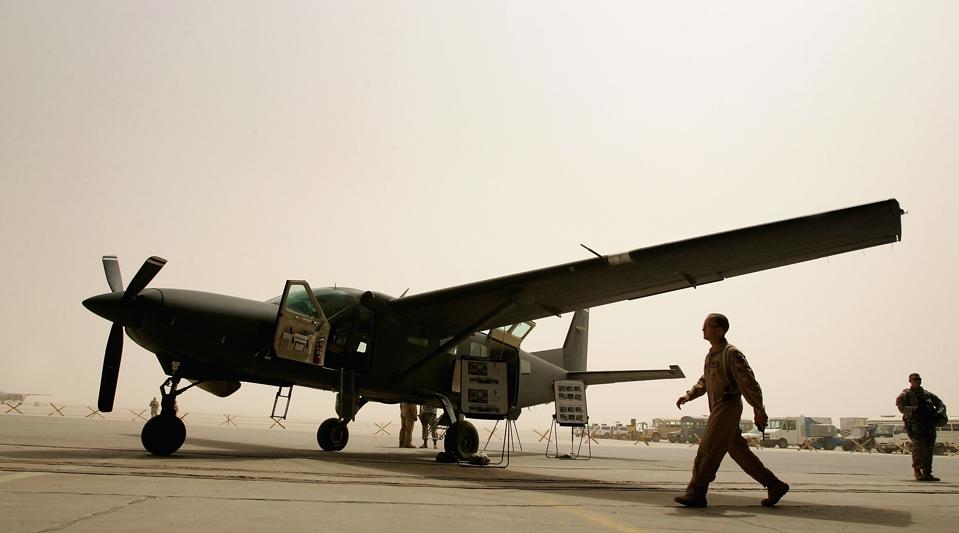
“In terms of meeting Iraq’s immediate needs, the best option would be rugged and capable UAV (unmanned aerial vehicle) or turboprop platform to replace the unreliable Chinese CH-4Bs and provide a badly-needed boost to the IQAF’s limited but very in-demand tactical ISR/overwatch and dynamic strike capability,” Almeida said.
Cheap and relatively simple platforms he suggested could adequately fulfill these roles include Turkey’s Bayraktar TB2 drone, Brazil’s A-29 Super Tucano turboprop light attack plane, or even additional AC-208 Combat Caravans.
Almeida is “cautiously optimistic at points” about the overall future of the IQAF.
“There seem to be incremental but real improvements, though of course there’s a long way to go,” he said. “The key issue still seems to be the IQAF’s inability to match its aircraft procurements with the required levels of sustainment and training support.”