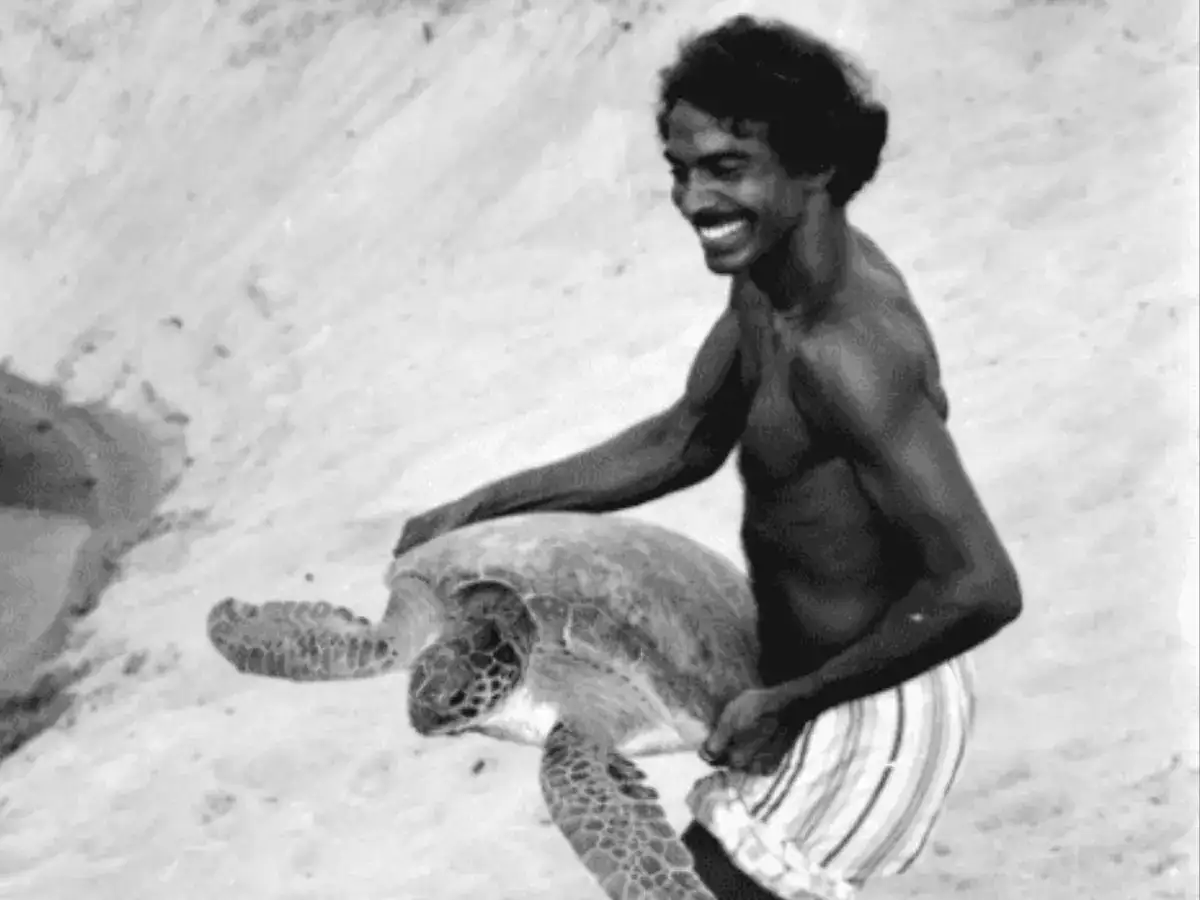
As conversations around conservation gain momentum on World Environment Day 2026, one name continues to stand out in India's environmental history: Satish Bhaskar.
The late conservationist spent decades studying and protecting sea turtles, often working in isolation across some of the country's most remote coastlines and islands. His remarkable journey is now reaching new audiences through Turtle Walker , an award-winning documentary that chronicles his life, work, and enduring legacy.
At a time when environmental challenges can seem overwhelming, Bhaskar's story offers a different perspective — that meaningful change can begin with one person taking one step at a time.
Who was Satish Bhaskar?
In the 1970s, when India's sea turtles were facing mounting threats from poaching, fishing nets and habitat loss, there was little documented information about where they nested.
Bhaskar, an IIT graduate, chose an unconventional path. Instead of pursuing a traditional career, he set out to understand India's sea turtle populations by travelling across vast stretches of coastline and remote islands.
What followed was a years-long mission that would eventually help shape sea turtle conservation efforts in India.
What did Satish Bhaskar discover about India's sea turtles?
For nearly two decades, Bhaskar surveyed coastlines across Kerala, Odisha, Lakshadweep and the Andaman and Nicobar Islands.
Without GPS, research teams or advanced technology, he carefully recorded nesting sites by hand.
His work revealed crucial patterns about sea turtle behaviour, including evidence that turtles returned to the same beaches year after year to nest. Those findings later became important building blocks for conservation initiatives aimed at protecting vulnerable populations.
Today, many conservation programmes and volunteer-led hatchery efforts trace their roots to the data and observations Bhaskar collected over decades.
How far did Satish Bhaskar go for conservation?
Bhaskar spent months at a time in remote locations, frequently cut off from the outside world.
One account recalls him staying on Suheli Island in Lakshadweep in 1982, surrounded only by monsoon winds and the sea, waiting for green turtles to return to nest.
According to stories shared by media reports, he once survived for days on biscuits after becoming stranded in Little Andaman. Even later in life, despite severe nerve pain and the challenges that followed the 2004 tsunami, he continued monitoring turtle populations.
His dedication became the stuff of conservation folklore.
As Bhaskar often put it: "I never felt alone. The turtles were my company."
Why is Turtle Walker bringing renewed attention to his work?
Directed by Taira Malaney, Turtle Walker follows Bhaskar's life and conservation journey, introducing audiences to a figure many Indians had never heard of despite his contributions.
The documentary has received international recognition and has been screened at major environmental and film festivals. It combines Bhaskar's story with broader questions about humanity's relationship with the ocean and the importance of protecting fragile marine ecosystems.
Filmmaker Zoya Akhtar recently said stories like these deserve wider attention because they reveal extraordinary lives and contributions that often remain unknown, even within India.
Why does Satish Bhaskar's story still matter today?
Environmental stories often focus on large-scale crises, but Bhaskar's life work helped create a deeper understanding of India's sea turtle populations and provided a foundation for future conservation efforts.
More importantly, his journey serves as a reminder that conservation is not always driven by institutions or technology. Sometimes it begins with one person willing to spend years observing, documenting and protecting a species that cannot speak for itself.
On World Environment Day 2026, that message feels particularly relevant.