AI dispatch tools slash power restoration times by nearly 20 percent by automating the logistical chaos of crew management and real-time navigation. Instead of human dispatchers manually juggling radio calls and paper maps during a major storm, machine learning models process live telemetry to identify the fastest route to a fault. This shift from reactive to proactive management allows utilities to resolve outages before they cascade into regional crises.
The old way of handling outages relied on phone calls and guesswork. Today, predictive models forecast high-risk failure zones hours before a wind front or ice storm actually makes landfall. By pre-positioning crews based on these probability maps, the travel-time component of a repair window is often halved before the first customer reports a flicker. It turns a chaotic scramble into a calculated deployment.
Reliability is the only metric that matters when the lights go out. Modern systems ensure that the right expertise arrives at the right transformer without the friction of outdated communication loops.
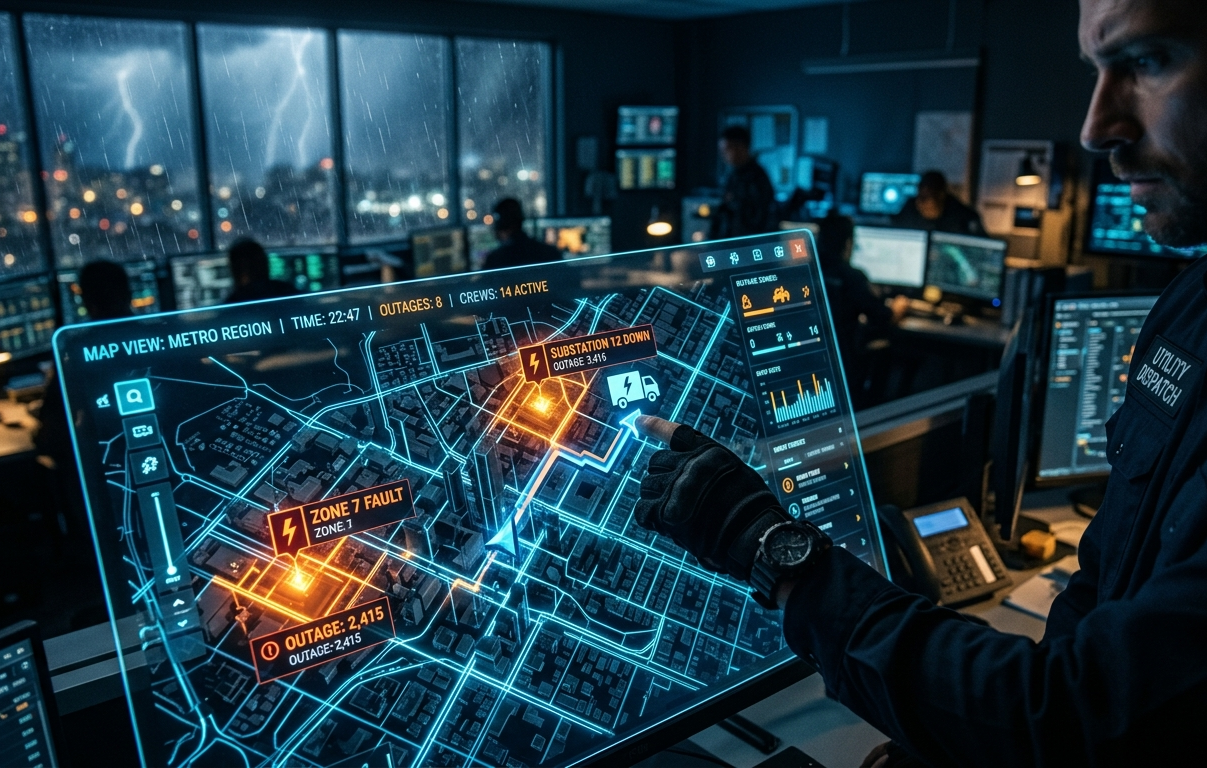
Image Source: Google Gemini
Dynamic Routing and Real Time Grid Telemetry
Severe weather events often render standard GPS routing useless because of downed trees or flooded roads. Advanced systems now process municipal data and local alerts in real time to automatically reroute emergency vehicles around blocked access points. This ensures a specialized line crew is not idling behind a road closure while three towns over sit in the dark.
For electrical teams, the integration of electrical contractor software bridges the gap between office dispatchers and field technicians, enabling real-time coordination, faster response times, and more efficient outage resolution. This connectivity allows for immediate updates to work orders as grid conditions fluctuate. When an AI identifies a new priority fault, the software pushes that data directly to the technician's mobile device, eliminating the need for voice confirmation and reducing the margin for human error during high-stress shifts.
Grid resilience is no longer just about the physical hardware in the ground. It is about the digital layer that orchestrates movement across that hardware.
Modern dispatching involves several critical data layers:
- AI models that detect unusual stress on transformers weeks before a fault
- Real time telemetry that identifies nested outages within a single circuit
- Automated damage detection that streamlines the documentation of downed lines
These layers work together to provide a level of visibility that was impossible five years ago. When a technician knows exactly which fuse blew because the AI analyzed the upstream voltage drop, they arrive with the specific parts needed for a first-time fix.
Predictive Maintenance and Crew Safety Metrics
There are roughly 50 major grid stress events every year that require massive mobilization. For the workers on the front lines, the biggest danger is not just high voltage but also exhaustion.
AI tools now incorporate predictive fatigue scores to match drivers and technicians to routes based on their circadian alignment. This level of data governance ensures that the most complex repairs are handled by the freshest crews, significantly lowering the risk of workplace accidents during 24-hour restoration cycles.
Safety and speed were once seen as opposing forces in the utility world. If you moved faster, you took more risks.
AI changes that math by removing the cognitive load from the worker. When the routing, parts inventory, and fault location are all verified by an algorithm, the technician can focus entirely on the physical safety of the repair.
As we move deeper into 2026, power scarcity is becoming a primary concern for the industry. AI dispatching is now being used to shift maintenance workloads to off-peak geographies, which eases the burden on the grid during extreme heat or cold. This macro-level orchestration prevents the very outages that dispatchers used to spend all their time chasing.
The shift toward intelligent automation is the most significant upgrade to the electrical trade since the bucket truck. It empowers small contractors to perform like massive utilities and allows large utilities to react with the agility of a small shop. Keeping the lights on is no longer just an engineering feat but a masterpiece of data management.
Digital Integration in the Modern Electrical Trade
The transition to AI-driven dispatching represents a fundamental shift in how we value field data. Every truck roll generates a footprint that the system uses to get smarter for the next storm. This creates a feedback loop where restoration times continue to drop as the software learns the specific quirks of a local grid.
Exploring the intersection of field expertise and digital tools often reveals new ways to improve the bottom line while keeping customers happy. Staying up to date on these operational shifts is the best way to remain competitive in an increasingly automated industry. You can keep abreast of all sorts of topics and industry talking points on our site, so read more posts before you head off.