In the run-up to the election there had been a lot of talk – too much talk, it turned out – about how overall moves in national vote shares would be less important than local variation. This proved to be awry in three crucial respects, and sweeping political tides overwhelmed all before them. The first came in Scotland. Because the prospect of big change had loomed since last year’s independence referendum, it was factored into many of the forecasts, but this was nonetheless the most extraordinary thing that happened on Thursday, the one change that historians will recall in 100 years time. Nicola Sturgeon’s nationalist charge overwhelmed every citadel that lay before it, without any regard for the strength of the walls.
The overall swing from Scottish Labour to the SNP was almost 25%, that’s the same sort of movement that used to terrify John Major’s Tories in mid-term byelections, but at a general election. To the extent that there was variation, it can be readily summed up: where a bigger surge was required, a bigger surge was achieved. The figure came down to around 20% in parts of Edinburgh, where Labour has traditionally faced real competition; but in the heartland on the west coast, it was far higher, approaching 40% in the safest seat of all, Glasgow North-East.
The three other parliamentary parties (or should that be former parliamentary parties?) were left to split three out of 59 seats between them. Since each of these races was highly atypical, it was almost as if things had been neatly set up to see off the charge of a one-party state. The last Lib Dem holdout in Orkney and Shetland is culturally as well as geographically remote from the mainland; an ultra-nationalist crank of a candidate in Edinburgh South had livened up the local race by calling unionists “Quislings”; Dumfriesshire, Clydesdale & Tweeddale was already considered irredeemably eccentric for returning the nation’s only Tory MP, something it did again.
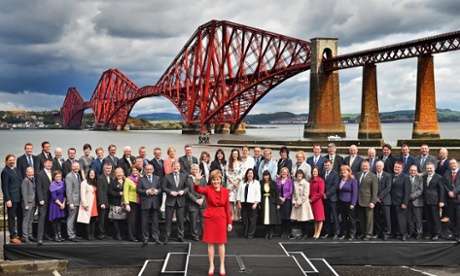
The electoral annals underline how remarkable Scotland’s transformation is. Back in the postwar days Scottish politics blew in line with the rest of the rest of the UK: it actually returned a result that was a touch more Tory than the average in both the 1951 and 1955 general elections. Later on voters north of the border steadily lurched ever-further to the left of their English counterparts, but right up until 2010 – when their MPs stood in the way of an outright Tory win – they remained an integral part of a pan-British conversation. No more. It is another country.
The second dramatic instance of the big picture overwhelming the small was the utter collapse of the Liberal Democrats. The party, which won 62 seats under Charles Kennedy a decade ago, has now returned just eight under Nick Clegg. The former third force of British politics is set back by half a century. If the joke in the 1950s was that the Liberal parliamentary party could be fitted into a black cab, their successors would now snugly fit into a people carrier.
A lot of rot was spoken about how local factors would ride to the rescue, and false comfort given by the big shift in voting behaviour that sometimes appeared to show in Lord Ashcroft’s local polls, when respondents were prompted to reconsider their party preference in the context of their own seat. This may have simply served to confuse. While likeable local characters can be worth a couple of thousand votes here or there, that is almost immaterial for a party that is losing lost two-thirds of its nationwide vote, as the Lib Dems were to do.
Their collapse against Labour in northern seats such as Redcar came just as expected, but the parallel decline against rural Conservatives was not. The Lib Dems are now wiped out entirely in what they used to think of their heartland in the south-west. It is hard to see any clear thread connecting the eight disparate survivors, although chances were improved where the incumbent Lib Dem faced splintered competition. That was, for example, true in Ceredigion, where Plaid Cymru came second, and in Clegg’s own (and once Conservative) seat of Sheffield Hallam, where Tory tactical voters thwarted Labour hopes of leapfrogging into first place.
The third and less dramatic sense in which national swing proved a better guide than expected came in the main Conservative/Labour English battleground. Compared with 2010, Cameron added 0.8 points to the Conservative’s UK-wide vote share, while Labour could add only 1.4 points to Gordon Brown’s 2010 result. Those numbers imply a vanishingly thin 0.3% swing between the two main parties, which was never going to shift many seats – and it didn’t. In England and Wales, the bottom line was a net Labour gain from the Conservatives of just two seats.
A few more seats than that changed hands, but not much, and most of the switches cancelled out. Labour did a bit better in multicultural London, with gains including Brentford & Isleworth and Ilford North. There was also odd Labour bright spots in the north west, including Chester, Lancaster and Fleetwood, and Wirral West.
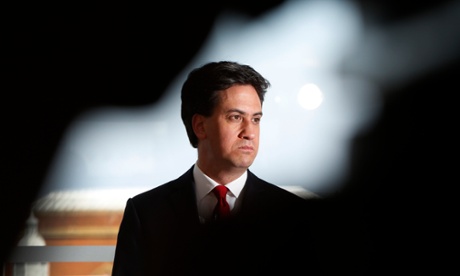
But set against these were odd southern losses such as Plymouth Moorview and Telford so the overall north south-divide has intensified slightly, even if the felling of Ed Balls at Tory hands in Yorkshire pointed the other way.
Under the surface there were some interesting movements – particularly the growth of Ukip, which is now second-placed in well over 100 seats, many of them Labour which could change electoral dynamics in future. Then there was the tendency for Labour to pile on extra votes in places where it didn’t need them because it already has the MPs – particularly in the north-east. The first three results to be declared on Thursday night all happened to be in that region, and all of which registered a move towards to Miliband which proved highly atypical.
The upshot of this, after years in which the electoral system has been rigged in Labour’s favour, is that it now helps the Tories more. This week it took about 6,000 more votes to elect a Labour than a Conservative member. The Tories can now be expected to use their majority to cement this advantage by redrawing the boundaries as they had planned to do in the last parliament until coalition wrangling got in the way.
The big picture in the English battleground, however, was of little change – in line with the overall swing. It became a cliche of commentary in this election to say that “the swingometer was broken”, but on the strength of the results I would caution psephologists against throwing it away.