Some home sellers will have to drop their asking price if they hope to remain competitive in today's housing market, which is showing signs of a massive cooldown from its pandemic-related highs.
As Americans watch their wallets, home buyers are less likely to purchase high-priced homes with accompanying elevated mortgages, opting instead to rent or hold out for less expensive options. The higher rates - currently around 6 percent - mean sizable monthly payments compared to what was seen during the pandemic, when mortgage rates were low around 3 percent.
In the early 2020's, the Covid-19 pandemic drove people living in dense cities out away from the masses and into less populated parts of the country, the Wall Street Journal reports. Some homeowners were able to quickly unload their properties at higher asking as homes frequently lasted just days on the market and sold for more than asking price.
Now, as sellers put their homes on the market, many are basing their estimates on prices from a red-hot market and not taking today's market, and mortgage rates, into context.
Just over 20 percent of active home listings on the site in October had a price cut, which is double the number of cuts the site recorded during the Covid-19 pandemic, the Wall Street Journal reports.
Setting a price too high at the start can add time to a seller's wait. According to data from the National Association of Realtors, listings that sold after a price cut generally spent five times as many days on the market as those whose prices were correct from the beginning.
The same data found that homes priced correctly from their first day on the market not only sell faster, but they get close to 100 percent of their asking price. Once a home has been on the market for three months, sellers generally begin cutting back the asking price.
A recent report from real-estate brokerage firm Redfin found that the U.S. is undergoing a market rebalance, with favor shifting significantly to buyers, at least in theory. This year has been the strongest buyer's market Redfin has ever tracked, noting there are 36.8 percent more sellers than buyers nationwide. That means there are more than 528,000 homeowners who are struggling to find someone to buy their properties.
One might expect that such a gap between supply and demand would result in a price reduction, but that's not been the case.
National home prices are still rising despite the buyers' lull. In 2025 homes prices were up 2.3 percent year over year, with October showing the largest monthly price increase in seven months, the Street reports.
But just because sellers are asking for more doesn't mean buyers are willing to pay.
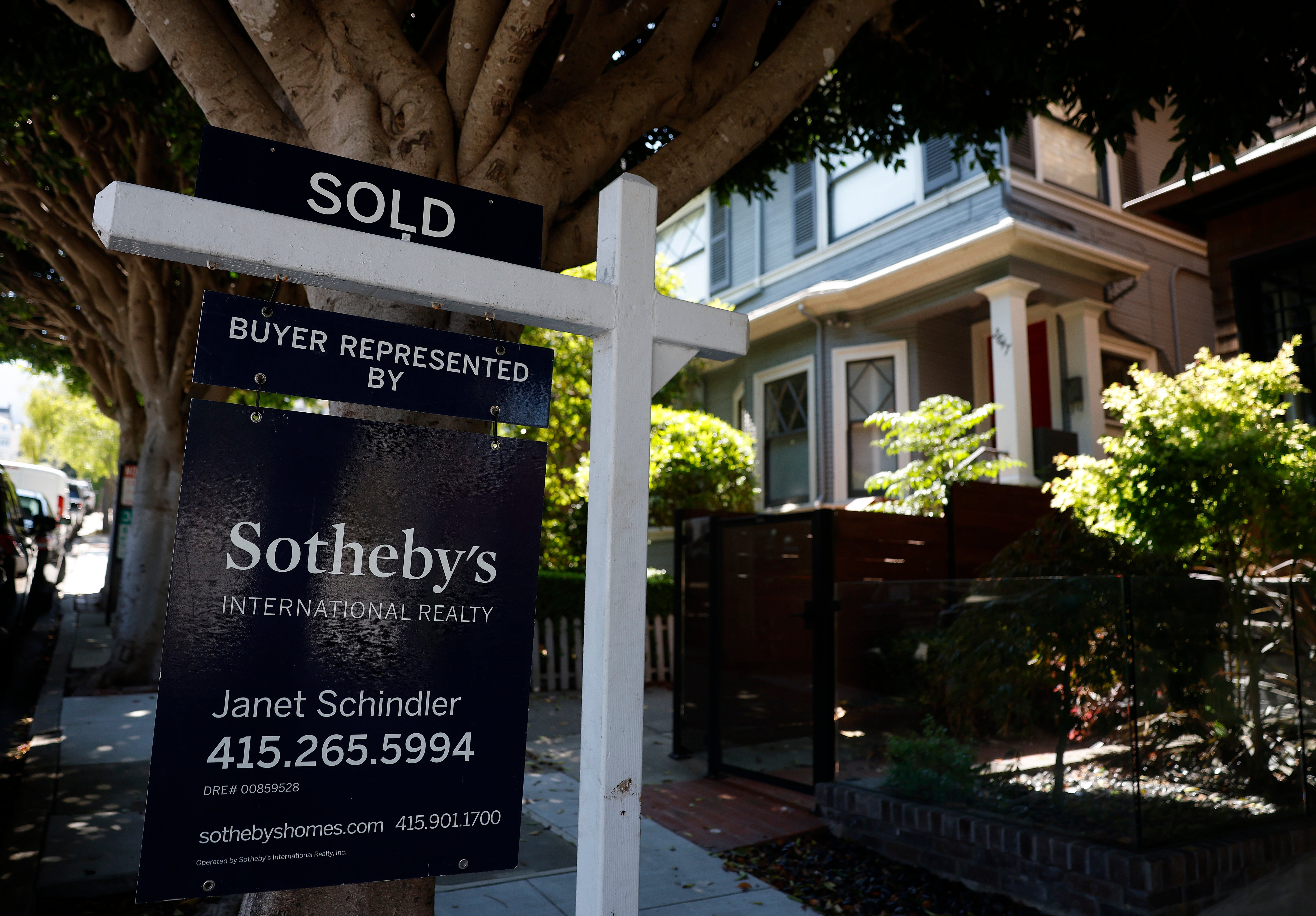
More than half — 57 percent — of homes sold in 2025 through October underwent at least one price cut, according to NAR data. Between 2020 and 2024, that number was closer to 47 percent.
For homes selling this year, the average price cut was approximately 3.7 percent below the asking price, NAR reports.
Even with cuts, asking prices are still too high for many prospective first-time buyers to actually enter the market. First-time buyers only made up 34 percent of the home buyers in October — well under the 40 percent typical of this time of the year — and only 21 percent of buyers over the past year, which is a record low, according to Redfin.
With new buyers staying home and others waiting for price drops, housing inventory has bloated. Resi Club, a housing market research and analytics publisher, reported in Fast Company that every state had an increase in homes actively being sold on the market over the same period in 2024, suggesting that not only are new houses being built, but exiting houses aren't being sold.
States with the most active housing inventory increases over last year include Maryland (34 percent increase), Virginia (27 percent increase) and North Carolina (34 percent increase) as well as Nevada (27 percent increase) and Arizona (23 percent increase). Further north, Washington saw a 25 percent inventory increase and South Dakota reported a 23 percent increase.
What's emerging are markets moving in opposite directions based on regional housing availability. Softening prices — and even some price decreases — have been noted in markets where the active homes on the market exceed the number of homes on the market in 2019, Fast Company reports.
Most of the states with notably more inventory today than in 2019 are in theWwest — Texas, Arizona, Colorado, Utah, Idaho and Washington. Tennessee, Florida and Washington, D.C,. also have more homes on the market today than in 2019. Because of the available homes, prices in those places are cooling.
But in the Northeast and the Midwest a different story is playing out. There are far fewer homes on the market in those states when compared to their pre-pandemic numbers, and thus prices have remained high.
Luxury home prices rise - here’s what it means for the housing market
What are adjustable-rate mortgages - and how do you know if one is right for you?
Home Depot CEO warns of ‘uncertainty’ as three issues plague retailer
Black Friday expected to see record foot traffic spending less
Retailers are tightening return policies. How not to get caught out this Black Friday
Here’s why pet insurance is the right move ahead of the holidays