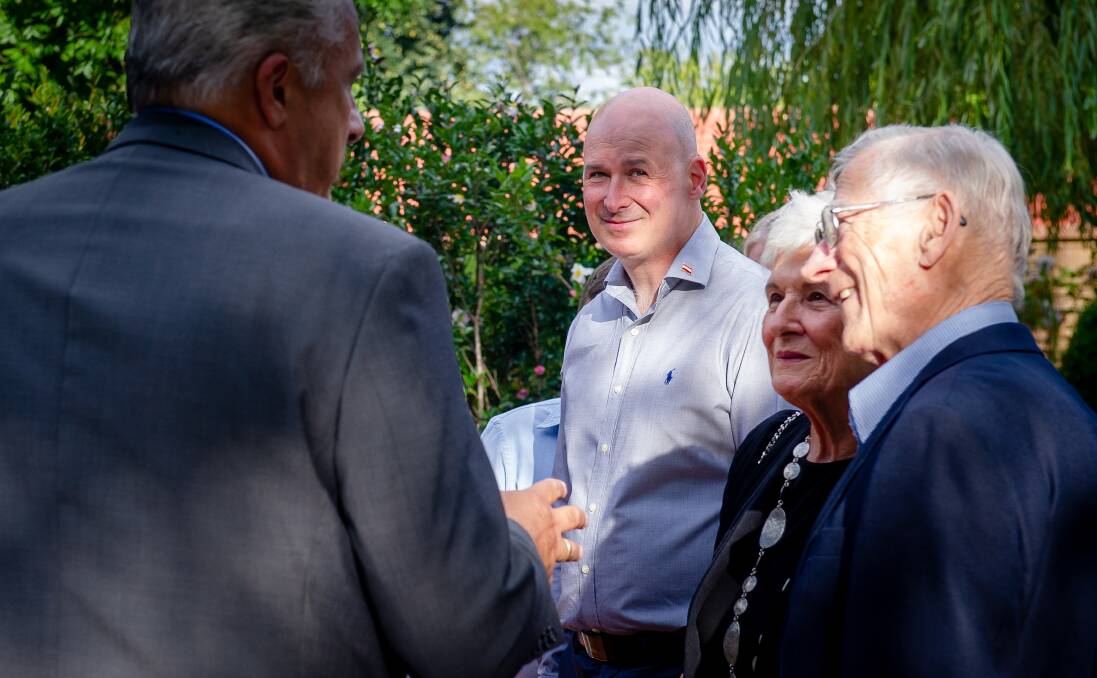
When Ian Ernst arrived in Australia in September 1939, aged just 10 months, he was among 90,000 Jews to flee Austria in the face of persecution by the Nazi regime.
Torn from their homeland, the Ernst family's bond with the country was frayed, almost completely broken, but at a small ceremony in Canberra this week new threads began to pull the nation and the family back together.
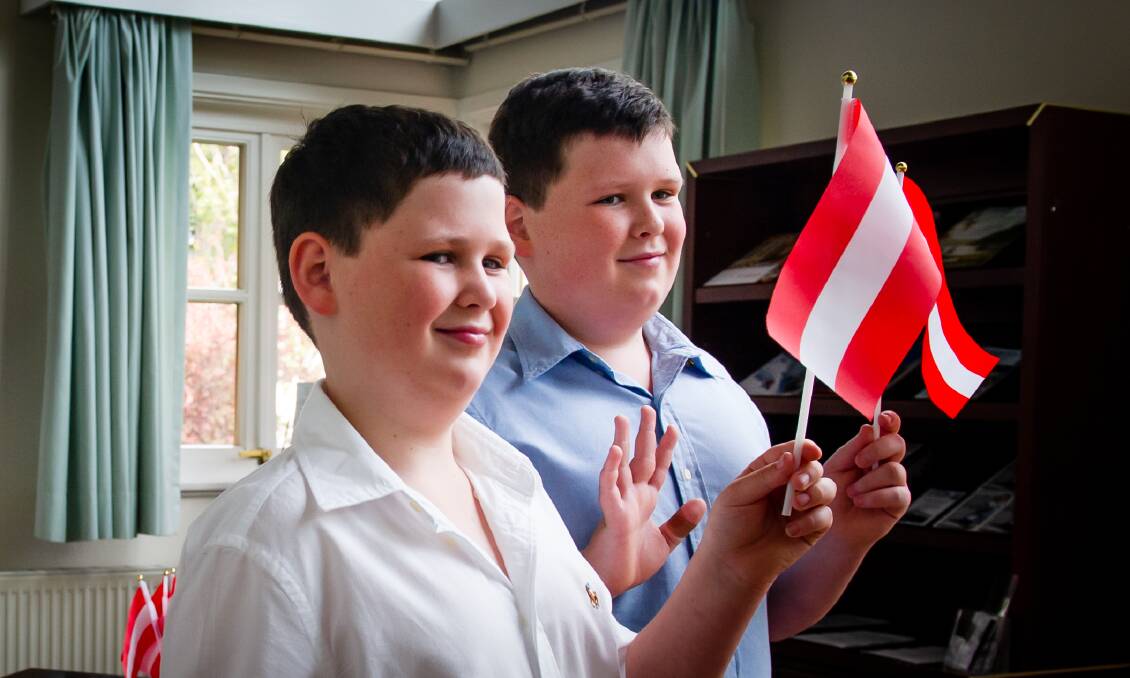
Mr Ernst's son Christopher, and his grandsons Callum and Ethan, were the first Canberra family to be granted Austrian citizenship as part of a decades-long process the country has undertaken for reconciliation with victims of the Nazi regime.
Ian Ernst's story will be familiar to many whose families also had to flee to escape the Nazis. His mother Liselotte, who had grown up in Vienna, and his father Hermann, who was living in Prague in what was then Czechoslovakia, had seen the writing on the wall.
They were agnostic, but were "Jewish enough by Hitler's definition".
They made the decision to leave, travelling first to Zagreb in Croatia, then on to Switzerland, to England, and eventually to Australia.
The family's Austrian background was a constant presence in their life in Australia, through music, art and memories, but Mr Ernst said his mother "didn't want to dwell in the past at all".
It's a story that has been replicated for many victims of the Nazi regime, forced to leave their home countries to stay alive, bonds broken, or never quite the same.
The importance of reconciliation
"This is about the importance of reconciliation. I'm very grateful that the family has decided to renew, to re-establish the bonds with Austria, which in 1937, Austria herself, has cut through so cruelly and painfully," said Austria's ambassador to Australia Wolfgang Lukas Strohmayer.
Mr Strohmayer had the duty of presenting the Ernsts with their new Austrian citizenship this week.
It was a joyful, but solemn, moment for the ambassador, who keenly felt the magnitude of the occasion - re-establishing the connection between Austria and the people betrayed by the Nazi regime and those who welcomed it.
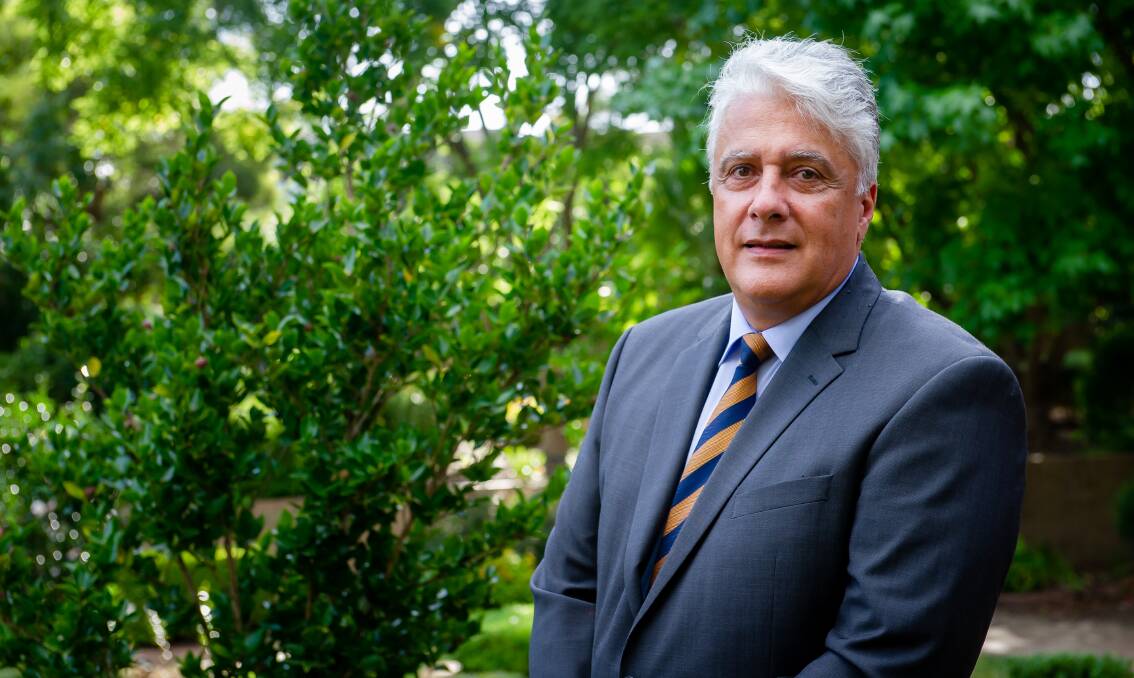
While Austria was hoping for forgiveness, it was not expected, Mr Strohmayer said.
"We just want to make it clear for the younger generations, to acknowledge what happened, and to do everything to ensure it won't happen again," he said.
The reconciliation process was not just about saying sorry to each victim and their descendants, but ensuring no such atrocity was allowed to happen again.
"[It's] to remind each and every one of our individual responsibility to resist and to speak up decisively against all forms of intolerance, racism and anti-Semitism," Mr Strohmayer said.
Coming to terms with history
While Austria was annexed by Germany in 1938, against the will of the Austrian government, it was not a wholly unwelcome development.
According to Ian Ernst, his mother recounted the Anschluss, when many Austrians cheered in the streets as the Germans marched into Vienna.
Austria has undertaken somewhat of a reckoning of its role in the Holocaust in the past 30 years, embarking on a journey of reconciliation with victims of the Nazi regime, not just Jews, but others persecuted by the regime.
For decades Austrian governments had maintained the country was Nazi Germany's "first" victim but in a speech in 1991, then chancellor Franz Vranitzky formally acknowledged the role Austrians played in the Holocaust for the first time.
"We acknowledge all of our history and the deeds of all parts of our people, the good as well as the evil. As we lay claim to the good, so must we apologise to the survivors and the descendants of the dead for the evil," he said.
The change in attitude led to a series of reparation measures, including hundreds of millions of dollars paid to Holocaust victims and their descendants, both who could prove economic loss, and for those who suffered, even if they couldn't point to an economic loss.
A new chapter
Part of the move to reconciliation was to offer Austrian citizenship to descendants of Austrian victims of the Nazi regime around the world.
It took many years, but when the Austrian Parliament passed the legislation allowing for descendants of victims of the Nazi regime to become citizens of Austria, and hold dual citizenship, the vote was unanimous.
It was unclear how many Australians could be eligible for Austrian citizenship now. It was estimated to be 25,000. Since the law came into effect in Austria in September last year, approximately 200 Australians had submitted declarations for citizenship, and approximately 60 had been awarded so far.
While families like the Ernsts had moved quickly to reconnect with Austria, Mr Strohmayer acknowledged some descendants may never wish to, with the pain of the Holocaust running too deep.
Christopher Ernst said he was "delighted" to receive his citizenship and to see his children receive theirs as well. He loves Austria - particularly the skiing - and hoped to visit with Callum and Ethan one day, sharing the family's history.
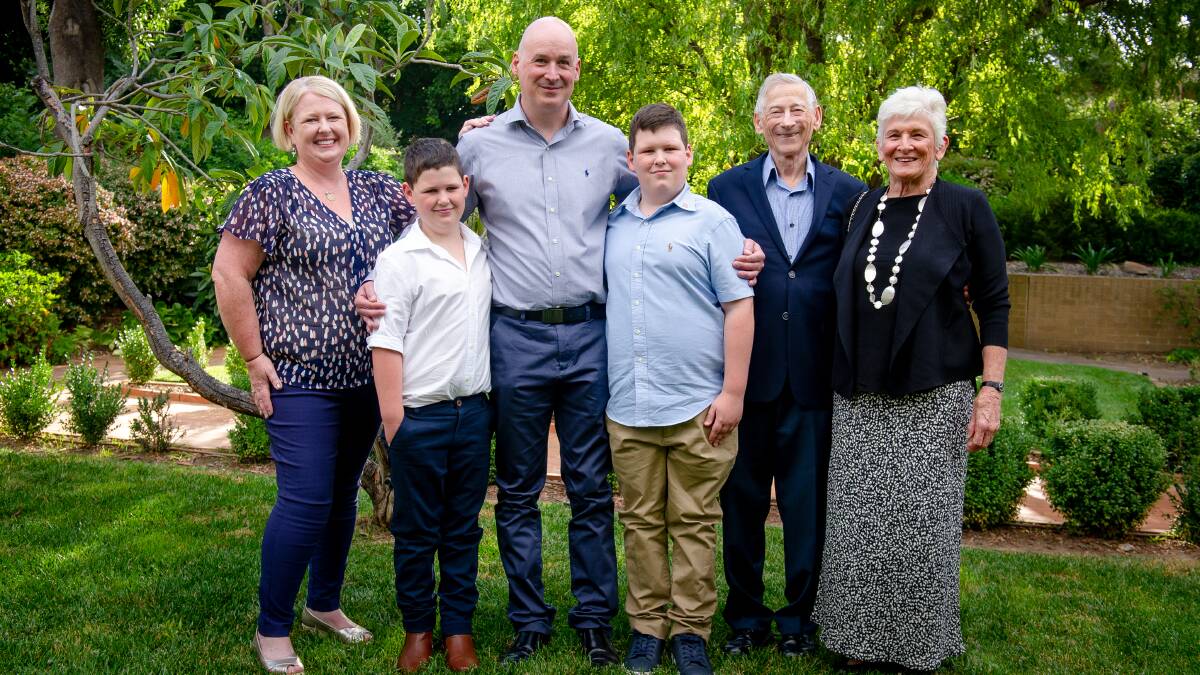
Ian Ernst at first decided against seeking Austrian citizenship. While he had travelled to the country of his birth many times, he was in his 80s now and he was unlikely to relocate. It made sense for his son and grandsons, who would be able to take advantage of the opportunity that would come with being a citizen of the small European nation.
Seeing his descendants re-establish his family's connection with the country of his ancestors, though, led to a change of heart.
"But having thought about it and having watched the ceremony, I think I will put in an application. If for no other reason but to have a vote if the right wing ever goes mad again," he said.
Our journalists work hard to provide local, up-to-date news to the community. This is how you can continue to access our trusted content:
- Bookmark canberratimes.com.au
- Download our app
- Make sure you are signed up for our breaking and regular headlines newsletters
- Follow us on Twitter
- Follow us on Instagram