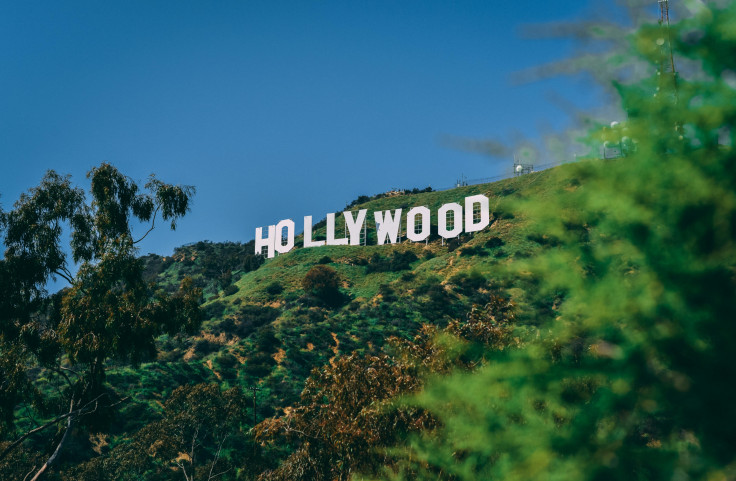
Hollywood's biggest movies became less white in 2025, but the shift did little to improve Latino representation, while women lost significant ground in leading roles, according to a sweeping new USC study examining nearly two decades of inclusion in popular films.
The latest report from Dr. Stacy L. Smith and the USC Annenberg Inclusion Initiative analyzed the 100 highest-grossing theatrical films of 2025 as part of a larger study encompassing 1,900 movies released between 2007 and 2025. Researchers examined every speaking or named character for gender and race or ethnicity, as well as representation of LGBTQ+ people and characters with disabilities. They also studied who was working behind the camera.
For Latinos, the numbers remain particularly striking.
Hispanic and Latino characters accounted for just 5.8% of speaking or named roles in 2025, despite Latinos making up roughly one-fifth of the U.S. population. Nearly half of the year's biggest movies, 46 out of 100, did not include a single speaking or named Hispanic or Latino character.
The problem was also evident behind the camera. Only four Latino directors worked across the 100 top-grossing movies of 2025, and all four were men. Researchers found no significant improvement compared with 2024, when seven Latino directors worked on top films, or 2007, when there were three.
The report underscores an even more persistent absence for Latinas: across the 19 years studied, the most common annual number of Latina directors working on the 100 biggest films was zero.
The findings come despite broader gains in racial and ethnic diversity. Of the 3,729 characters whose race or ethnicity could be determined in 2025, 58.5% were white and 41.5% were from underrepresented racial and ethnic groups. Asian characters represented 14.5%, Black characters 10.5%, Hispanic or Latino characters 5.8%, and Middle Eastern or North African characters 5.2%.
The change since 2007 is substantial in some categories. White characters represented 77.6% of speaking roles that year, compared with 58.5% in 2025. Asian representation, meanwhile, surged from just 3.4% in 2007 to 14.5% last year.
Latinos have not experienced a comparable breakthrough.
The study found that 46 of the top 100 films completely erased Hispanic and Latino characters, statistically unchanged from 49 films in 2024 and 47 in 2018.
Representation at the center of movies offered a somewhat more encouraging picture for people of color overall. Thirty-four percent of 2025's top films had an underrepresented lead or co-lead, up from 26% in 2024 and just 13% in 2007. Among the 37 underrepresented protagonists identified by researchers, however, only four were Hispanic or Latino.
Women also experienced a significant setback.
Women and girls represented only 33.6% of the 4,333 speaking or named characters in 2025, exactly the same percentage as in 2024 and only modestly above the 29.9% recorded when the study began in 2007.
That translates to almost two male characters for every female character on screen.
Only 14 of the 100 biggest films were considered gender balanced, meaning women and girls represented between 45% and 54.9% of their speaking casts.
The decline was even sharper when researchers looked at protagonists. Women and girls accounted for just 38% of leads and co-leads in 2025, plunging from 55% in 2024. The figure nevertheless remains considerably higher than in 2007, when only 20% of top films centered on a female lead or co-lead.
Older women remained especially scarce. Women accounted for only 24.2% of speaking or named characters age 40 and older, a figure the researchers said has essentially not moved in 19 years.
Behind the camera, the imbalance was similarly pronounced. Of 1,559 directors, writers and producers employed on the top 100 films, just 21.7% were women.
Only nine of the 110 directors, or 8.2%, were women, a significant decline from 2024 and the same level recorded in 2008. Women also represented just 16% of screenwriters and 24.4% of producers.
The study found a notable relationship between who directs movies and who appears at their center: films with female directors had significantly more women and girls on screen and were more likely to feature female leads or co-leads than movies directed exclusively by men. Researchers cautioned that the association does not establish causation.
Representation was even more limited for LGBTQ+ people and characters with disabilities.
Just 36 LGBTQ+ speaking or named characters appeared across the 100 biggest films of 2025, representing less than 1% of all characters analyzed. Seventy-eight of the 100 movies contained no LGBTQ+ speaking characters at all, and researchers found no transgender characters in the year's top films.
Only one movie featured an LGBTQ+ lead or co-lead.
Characters with disabilities represented just 2.8% of speaking or named roles, dramatically below the 27.2% of Americans the report says identify as having a disability. Nearly half of the top films, 49, contained no speaking or named character with a disability.
The findings reveal a Hollywood that has changed dramatically in some respects since USC began tracking inclusion in 2007 but remains remarkably static in others.
Asian representation has increased sharply, characters of color collectively are approaching their share of the U.S. population, and underrepresented actors are considerably more likely to lead major movies than they were 19 years ago.
But for Latinos, one of the largest demographic groups in the United States, the numbers tell a different story. In 2025, they accounted for fewer than six out of every 100 speaking characters in Hollywood's biggest films, nearly half of those movies had no Latino characters at all, and not a single Latina was among the four Latino directors behind the year's top 100 films.
After nearly two decades of tracking Hollywood inclusion, those numbers suggest that visibility has expanded, but not equally.