The Food and Drug Administration (FDA) has withdrawn studies that suggested COVID-19 and shingles vaccines were safe and effective.
In one case, a study was undergoing peer review for publication in a scientific journal when the authors were told to pull it. In another instance, Health and Human Services officials refused to sign off on abstracts for scientific findings that would have been published for a conference.
"The studies were withdrawn because the authors drew broad conclusions that were not supported by the underlying data," a HHS spokesperson told ABC News. "The FDA acted to protect the integrity of its scientific process and ensure that any work associated with the agency meets its high standards."
The Washington Post reported that one COVID-19 study followed people who were vaccinated in 2023-2024. Specifically, the study tracked what happened in relation to a variety of health conditions, including heart issues.
The outlet added that the study was undergoing peer review for publication in the journal Vaccine when it was withdrawn. Although the paper is not publicly available, it's abstract was still on the site: "No new safety concerns were found following 2023–2024 COVID-19 vaccination among U.S. health plan enrollees aged 6 months–64 years," it stated.
According to the New York Times, the studies can cost millions of dollars in public funding, noting that at least two COVID-19 vaccine studies that were close to being published before being pulled. Both studies, the Times reported, found that side effects caused by the vaccines were rare.
In addition, HHS officials refused to allow abstracts about a shingles vaccine to be submitted to a drug safety conference. The shingles studies found that the vaccine was safe and effective, the New York Times reported.
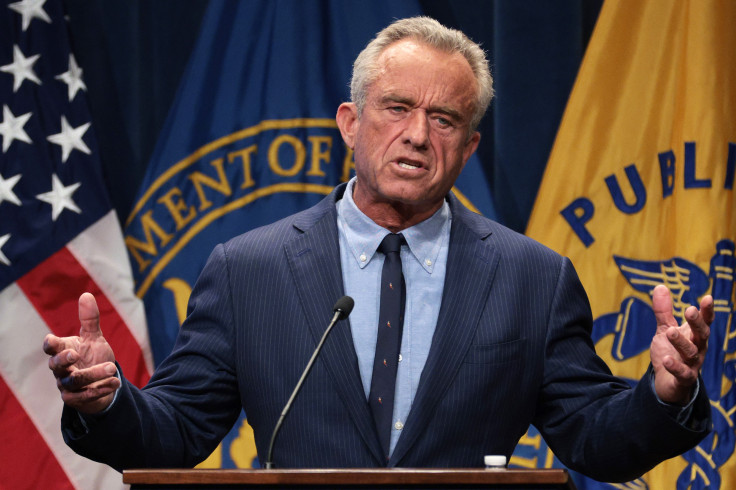
HHS Secretary Robert F. Kennedy Jr. is a vocal skeptic of vaccines. For example, he said at a 2021 Louisiana meeting about whether to require children to get a COVID-19 vaccine that it was the "deadliest vaccine ever made."
And, during his confirmation hearings in 2025, Kennedy said the COVID-19 vaccines were approved "without any scientific basis."
Although the first COVID-19 vaccines were given emergency approval, the mRNA research used to develop them stretched back decades and actually first began in 1984, the Mayo Clinic stated.
Even with less robust approval standards under the emergency approval process, the COVID-19 vaccine data had to "show that the vaccines are safe and effective" before they were cleared for use.
"Vaccines have gone through — and continue to go through — extensive safety monitoring," the Mayo Clinic stated. In fact, numerous clinical trials regarding COVID-19 vaccines have been completed and continue to be carried out.
A recent study suggested that COVID-19 vaccine use saved 2.5 million lives during the pandemic.
The study was conducted by Stanford University School of Medicine. "Estimates in this study are substantially more conservative than previous calculations focusing mostly on the first year of vaccination, but they still clearly demonstrate a major overall benefit from COVID-19 vaccination during the years 2020-2024," the study stated.
There have been studies that have found possible complications with COVID-19 vaccines. Another study by Stanford found that a rare complication is myocarditis, inflammation that can injure heart muscles. But that study also stated that the vaccines were safe and effective.
"The mRNA vaccines have done a tremendous job mitigating the COVID pandemic," said Dr. Joseph Wu. "Without these vaccines, more people would have gotten sick, more people would have had severe effects and more people would have died."
The study found that the side effect could affect about 1 person in every 140,000, although that could rise to 1 in 32,000 on the second dose. The goal of the study was to find the cause and suggest ways for the medical community to mitigate the potential complication. In most cases, even patients who experienced the issue fully recovered.
"It's not a heart attack in the traditional sense," Wu said. "There's no blockage of blood vessels as found in most common heart attacks. When symptoms are mild and the inflammation hasn't caused structural damage to the heart, we just observe these patients to make sure they recover."
Wu also noted that complications from COVID-19 were about 10 times more likely to cause myocarditis than the vaccine.