The ongoing European heatwave has been linked to dozens of drownings in France, wildfires in Britain and now it is threatening Italy's cheese industry—the Parmigiano Reggiano industry to be more specific. The cheese is not melting from the heat, but production is getting more expensive.
Parmigiano Reggiano is a €4 billion (£3.4 billion / $4.7 billion) industry. It is strictly made in Italy, specifically in the regions the cheese is named after: Parma and Reggio Emilia. However, less than 50% of Parmigiano Reggiano stays in the country, as 51% is exported.
Is Parmigiano Reggiano Getting More Expensive?
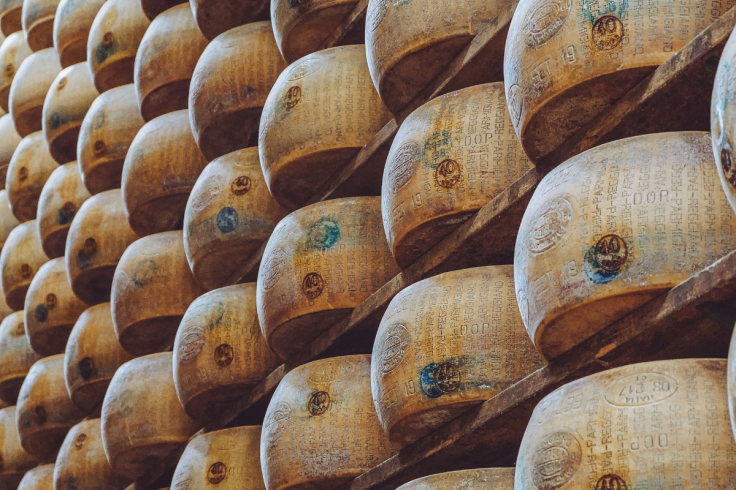
Many Parmigiano Reggiano wheels are kept in so-called 'cheese banks' or warehouses owned by banks, as part of an arrangement with farms. Because these special cheese wheels need to age at least 12 months, farmers face a long wait for income. Banks step in and offers loans, and the cheese wheels become collateral.
Such an arrangement was practiced since the 1950s. But with the current heatwave, banks are forced to upgrade cooling systems to ensure proper aging and storage for the cheese. Daily energy consumption rose by 30%.
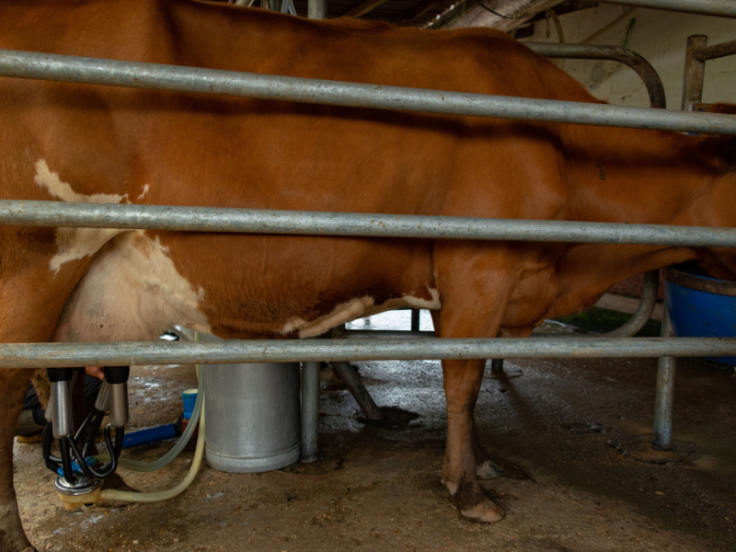
That is just one aspect of the total Parmigiano Reggiano production. Dairy farmers are also affected by the heatwave because cows become more lethargic—lying down more and eating less. The result is less milk production, with farmers estimating a 10% drop in the last couple of months.
Parmigiano Reggiano uses up to 18% of Italy's total milk output, according to CLAL, an Italian Dairy Economic Consulting firm. The dairy farmers also need to upgrade storage for milk production, as the heat can easily affect the quality. Temperatures in Italy soared to 40°C (104°F) for many weeks, prompting officials to place many cities under maximum red alert.
Disrupting Trend
The heatwave is disrupting the production increase of Parmigiano Reggiano in recent years. In 2025, 4.19 million wheels were produced compared to 4.079 million in 2024. Parma was the leading producer of the specialised cheese, followed by Reggio Emilia, Modena, Mantua and Bologna.
The export share also saw an increase of 2.7% in 2025, which marked the first time more than half of the cheese was seen leaving Italy. Among the top markets for Parmigiano Reggiano are Canada, France, Germany, Sweden, the UK and the US.
Parmigiano Reggiano is often regarded as one of the best cheeses in the world. Online food encyclopaedia TasteAtlas recently hailed the Italian cheese the second best in the world, just behind Greece's Graviera Naxou. 'Parmigiano Reggiano is made with raw, semi-skimmed milk from cows grazing on fresh grass and hay,' TasteAtlas described the cheese.
'It is a hard, gritty texture and its flavours range from nutty to robust and slightly piquant, depending on how long the cheese has matured,' TasteAtlas also stated. In Europe, the term parmesan exclusively refers to Parmigiano Reggiano, which is a highly regulated cheese.
Imitation Cheese Also Threatens Parmigiano Reggiano
Counterfeit Parmigiano Reggiano is also threatening the industry. 'The Parmigiano Reggiano Consortium estimates that counterfeit cheese sales add up to $2 billion a year,' Encyclopaedia Britannica said on X, while reacting to the story about the heatwave's effect on the Italian cheese.
'Italian cheese makers often embed tiny microchips in their Parmesan wheels to help fight counterfeiting. Yes, they are edible,' it also said.