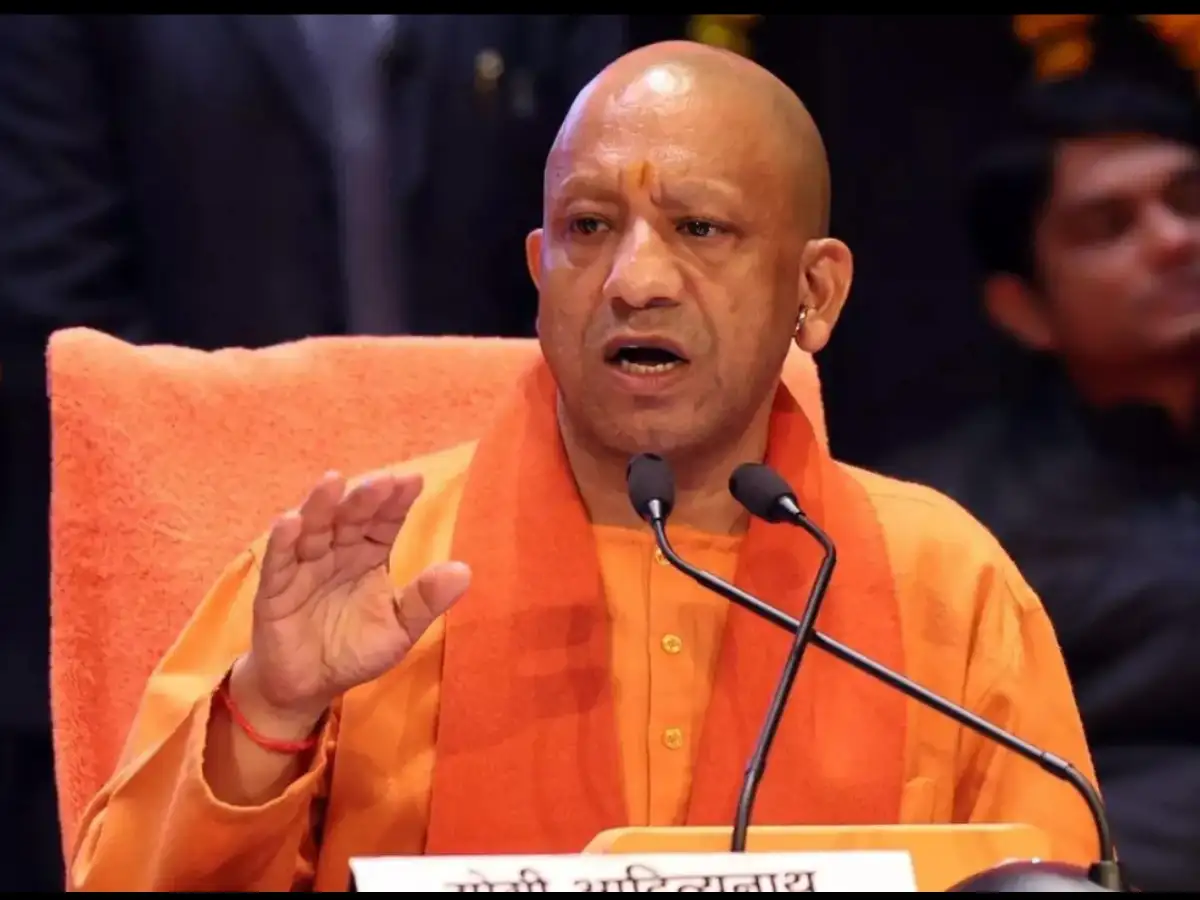
Lucknow: May Uttar Pradesh Chief Minister Yogi Adityanath held a review of the health and medical education departments on Tuesday, emphasising that the quality of treatment, diagnostics, medicines and emergency services in government hospitals should improve.
Medical colleges, nursing institutions and super-speciality services should be strengthened through modern technology, better human resources and effective management, he said. "Technology, accountability and sensitivity must all be visible together in health services, only then will public trust become stronger."
The chief minister said the objective of medical education is not merely to increase the number of institutions, but to produce trained doctors, specialists and quality healthcare workers. Modern equipment, expert faculty and research must be promoted in medical institutions.
Read More: Adityanath calls for trader-friendly tax system, better services for honest taxpayers
According to an official statement, the meeting was informed that 108 district hospitals, 106 specialised hospitals, 976 community health centres (CHC), 3,757 primary health centres and 27,668 health sub-centres are operational in the state.
In 2025-26, government hospitals provided 26.41 crore OPD (outpatient department) and 1.23 crore IPD (inpatient department) services, while 24.33 crore pathology tests were conducted.
Compared to 2016-17, the number of medical colleges in the state increased from 44 to 83 by the 2025-26 session, registering an increase of 88.6 per cent.
Over the past 10 years, the number of PG (post-graduate) seats increased from 1,344 to 5,067, while MBBS seats rose from 5,390 to 12,800. Super-speciality seats saw an increase of nearly 165 per cent, according to the statement.
On the expansion of nursing education, it was informed that 652 nursing institutions are currently operational in the state.
Seats in ANM (Auxiliary Nurse Midwifery), GNM (General Nursing and Midwifery), BSc Nursing and other courses have increased significantly, and approximately 3.95 lakh registered nursing staff are available in the state.
Information regarding reforms in nursing education under 'Mission Niramaya 1.0' was also shared. Counselling sessions were organised in 17,000 schools, reaching more than 3.5 lakh students. A total of 10,570 nursing faculty members were trained, the statement said.
The chief minister said Ayushman Yojana is becoming the biggest support for poor families.
Directing claim settlements be ensured within the stipulated timeframe, Adityanath said timely payments to hospitals ensure better facilities for patients.
He was informed that 6,480 hospitals in the state are associated with the Ayushman scheme and more than 96.75 lakh free treatments have been provided so far.
He directed that AYUSH systems be included in the Deendayal Upadhyay Rajya Karmchari Cashless Chikitsa Yojana. IPD services of systems such as Ayurveda, Unani and Homeopathy should be made part of the scheme.
He further said, "Health workers who served during the Covid period under the National Health Mission should be appropriately adjusted on a priority basis. Payments to ASHA workers should not remain pending under any circumstances. Health ATM services should be expanded to reach more areas."
Adityanath instructed officials to make the communicable disease control campaign more effective and said better outcomes should be ensured through public awareness, cleanliness and timely treatment.
He emphasised strengthening institutional and safe child delivery systems to further reduce maternal and infant mortality rates. Every pregnant woman should receive timely medical facilities.
During the meeting, the chief minister was informed that more than 15.28 crore ABHA IDs have been created under the Ayushman Bharat Digital Mission (ABHA). More than 15.14 crore electronic health records have been linked in the state. The scope of the hospital and laboratory information systems are also being expanded.
Emphasising the strengthening of medical research and innovation, the chief minister said institutions should be connected with research-based healthcare services.
In this regard, work is being carried out on the 'UP-IMRAS' digital initiative, multidisciplinary research unit, clinical trial unit and MedTech programmes. Intent proposals to the tune of Rs 1,500 crore have been filed for investment in medical research and the MedTech sector.
Adityanath directed that work on under-construction medical colleges and health institutions be expedited. "All projects should be completed within the stipulated timeframe so that the public can soon benefit from better healthcare facilities," he said.
Proposed inaugurations and foundation-layings for medical infrastructure were also reviewed during the meeting.
These include the multi-storey girls' hostel at Gorakhpur Medical College, the 110-bed trauma centre at Ayodhya Medical College, the BSc Nursing College at Saharanpur Medical College, and the expansion of the psychiatry department and de-addiction ward at Kanpur Medical College.
The process of establishing medical colleges under the public-private partnership model is progressing rapidly, the statement said, adding that medical colleges are operational in Maharajganj, Shamli and Sambhal, while process is underway in several other districts.
The response time of 108 ambulance services and advanced life support (ALS) ambulances is improving, it said.
At present, 375 ALS ambulances are operational and 9.38 lakh patients have been referred so far.
Adityanath directed that response time of ambulance services be reduced further and said every minute is important during emergencies.
He also instructed that payments to ambulance operators be ensured on time.
The chief minister issued strict instructions regarding the quality of medicines in hospitals. Medicines with less than three months of expiry should not remain in hospitals and should be replaced with fresh stock.
During the meeting, officials said dialysis services are available in 75 districts while CT scan services can be accessed in 74 districts, with over 35.69 lakh dialysis sessions and 45.35 lakh CT scans conducted by March 2026. Tele-radiology services are operational at 227 CHCs.
Achievements of Dr Ram Manohar Lohia Institute of Medical Sciences, Lucknow, were also highlighted, including over 376 robotic surgeries and 250 kidney transplants. The state's first gamma knife (advanced radiology) centre is being set up at the institute, while approval has been granted for a 1,010-bed hospital at its new campus.
Work on the 500-bed advanced pediatric centre at Sanjay Gandhi Postgraduate Institute of Medical Sciences is also underway.
Presentations were made on the action plans of the Uttar Pradesh State Cancer Mission, Uttar Pradesh Trauma and Emergency Network (UPTEN), Project Sushrut and CARE-UP Mission.
Under UPTEN, a statewide emergency trauma network will be developed, while CARE-UP aims to expand ICU and HDU services in medical colleges and district hospitals.
The chief minister said the tuberculosis eradication campaign should be stepped up, turning it into a mass movement involving schools, colleges and voluntary organisations.