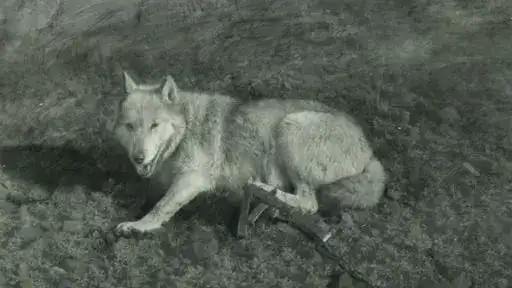
Aldo Leopold’s conservation vision was born from a moment of violence that became a lesson in humility. In the early 1900s, a young forester in Arizona shot a wolf, expecting another routine victory against a feared predator. Instead, the fading eyes of the animal forced him to question everything he believed about humans and nature.
That encounter became one of the most powerful turning points in environmental history. Leopold later described seeing a “fierce green fire” disappear, a moment that revealed the hidden connections between predators, forests, animals and people. His conservation philosophy grew from that realization.
At the time, killing wolves was considered necessary. Many wildlife managers believed predators threatened livestock and reduced valuable game populations. However, Leopold began understanding that removing one species could disturb an entire ecosystem. His ideas helped shape modern ecology and changed the future of conservation.
Born in 1887 in Iowa, Leopold entered the newly developing field of forestry when America was facing serious environmental damage. Overgrazing had destroyed soil, uncontrolled hunting had reduced wildlife populations, and expanding development was putting pressure on natural landscapes.
His work later became the foundation of environmental ethics. Through his famous book A Sand County Almanac, Leopold argued that humans were not rulers of the Earth but members of a larger ecological community. His message remains relevant today as climate change, biodiversity loss and habitat destruction continue to challenge the planet.
How Aldo Leopold’s conservation vision transformed wildlife protection
Aldo Leopold’s conservation vision challenged the old idea that humans should dominate nature. During his early Forest Service career, wildlife management often focused on controlling predators and increasing populations of animals considered useful for hunting.
Leopold eventually saw that ecosystems were far more complicated. Wolves were not simply threats. They played a vital role in maintaining balance among species, vegetation and landscapes.
His famous reflection in “Thinking Like a Mountain” explained how mountains themselves were affected by the disappearance of predators. Without wolves, deer populations expanded and consumed young plants, damaging forests and changing the entire environment.
His research on the Gila National Forest showed his commitment to preserving wild spaces. In 1924, the Gila Wilderness became America’s first designated wilderness area, marking a major step in land protection. Leopold combined scientific research with emotional understanding. He believed facts alone could not create conservation. People also needed respect, responsibility and a deeper connection with the natural world.
Why did A Sand County Almanac change the future of conservation?
Aldo Leopold’s conservation vision reached millions through A Sand County Almanac, published after his death in 1949. The book transformed environmental thinking by presenting nature as a community where every element had a role. Leopold introduced the idea of a “land ethic,” asking people to consider moral responsibility toward the environment.
The timing of the book made its message even more powerful. America was entering an era of rapid industrial growth, expanding highways and technological change. Leopold’s writing offered a different path based on awareness and restraint. His ideas influenced later environmental movements, conservation policies and ecological research.
Leopold also demonstrated that restoration was possible. After purchasing a damaged Wisconsin farm in 1935, he and his family planted thousands of trees and rebuilt the landscape. The once-degraded land slowly became a healthier ecosystem. This personal experiment showed that conservation was not only about protecting untouched wilderness.
How Leopold’s legacy still shapes environmental thinking today
Aldo Leopold’s conservation vision remains influential because it connects science with human values. He showed that protecting nature requires more than regulations or research. It requires a change in how people see their place on Earth. Today, conservationists use many ideas that Leopold helped popularize. Wildlife corridors, ecosystem restoration and predator protection all reflect his belief that nature works through relationships.
Leopold’s story also carries a personal lesson. A single moment of reflection after shooting a wolf changed the direction of his entire life. He recognized that knowledge grows when people are willing to question their assumptions. He did not reject humanity. Instead, he believed people could become positive forces in the natural world. Humans could destroy landscapes, but they could also heal them.
More than seven decades after his death, Leopold’s words still challenge society to rethink progress. His greatest contribution may be the simple but powerful idea that the Earth is not merely something humans own. It is a community humans belong to.
FAQs:
Q1. How did Aldo Leopold’s conservation vision change modern environmental thinking?Aldo Leopold’s conservation vision changed environmental thinking by showing that humans are part of nature, not separate from it. His experience with the wolf in Arizona helped him understand the importance of predators, ecosystems and biodiversity. Through his land ethic, Leopold encouraged people to protect nature with responsibility, respect and long-term ecological awareness.
Q2. Why is A Sand County Almanac important in conservation history?
A Sand County Almanac remains important because it introduced a powerful idea that land, wildlife, soil and water form one connected community. Aldo Leopold’s conservation vision influenced modern ecology, wildlife protection and restoration efforts. The book challenged society to move from controlling nature toward living in balance with the natural world.