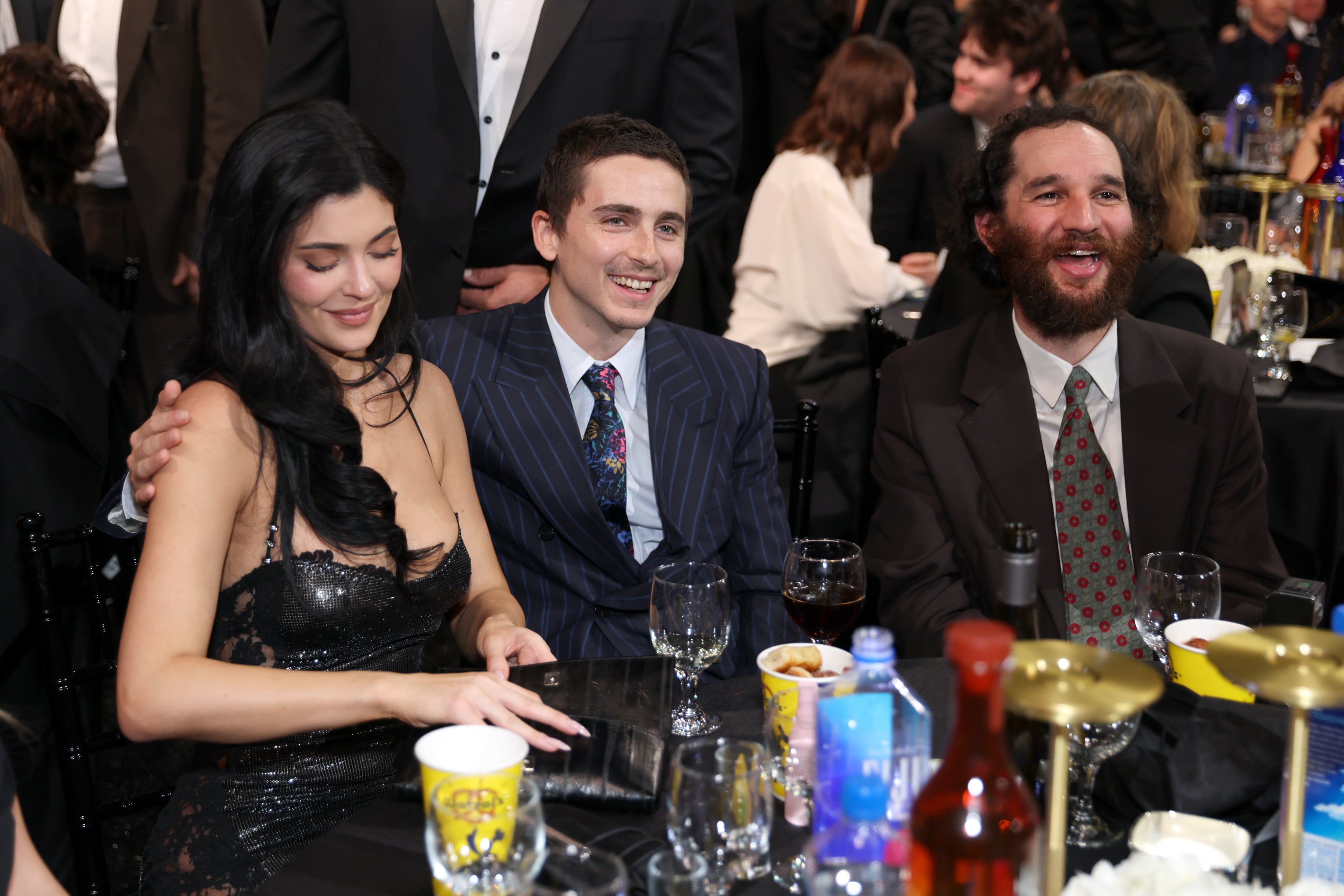
What’s in a name? Well, rather a lot, actually – at least when it comes to the person you’re dating. Over the weekend, Timothée Chalamet made headlines for thanking his “partner of three years”, aka Kylie Jenner, during his acceptance speech at the Critics Choice Awards in LA, where he took home the gong for Best Actor.
“Lastly, I'll just say thank you to my partner of three years,” the 30-year-old said after thanking the litany of collaborators who worked with him on Marty Supreme. “Thank you for our foundation,” he continued. “I love you. I couldn't do this without you. Thank you from the bottom of my heart.”
It was a sweet public display of affection from the star of Marty Supreme, but declarations aside, it was his choice of wording that seemed to capture the internet’s attention. “In Hollywood, ‘partner’ is more serious than ‘girlfriend’,” speculated one fan. “It suggests equality, commitment, and walking through life together.” Others argued the opposite, believing “partner” to be a term of emotional distance. “He’s not gonna say Kylie’s name? Just thank you to ‘my partner’ lmao [sic],” tweeted one person.
The moment highlighted just how contentious these labels can be. And there are plenty of them. In addition to “girlfriend”, “boyfriend” and “partner”, other modern-day relationship monikers include the saccharine “my love”, the somewhat condescending “babe”, and archaic terms like “significant other” and “other half”. And don’t get me started on “my better half”. There’s also “bae”, “boo”, and a myriad of niche alternatives ranging from the adorable (“love bug”) to the nauseating (“pookie”).
In LGBT+ communities, the word “partner” has long been commonplace, given its gender neutrality. It also does not indicate one’s marital status, which is seen as being progressive for some. In 2023, The Cut declared the term “annoyingly vague” and stated that straight people could only use it when they wanted to get something out of it ie: “when trying to procure an apartment or a seat next to your, ahem, ‘partner’ on an airplane and in negotiations with bosses about relocations”.
But any existing resistance seems to be fading. “‘Partner’ has grown in popularity because it reflects a more mature form of relating,” suggests the relationship coach and author Lorin Krenn. “The person you build a life with is, in many ways, your partner. It speaks to shared responsibility, equality, and emotional adulthood.” The ambiguity surrounding the term is also part of its appeal.
“It bypasses assumptions about marriage while remaining inclusive of many relationship structures,” adds Krenn. “Its rise has coincided with changing social norms around marriage, greater visibility of same sex relationships, and a cultural shift towards defining relationships by commitment rather than labels. Today, ‘partner’ signals seriousness and shared agency without needing to specify gender or legal status.”
There are also certain contexts, particularly those involving shared finances or children, where terms like “boyfriend” and “girlfriend” might feel juvenile or impractical. “I prefer to say ‘partner’ or ‘other half’,” says blogger Tina Bailey, 42. “Referring to someone of our level of maturity as ‘boyfriend’ sounds completely wrong to me. I have teenage kids, and ‘boyfriend or girlfriend’ are terms kids their age use to describe their relationships, so using the same noun to describe an adult relationship of six years just doesn’t sound right to me.”
For El Brownn, 26, the opposite is true; being referred to as “girlfriend” feels more affectionate. “It’s simple but clearly communicates a romantic connection, and it has a warmth that ‘partner’ sometimes lacks,” she says. “It feels like a title that belongs specifically to us, rather than something generic. ‘Partner’ works in certain contexts, like legal or professional situations.”
It makes sense why some labels have fallen out of fashion; to many, “other half” bears the weight of societal single-shaming. The phrase inadvertently perpetuates the belief that someone is incomplete without a romantic partner – that they can only become a whole person through that relationship. “These days, we openly celebrate independence and self-definition, so relationship language tends to celebrate two complete individuals choosing each other, rather than merging them into a single identity,” says Naomi Magnus, founder and psychotherapist at Low Cost Therapy.
These days, we openly celebrate independence and self-definition, so relationship language tends to celebrate two complete individuals choosing each other, rather than merging them into a single identity
“Choosing ‘partner’ over ‘girlfriend’ can also signal your personal values, or how you perceive your relationship, to others,” Magnus adds. “It can imply seriousness, equality, and longevity, whereas for public figures, labels also shape narratives, controlling how much intimacy or information is shared with the outside world.”
That clarity can be particularly meaningful in today’s dating landscape, where trends like situationships can hinder progress. It also reflects a wider societal shift away from conventional relationship models, the idea being that you can still be in a serious and committed relationship with someone who isn’t your spouse. Marriage rates have been dipping significantly in recent years, with data analysis by the London-based law firm Russell Cooke predicting that by 2050, only three in 10 people will be married, a marked shift from, say, 1970, when seven in 10 people were married.
“The widespread use of ‘partner’ reflects a broader shift toward inclusivity, fluidity, and self-definition,” says Dr Lalitaa Suglani, an eharmony relationship expert and award-winning psychologist. “It is also staying modern and choosing gender-neutral language to signal growing awareness that relationships don’t need to be explained, categorised, or justified for public consumption.”
All this is a net positive – take one peek at the way Chalamet looks at Jenner during his speech, and you’ll see what we mean. That isn’t a couple who are over their heady romantic phase. In fact, they look like quite the opposite.
Critics Choice Awards draw Fyre Festival comparisons over ‘sad’ dinner
Kylie Jenner and Timothée Chalamet’s matching orange looks spoofed on red carpet
Why the ‘high-effort boyfriend’ is the next toxic dating trend
Dunkin’ Donuts takes on rival Starbucks with latest menu additions
Why I’m ditching my toxic ‘mum group’ WhatsApps – and you should too
The five everyday ingredients making your home more toxic than you think