Being frugal is a virtue – certainly not everybody knows how to save money. However, some folks might overdo it and step into cheapskate territory. Rich people often are the best savers, and research even shows that those who earn a lot spend a maximum of $100 on holiday gifts, for example.
Nevertheless, some cheapskate behavior can cross the line of common sense. Quitting reading because your glasses broke and buying new ones is "too expensive" or eating off other people's room service trays on work trips qualifies as pretty wild cheapskate behavior.
But these are just a few examples from an online thread where someone asked, "Who is the cheapest person you know, and what is the cheapest thing you've seen them do?" Read on to find even more ridiculous cheap people and share your own examples of frugality gone too far in the comments!
#1
My son has a landscaping business and does jobs for all income levels. If a middle class or lower income person feels like the estimate is too much they will do it in stages or just not hire him. Upper class people will agree to a price then complain about the price, pay VERY late or try to bargain down the price they already agreed on. It’s bizarre.
© Photo: love2go
#2
My grandmother was worth a few million. When I saw her using a toothpick I asked if she had another. She offered me the dry half of the toothpick she was currently using.
BONUS: She had a whole jar of toothpicks and they were stolen from Howard Johnson's.

© Photo: bunkerbee_hill
#3
My roommate in college. He sat myself and the other roommate down when we were all moving out (post graduation). After living together for close to 2 years, splitting groceries, utilities, rent, etc he presented us with an itemized list of every small expense he had incurred or even items he had shared. Sodas. Beer runs. Gas when he drove somewhere. Bags of chips. Pages and pages of one-offs. The thing that got me was that it was all one sided transactions (what we owed him). His position was that it was our responsibility to account for every skittle we let him eat from our bags…
It was like $1700 of just nonsense. He had never mentioned this ledger before. It was wild. Me and the other roommate but said “absolutely not” and that was it. Basically the end of the friendship, too. Very strange.

© Photo: johnsilver4545
#4
A friend (Tim) years back. Five of us went to dinner. The young lady that waited on us was 7+ months pregnant. That day had been particularly hard for her. She took our order. Food came. Her service was impeccable. We (friends) left her a great tip. We got up to leave, and I noticed Tim went back to the table. Watched him pick up the tip money, and replace it with $1.00. I went ballistic. The other guys did too. Made him go back into the place, apologize and hand the young lady her full tip. I never invited Tim to another event. Disgusting….
#5
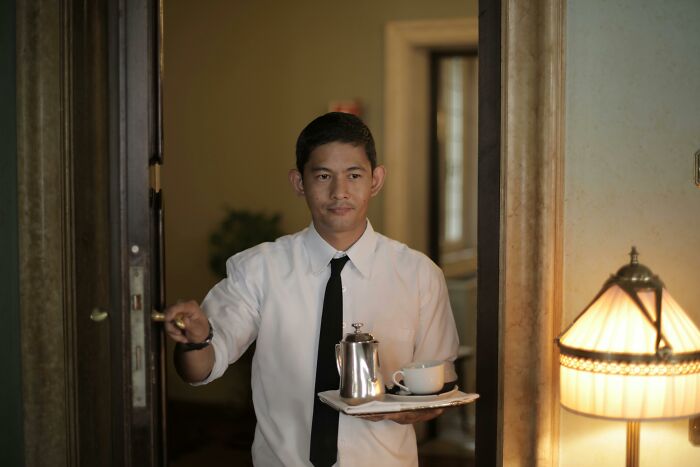
My brother is extremely cheap. He had one job where he traveled for work on his company’s dime. And yet he would still eat food off of other people’s room service trays in the hallway. Yuck.
© Photo: MeanSecurity
#6
A rich kid, son of a lawyer, asked me to reimburse him for a banana I ate at his house. It was a shared house with many roommates that I was very close with. I, the poor kid, frequently brought over food and booze to share! I laughed it off but he was serious.
© Photo: trumpskiisinjeans
#7
My coworker. I have so many stories.
During the height of Covid, many stores were giving out free Covid kits. Each kit had 5 tests. She and her husband would go to these stores every single day to get a free box each. They did this for months, even though these kits would eventually expire. They must have at least 100 or more.
One day my coworker said she was mad at her daughter because she was showing symptoms of Covid and asked her for test. She didn’t want to give her own daughter one single free test because she didn’t want to waste it. What else are you going to do with it?
And no she never sold any because she’s not that type. She stills has them on her basement.
I’m realizing this might not be a good cheapness story but more a weird coworker story 🤣.
#8
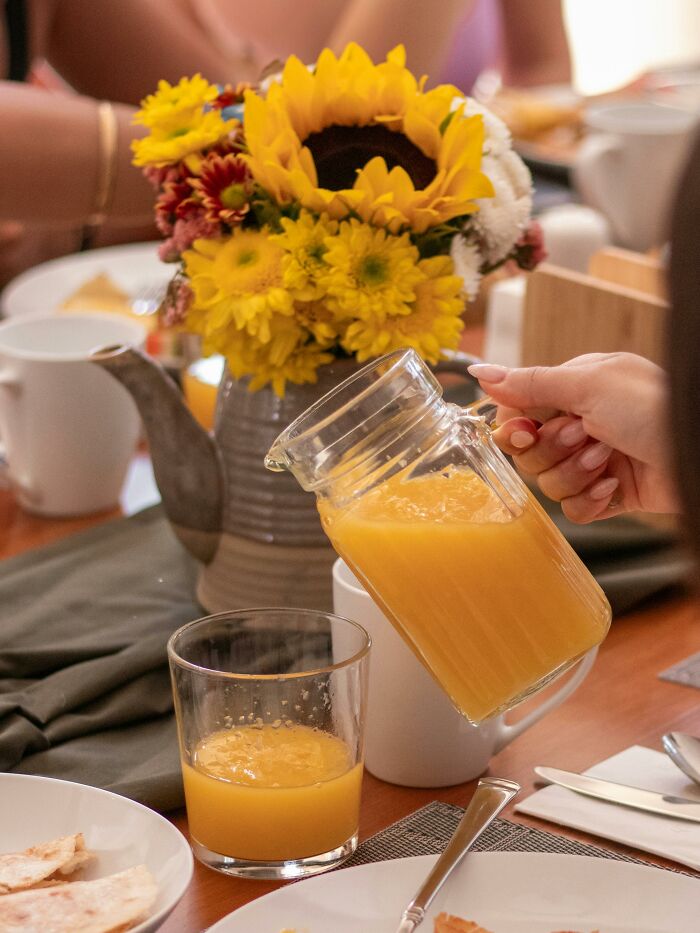
My friends parents. Dad was a nuclear engineer designing submarines, mom was a tenured physics professor. At a sleepover we were allowed exactly 4oz of orange juice at breakfast. They also split two ply toilet paper to make two rolls, and recycled dryer lint to use in stuffed animals to sell at craft fairs. Now I never really cared but they were not poor. It was just… odd.
© Photo: Curleysound
#9
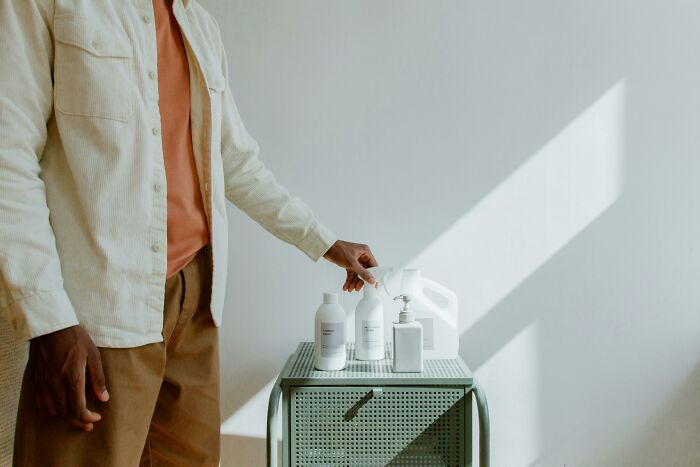
Had a roommate lock toilet paper inside a chest and you had to pay him by the square to borrow some. He would also weigh his shampoo after other people showered to ensure no one was using his stuff without paying 💀.
© Photo: No-Importance-2598
#10
My grandparents had money. They had a house on cape cod, a house in Naples FL, and would travel around the world multiple times per year. They went to Italy at least once a year.
My grandmother loved an early bird special. She loved her coupons. She lived thru the great depression and you could tell.
Sometimes she'd drag us to olive garden with her coupons, and she'd have us all get a free taster glass of wine. It's just a splash in a glass, barely anything. But then we'd all have to pour it into her glass so she'd have a free full glass with dinner.
😭😭😭 Grandma noooooo. I'll just buy you a glass of wine. But she was so insistent on us doing that.
While wearing a real mink coat. Please.

© Photo: biddily
#11
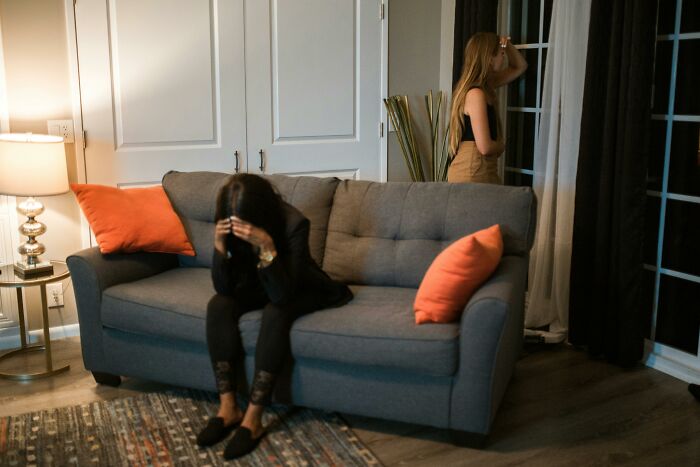
Stepdad was super cheap. My mom (5’6”) had cancer. She was very, very ill and her stomach was so full of fluid she couldn’t wear her pants. I was talking to her about what size and color sweats she wanted from Walmart and he LOST his mind, even though I was buying them for her. Ran and grabbed a pair of his (6’2”) old ratty sweats, tossed them at her and told her to wear them. She said they were too big so he grabbed them, held them up to her and said we’re going to cut them off right here then. It took everything I had to not punch him in the face.
© Photo: kind_librarian
#12
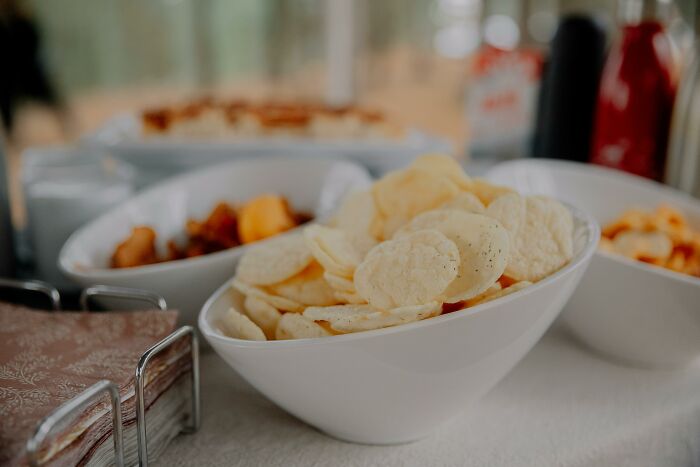
An old guy, who was one of the highest paid employees, would bring a bottle of ketchup and an bottle of mustard from his fridge for potlucks. That was his contribution. He would bag up leftovers to take home along with his bottle of ketchup and his bottle of mustard. The secretary told him to at least bring a bag of chips or he would not be welcome to the next potluck. He threw a fit. At subsequent potlucks, he would bring a small bag of chips about the size you would get out of a vending machine, along with his bottle of ketchup and his bottle of mustard.
I don't think anyone ever opened his bag of chips because the same bag showed up at each potluck. I think people might have used his ketchup and mustard. I never did.
© Photo: Globinnyc
#13
My grandfather is worth a few million. His reading glasses broke last week and he said a new $30 pair at CVS is too expensive so he’s opted to stop reading.

© Photo: manillaoreo
#14
I will never forget my loser neighbor bringing a Tupperware container to a wedding reception to take home food from the buffet….

© Photo: B-Cerre-us
#15
My aunt's boyfriend. He washes his car under the pouring rain to not pay water. Once I saw him eating whole shrimp (including the head and the hard shell) to "not waste". He wasn't the one paying for the shrimps.
This mf has nearly half a milion saved because he's so cheap.
#16
I had a buddy eric in highschool who was born into a rich home but was always such a cheapskate. At one point our friend group of like 6 people went to McDonalds together. Everyone ordered something except him. He said he was hungry but didnt buy anything. I took this as him meaning he didnt have money. I offered to buy him a meal and he accepted. After he ate the meal he said he was still hungry and ordered something else. I said "hey i thought you didnt have money?" He said "no, I just didnt want to pay" and continued ordering his meal. Never went out with him again after that.
#17
I used to work for a member of the wealthiest family in the world, and their estate manager rounded up a charge on their company card by 68 cents to benefit a local charity. She later had to write a personal check to the accounting department for that 68 cents. It’s still the most disgusting thing I’ve ever seen.
#18
I was eating a bean taco at a restaurant, and some filling fell out of the sides. My great grandmother wanted me to wrap it up in napkins and take it home. She also tried to repurpose an empty bottle of bleach as a water jug, and tried to strain broken glass out of milk once because she didn’t want to waste the milk.
Adding that she would also stuff newspapers into pillowcases to make new pillows.
#19
My uncle. He is a cautionary tale.
Basically he never wanted to spend money on ANYONE not even himself (well from time to time lol) he had four kids tho mind you.
One of the stories ive been told is he took my cousins to disneyland and because he didnt want to pay for tickets, made them stand up outside of the entrance and took photos of them. Thats it…the kids never got to see disneyland just stayed outside. And they had the money.
Well he is diabetic and nowadays he lost both his legs and one arm, he still refuses to hire a nurse or some help. He forces his early 20s daughter to care for him and because she is caring for him she cannot have her own income but a tiny amount he gives her every week and still my uncle tells her she is not allowed to use the toilet paper or the food he buys, she has to get her own stuff with the little money she has.
#20
A friend who reuses dental floss. Not even once — multiple times. He keeps it draped over the bathroom mirror "to dry." I no longer accept invitations to stay at his place.
#21
My grandparents were pretty well off, but my grandmother still used a hair brush with like 4 teeth left and a hand towel so thin, I could see through it. I bought her a new brush and new hand towels, and teased her about squeezing a penny till it was worth $0.10. I miss that woman fiercely.
#22
My parents live in California, I live in Georgia. They are easily worth a couple million, I just get by. They were visiting and we went to the Publix and my dad took an entire STACK of plastic bags (10c per bag in California). He said “we can use these back home when we go grocery shopping”. My wife was so embarrassed lol.
#23
I served on a board of directors for many years with a banker who would absolutely never buy a drink for himself or anyone else at social functions. I remember one time specifically there were 3 of us at a table, and both the other person and myself had bought a round. When it looked like a 3rd might be coming he mumbled “well it looks like you guys are good” and just sauntered away. He did something similar to this all the time.
#24
I knew a millionaire who owns a landscaping business, the dude was banned from multiple 7 elevens for filling up his coffee cup with free soda every morning.
© Photo: alexsi707
#25
I saw a guy drop a can of beans on the floor in the grocery store and then go to the front counter asking for a discount because it was dented.
#26
I knew a guy who never bought a shirt. Ever. He worked in IT and used to go to cons often (this was the mid/late-90s) so he just kept wearing the free shirts he got from various vendor booths. He was like a walking billboard for random computer software and hardware companies. To this day he has still never purchased a shirt.
#27
My college roommate would take advantage of the Trader Joe’s return policy that basically says that if you don’t like something, you can return it. He’d eat his meals, save a few containers, and return them every time we’d go to Trader Joe’s. He’d even make sure we went at different times so that it wouldn’t be the same manager on staff. My other roommate and I were pretty bothered by it and finally told him we couldn’t go with him if he was going to continue to do that.
#28
My Father In Law will drive around looking for the cheapest gas price not thinking about the gas that he's burning.
When he goes to a 7-11 he will fill a coffee cup up with half & half and just pay for a single coffee since it's cheaper than buying a carton of half & half. He'll also take all the sweetener that he can fit in his pockets.
#29
My friend used to refuse to drive at night because turning on the lights draws current therefore wastes fuel.
He would turn the engine off and coast down hills.
Would refuse to take more than one passenger anywhere.
Would also refuse to drive in the rain, again turning on wipers uses current and wastes fuel.
#30
My dad is very well off. One time, the propane ran out in the tank (which has only ever happened that one time), but instead of paying $200 for an emergency fill up, he made my mom and two little sisters sit in a 20°F house for 3 weeks in the middle of January in Ohio.
He just stayed in the office as long as possible every day and went straight to bed after, but my mom and sisters were stuck. Again, he is very well off.
#31
Met a guy who saved the salt from the bottom of the pretzel bag. .
#32
My mother. She didn’t want to record too many shows on TV because she thought it would run up her electric bill. Not a joke.
#33
My MIL packs up all her leftovers when we go out to eat. One time, I had bitten into a French fry and set the other half onto my plate. She asked me if I was going to eat it, I said no, and she proceeded to pack it up into her takeout container. I mean, I like to pack up my leftovers too, but I typically don’t pack up other people’s half eaten food.
#34
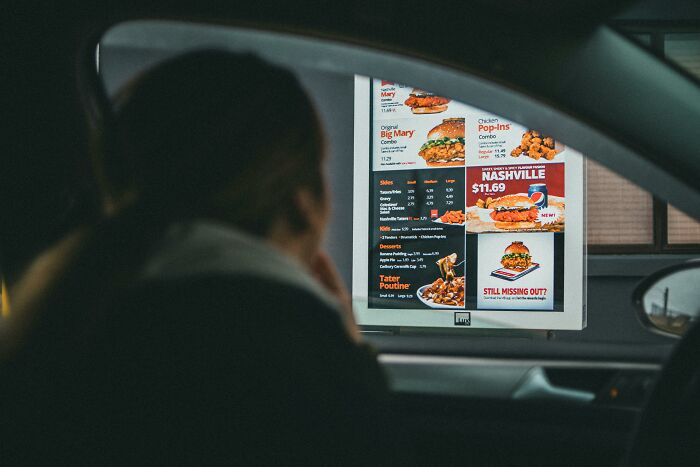
My dad ordered a Diet Coke in the drive thru and then once we got to the window where they give us our food, he asked for a normal coke. In Seattle there is a sugar tax so he prob saved 15 cents or whatever.
© Photo: spursfan69
#35
My step dad was a doctor and a pretty wealthy yet cheap guy. I remember my mom bought him some new shirts and he hated them because they didn’t fit right. When he couldn’t return them, he wore those shirts constantly because he “had to wear them down as fast as possible” so someday he could finally throw them out. The shirts unfortunately outlived him. I miss him so so much.

© Photo: Hamburglar3086
#36
My dad.
Took an allergy med (store brand, naturally) and it caused a serious reaction that required an ER visit.
Three weeks later he did it again! I asked him why he hadn't thrown the meds out after the first reaction and he said "they were still good"!
#37
I used to work for a guy who was easily worth a few million. He had the usual of a big house and multiple businesses
He had us there working on his house, and I saw him come in with groceries. Normally not a big deal but he shopped at bargain mart which is a discount store in our town that takes the almost expired or damaged stuff and resells it. So think a grocery store that's a step below dollar tree.
He unloaded everything and then wanted a snack so he pulled a tomato out of the fridge that was obviously fuzzy, cut the fuzz off, and just ate that.
I worked on his house for ages and saw him routinely do unhinged stuff like that just to save a penny.
#38
My Dad. Trying to fit four bag’s worth of groceries into one bag because they’re five cents.
“Dad, the war is over. Live a little.”.
#39
My cousin and I are grown adults with good jobs. He’s very cheap. Probably has enough money saved to be comfortable for life.
On my birthday he invited me for burgers for lunch. He paid only for himself.
#40
There was this guy who took an empty flask to work. At the end of the day he boiled the kettle filled flask, then took it home to make tea and coffee.
Then there was my dad who gravelled his driveway, one handful at a time from the work carpark. Took a few years.
#41
My dad (owns 2 houses, mortgage free) sent us a 1/2 gallon of refried beans and some expired freeze-dried space carrots when my kids were 5 and 2 years old to help w our grocery bill.
#42
Was at my moms friends house(who is compulsively cheap) and while washing my hands he scolded me for using hot water and said “what am i a billionaire?”. He was a millionaire….
#43
My boss had me make copies of his daughter’s coloring book so that she would have more pages to color instead of buying another/different one. He was wealthy.
#44
Guy I was in the military with. Every summer he would go to the PX and buy a bunch of gardening tools like a rake, hedge trimmer, etc. He lived off base in a house, so he would buy all these things to trim and landscape his yard, and then he would return them after a few days for a full refund. He would even do this with things like a garden hose and ladder to get on his roof check his gutters. He was an absolute maniac. He tried to do this with a lawnmower one summer but he got rejected because they put return restrictions on gas powered things.
#45
My friend moved to Portugal. He invited his friend , a bar owner , I will call him Ken over for a couple of weeks, He called me to tell that Ken brought 20 Euro's with him. I said wow what a cheapo. He said no that's not the story. He took 13 Euros home with him.
#46
My grandfather would split the ply napkin in half, giving my grandmother the other half at breakfast..if it wasn't too used up (usually wasn't) they'd use it again for lunch...maybe again for dinner. Might have unwittingly held the Guinness book of world records for "Most Meals Supported by a Single Ply Napkin Between Two People".
#47
My friend reuses tea bags like 5 times.
#48
My best friends parents invited me to his 15th birthday dinner, later told me after we ate that I had to pay for myself. Keep in mind I’m also 15.
#49
My dad.
He used to change the oil in our moms nice car, and put the used oil in his car because it was a Toyota Corolla and they used to be bulletproof. Lol.
#50
An entire set of home owners. Rented in a condo in Singapore that had just been built. The condo developer gave residents 2 years of a private shuttle bus service to the nearest train station, which was only about a 20 min walk. When that service ended, almost every owner was screaming that this "free bus" should continue. Almost 12 months of countless comments/demands in the Facebook group and in committee meetings about restarting this bus. Of course no one thought who'd pay for it (buying a bus, hiring a driver, fuel, insurance, maintenance).
The public bus that you could have taken? It cost me only 4 cents to get to the train station.
#51
A girl i knew was into the early days of being seduced by a guy (under a week!) the girl takes a bite of the dude's subway sandwich.... the dude had the audacity to ask her 1$ for the bite she took !!!!!!!!
#52
Went to a restaurant. And he asked how many pieces of bacon are on the BLT, it was 4, cut in half, he then asked if he just had 2 pieces could he get a discount.
#53
He'd refuse to stop at the gas station if it was 3 cents a gallon more than a different gas station. So like 30 cents diff on the full tank, not worth caring about.
#54
Once knew a guy who paid £9 for a dvd, drove to a different shop, found the same dvd for £6 and drove back to the first shop to return it. He had to pay for parking again so it actually ended up costing him more but 'it was the principle'.
#55
Uncle. And made a mattress out of sheets and newspaper.
#56
Someone I know separates out spices (cardamom pods and similar) from cooked food to use it to make another dish😭.
#57
Ex-wife's grandmother would "wash" paper plates and cutlery to use at the next family event. We put our foot down and said no. By the next year I had gone to the restaurant supply store and bought a bunch of real plates and metal cutlery.
#58
My very well-off in-laws have dozens of penny-pinching habits, such as collecting sugar packets from motels, cafes, etc. and then tipping all the small amounts of sugar into a jar at home. Same for coffee sachets, tea bags, cheap biscuits, anything "complimentary". Cheap bastards.
#59
Had a friend that used to mix hand soap with water to dilute it. Her household income was ~260k/yr and we had friends on food stamps offering to buy her soap just so they wouldn't have to keep using their nasty stagnant watered down concoction.
After maybe 3-4 years of this she finally relented, and rather than just taking the middle road and buying Equate or something, now she exclusively buys nicer hand soaps (Crabtree & Evelyn kinda stuff). The whole thing made no sense.
#60
My father in law. He bought a power washer from harbor freight, power washed his driveway and then returned it after. Worked perfectly fine.
#61
One of my best friends is from a rich family, but his mother has some… odd… habits in that area. She would water down all the drinks they bought to make them last longer. Orange juice? Check. Milk? Yup. Soda? You bet!
I started just bringing my own drinks when I visited.
#62
My mom. She’ll get mad at me for tossing away the last few ounces of drip coffee and demands I leave it for her to pour in a cup for the her next morning’s coffee, but will still drink the fresh first. So there are 3-4 half filled cups of coffee in the fridge. I’m not sure if it’s the waste of the grounds, water, or waste.
#63
My dad had a 20% off coupon for Kohl's in his wallet, but when he got to the register, he put on this frankly embarrassing production about how he left a 30% off coupon in the car.
Like, slapping his forehead, proclaiming his stupidity for forgetting it, "Oh, I can see it in the front seat now. two_oh_seven, can you go run to the car and get it?"
The Kohl's employee had already rung in the 30% off after he first said he left it in the car and just stared at him blankly, waiting for him to stop.
He was so proud of himself for "pulling the rug over her eyes," and he did not appreciate the rest of us saying he way overdid it.
#64
A teacher I know, he comes from money. He never goes to the grocery store. He lives on free meals, and leftovers from the school. He has even gone as far as to eat stuff left on trays from students.
#65
My Dad would drive all the way across town to save 10 cents off a can a beans with a coupon.
#66
A guy I know would buy 4 ply toilet paper because it was cheaper in the long run but only because he would seperate 1 ply at a time.
#67
My great-uncle from Japan was technically a millionaire, a school teacher his whole life, not someone you would consider "rich" but saved about 1.5 million USD over the course of his life. He was incontinent but instead of using adult diapers he fashioned his own out of folded newspaper. He would splurge a little when visiting my grandma (his sister in law) in America. Once we were leaving a buffet. As we walked past tables waiting to be bussed or whose occupants were off getting more food, he grabbed half-eaten baked potatoes, dinner rolls etc. off the used plates and stuffed them in his pockets.
#68
My dad. Me and my brother used to joke that on the rare occasion we got to get McDonald's, he would make us split a free water.
#69
Software engineer at a weapons manufacturer for the govt making over 200k a year who wouldn't leave a tip at restaurants. Ever. .
#70
I had (past tense) a friend that would always complain to the staff about the food he got at restaurants…always. Then he would refuse to put in for the tip because he got his meal for free. He bragged about never paying full price for a meal.
#71
My dad had me write out an IOU to borrow bus fare, so I could get to work for my first job.
#72
I caught my dad, who’s worth low 8 figures, gathering up the ketchup packets after a family lunch out.
#73
Former friend and housemate…. Everything was to the cent. I had a Costco card and would do Costco runs; $44.13, call it $45. Nope! $43.13. He’d call and ask if I was picking up beer on the way home…. Yup, to the cent. Note; he’d ignore tax or round down when it was in *his* favor- example: 45.22, nope, that was $45 even…. “What? Do you want me to scrounge around for loose change?” When id had enough and told him yes, the next day I got it all in pennies. And it’s not like up upcharged on bs or otherwise, but I spent on the Costco membership, round to the nearest dollar and call it a day. Dude was cheap af.
#74
Guy at my work uses a pocket knife to cut the stalk off broccoli when he buys it by weight at the grocery store.
#75
My childhood best friend. Bought a 50rupee earring for my birthday ( I don’t mind it) wore it a day before my birthday and tried gifting it to me the next day. I said if you like it that much you should keep it lol.
#76
My friend re uses same chewing gum for more than a week in gym😅.
#77
My grandparents would get their burger toppings on the side (lettuce, onion, pickle, tomato) and would take them home for a salad using the Togo packets of mayo, mustard, and ketchup mixed into a dressing.
#78
I knew an older guy who was going to work for us and they needed to set up direct deposit. Almost everyone would write “void” on a check and staple it to the form. This guy didn’t want to waste a check, so he put a little piece of tape that said “void” on it and made a copy. Then he took the tape off and put it back in his checkbook.
#79
A family member (I wont be more specific in case he sees this). We were traveling in two cars and he said he knew a shorter way to a destination across town (we were visiting, he had grown up nearby). We followed him. The trip was 20 minutes longer (40 minutes instead of 20 according to the Mapquest directions I had printed). It did save us a 50 cent highway toll, though.
#80
My aunt had an Airbnb and showed me a giant soap ball and said she had been taking the left over soap bar she was giving the guests and was pressing the bars together to use herself. I almost threw up in my mouth. She’s generally the cheapest person I’ve ever met, but I’ve never seen someone do something so disgusting.
#81
My great aunt. She had roasted a chicken and gotten a few dinners out of it. Then she would pick off the small pieces to make chicken salad. By the time she was done, the skeleton looked like it had been professionally preserved. There was absolutely nothing left.