UN’s mission has fatal flaw
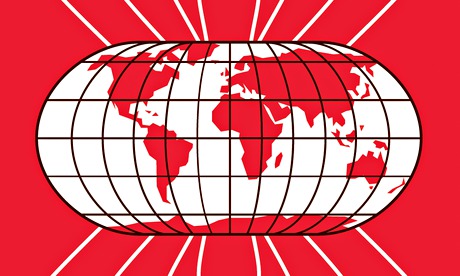
Chris McGreal’s article on the UN (25 September) misses the central issue. The UN is an international organisation designed to deal with international issues. It is not a global organisation designed to deal with global issues. It is important to understand the fundamental differences between the two.
The UN works to protect the interests of its sovereign nations. This is not the same as the global interests of “we the people”. We should not expect the UN to function as a global body in its current structure. It is better suited to deal with symptoms rather than root causes.
What is needed is a full analysis of the central issue, options to fill the gaps and a long-term action plan on how to evolve the UN to a fully functioning global structure. Maybe we need a “lower house” at the UN representing “we the people”.
Roger Dumelie
Ottawa, Canada
Cuban farmers merit praise
The article about Cuban farmers by Nick Miroff (4 September) peculiarly omits the extraordinarily productive and heroic period when Cuban agriculture adapted to the loss of Russian trade and fossil-fuel agricultural inputs during the 1990s, when the US embargo created siege-like conditions for Cubans. In order to save its people from starvation, scientists and farmers developed agro-ecological organic methods and adopted a range of land redistribution practices.
Your article states that Cuba imports 60% to 80% of its food, yet academics Miguel A Altieri and Fernando R Funes-Monzote say that by 2006, the peasant sector was producing over 65% of the country’s food. Currently urban farms supply 70% or more of all the fresh vegetables consumed in cities such as Havana and Villa Clara.
In fact, Cuban farming, and indeed the agriculture practices of the global south’s food sovereignty movement, need to be urgently adopted to replace high carbon-emitting industrial agriculture. The agriculture sector is too often ignored by climate change scientists and activists.
Judith Deutsch
Toronto, Canada
Humans are not empathic
Where on earth did Owen Jones (11 September) get the idea that “our species is naturally empathic”? Certainly not from a history book. The Germans were so empathic to the Herreros of south-west Africa that they wiped them out altogether, something they later tried to repeat with the Jews. The nice Britons gave us the concentration camp (in the Boer war), the firebombing of Dresden and the Bengal famine, and all countries have similar horrors in their closet.
Our species is a primate that lives in social groups, and we are naturally empathic only within these groups. Indeed in many Native-American languages the word for “human being” is the same as that for “member of my tribe”. Jesus understood this as the great human failing: hence the need for the parable of the good Samaritan.
These groups are defined by shared information. Originally they were just extended families, the information being in their DNA, but every advance in communication, from language itself, to printing, to railways and their associated telegraph wires, improved the sharing of information and thus the size of our groups, from tribes to countries. Wishful thinkers claim that the internet creates a global society in which we will presumably all be empathic to everyone. The response to the refugee crisis shows how far we are from that goal.
Graham Andrews
Spokane, Washington, US
God spare us the Queen
It seems Polly Toynbee has stirred up a hornet’s nest with her “miserable-spirited republicanism” as your correspondent Malcolm Smith puts it (Reply, 25 September). As an émigré Pom, I see it rather as a call for us to shepherd the UK, albeit with much bleating and forelock-tugging, into the modern era of political reality.
Regardless of how well we believe the current sovereign has fulfilled her perceived role as head of state, the real question is whether this reflects the face of democracy that the Westminster system supposedly embodies. The monarchy, together with its entourage, the House of Lords, represents for many of us an archaic concept of hereditary privilege, which helps perpetuate the stultifying and rigid class system still operating in many aspects of society, in England in particular.
As a transitional move, as well as a gesture of gratitude to the current Queen, why not invite her to serve as honorary president for the first term at least of the British republic? The job description would remain almost identical, but the image of the nation as a contemporary leader on the world stage would be immeasurably enhanced.
Noel Bird
Boreen Point, Queensland, Australia
• What a splendid article by Polly Toynbee on the institution of the monarchy, and without recourse to the guillotine, which has always been my personal favourite! She favours a more natural wastage.
Nick Wright
Woodbridge, UK
Trees in the cityscape
While I agree with the need to maintain and replenish urban trees, the claim that all mature street trees should be retained is simplistic (18 September). The original planting decisions have led to inappropriate trees in certain situations, and there is often a knee-jerk reaction to the idea of removing trees.
I live in Sheffield, close to the disputed lime trees that the city council wishes to replace as part of a wider programme of upgrading Sheffield’s crumbling roads. Local opinion is divided about this issue, and many people welcome the replacement of some of these with a range of smaller species. These are hardly “lollipop” trees, and the benefits of their differing foliage, fruits and flowers range from casting a dappled shade that allows more light into homes, providing winter food for bird visitors such as waxwings and giving a welcome splash of colour.
By contrast, mature lime trees are too large for many urban streets, making them rather gloomy to inhabit, causing damage to roads and pavements, and dripping sticky sap on to parked cars. Although I welcome the continued presence of trees throughout towns and cities, I would suggest that incorporating a diversity of species tailored to local circumstances is the best way to promote an attractive city treescape.
Phil Eades
Sheffield, UK
Farewell to Tony Abbott
Martin Rowson’s cartoon (Abbott, flawed by his fear of the unseen enemy, 25 September) still resonates, nearly a year on. He captured Tony Abbott succinctly in the arrogant tongue and warlike Chimp stance. Very many Australians were bemused by the sight of Abbott dashing down yet another beach in his budgie smugglers and chest wig to do a triathlon, with what relevance to the national agenda we could not guess. His insistence post facto that he is really a Nice Bloke rings hollowly. Tell that to the asylum seekers on Manus Island.
I can’t vote for him on principle, but I wish the urbane Malcolm Turnbull well. He is the first civilised prime minister since Gough Whitlam and, much after the event when he rediscovered his liberal principles, Malcolm Fraser. Hopefully Turnbull will also rediscover his liberal principles, but quicker, along with remembering his former position recognising the reality of climate change. If that happens, many Australians will feel less like pariahs.
Evan Gray
Brisbane, Queensland, Australia
Briefly
• I appreciated your editorial on the upcoming climate change summit (25 September). One thing you failed to mention is that to be a success any agreement must have teeth. It is rational for individual countries to back out of any agreement, assuming that most other countries will stay in. The Canadian government of Stephen Harper demonstrated this with the toothless Kyoto accord. We can’t rely on morals alone.
Edward Butterworth
Victoria, British Columbia, Canada
• I have had more than an inkling since March that Donald Trump’s candidacy was a piece of meta-theatre – the celebrity a stalking-horse whose aim has been to kick up a little dust and to wind the other lacklustre entries (25 September). At whose behest, I wonder? Chum Bill Clinton and eminence grise Mitt Romney have finally chastened him to “get serious”. With his own money to burn, what does he stand to gain himself? Heydays in the spotlight in an otherwise humdrum life? Certainly the VP slot or at least a posh posting to Monaco.
R M Fransson
Wheat Ridge, Colorado, US
• Carole Cadwalladr’s claim that London is a greater city than Paris because the son of an immigrant is a mayoral candidate is distinctly flawed (18 September). Doesn’t she realise that the mayor of Paris is an immigrant? So is the prime minister. The last president was the son of immigrants and is married to a successful immigrant. When did this happen in Britain? She needs more than a couple of taxi rides to make her point.
Martin Robiette
Loches, France
Email letters for publication to weekly.letters@theguardian.com including a full postal address and a reference to the article. Submissions may be edited for publication