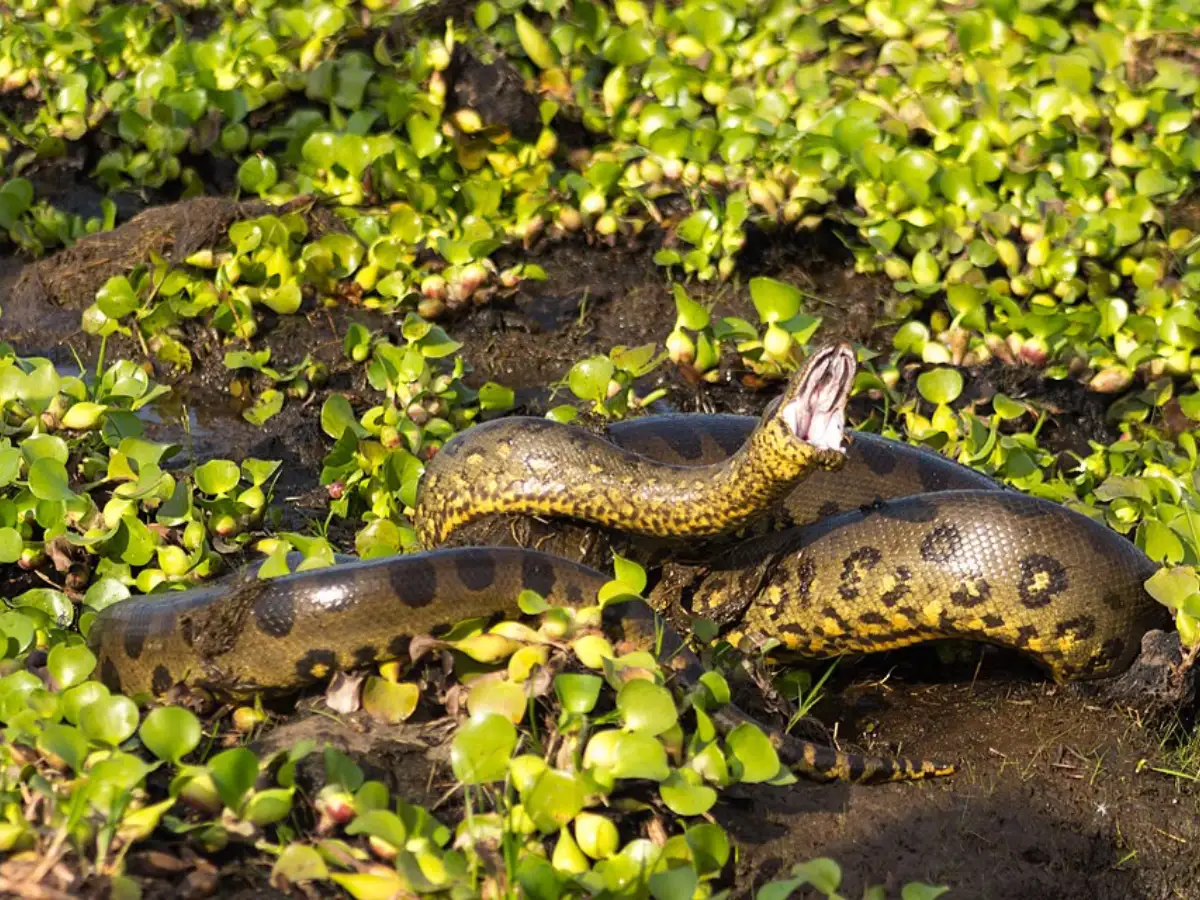
The green anaconda is usually described using exaggerations and folklore, but contemporary zoology gives us an even more intriguing answer as to why this snake is unique. The scientific name for this particular species of snake is the green anaconda. As a rule, it is considered to be the world's heaviest snake due to its huge body mass, particularly in adult females.
However, scientists should not confuse the issues of weight and length: one can be very heavy, while still not being the longest snake, and this fact is important to keep in mind since the unusual weight of the anaconda is directly related to its survival techniques. Green anacondas usually inhabit flooded wetlands, marshes, slow rivers, and swamps of South America. Based on research indexed in PubMed Central, green anacondas are commonly found in aquatic or seasonally flooded environments with good cover, where stalking and ambushing become more efficient.
The environmental conditions are one of the reasons for the giant body size of the anaconda, since wetlands have large populations of different types of animals such as birds, mammals, reptiles, and amphibians, which creates a rich prey habitat. Hence, this snake does not require constant mobility due to its large weight.
The snake relies on stealth rather than speed
While they are commonly thought to be active pursuit predators always chasing after their prey through forested areas, studies dedicated to the ecology of giant snakes indicate that they are predominantly ambush predators that rely heavily on concealment and quick attacks. This method of hunting seems rather appropriate considering the huge size of the creature, as it would take a lot of effort to move such a large body constantly.
Hiding in the water or in vegetation allows the snake to conserve energy by simply waiting for its prey to come to it. This approach also helps dispel the myth of the monster snake as portrayed in the media. Being large in size doesn't mean that the snake cannot be stopped or that it possesses unlimited energy; instead, it is known for its patience and ability to hide.