Greek proverbs have been admired for centuries because they capture deep truths about human nature, relationships, and the experiences that shape everyday life. Ancient Greek wisdom often explored themes of friendship, loyalty, love, and the importance of maintaining connections with others.
Many Greek sayings remind us that relationships are not sustained only by feelings — they require attention, care, and presence. A bond that is ignored for too long may slowly weaken, even if it was once strong. One such proverb reflects on the connection between distance and memory.
Greek Proverb of the Day:
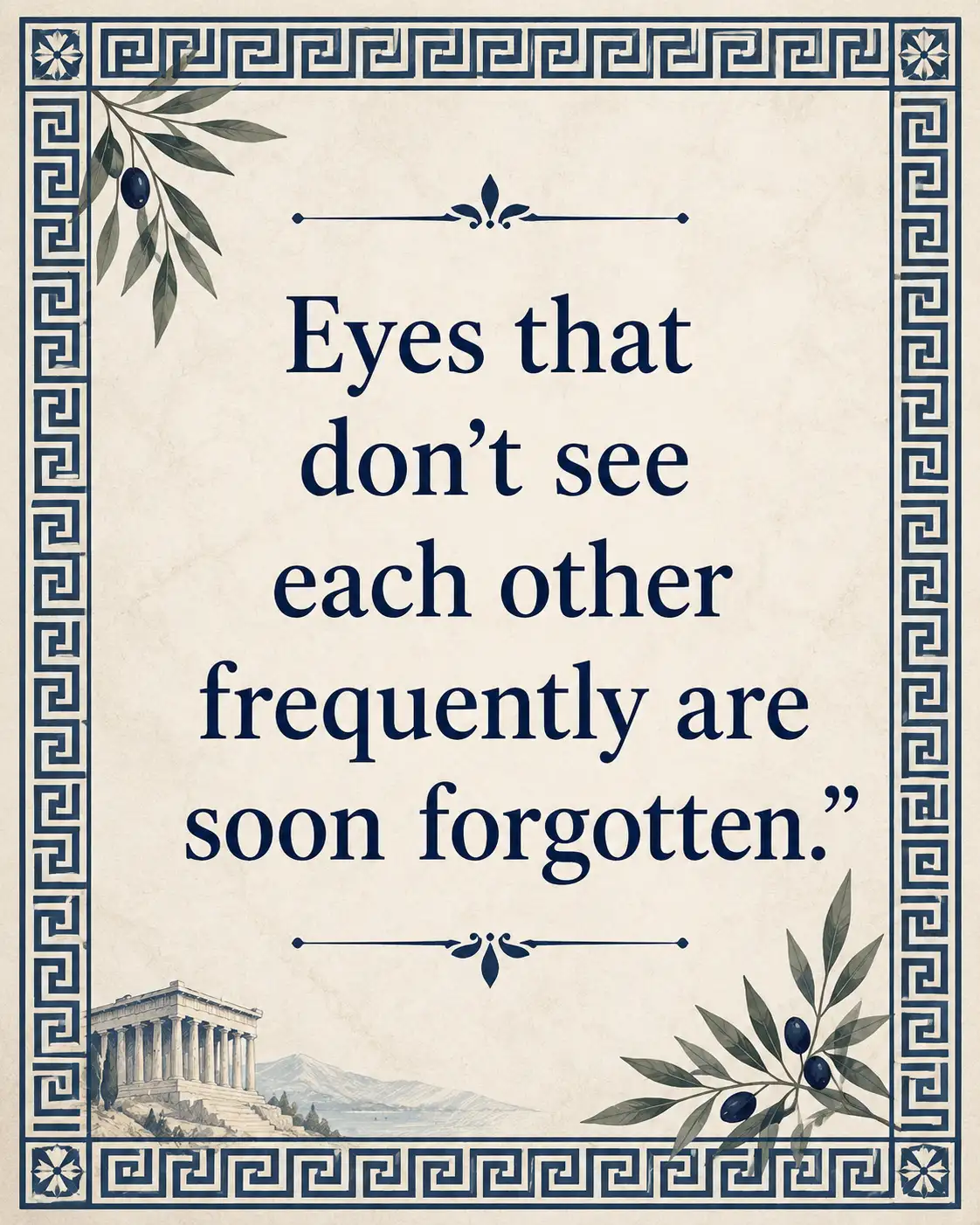
The proverb says, “Eyes that don’t see each other frequently are soon forgotten.”
This proverb highlights the importance of presence in human relationships. It suggests that when people stop seeing, communicating, or sharing experiences with each other, the emotional connection between them may gradually fade.
It is a reminder that relationships need nurturing, just like anything valuable in life.
What Does the Proverb Mean?
The phrase uses “eyes” as a symbol of human connection. Seeing someone regularly creates familiarity. It allows people to share moments, understand each other’s lives, and maintain emotional closeness.
When people no longer see each other, memories can slowly become less vivid. Daily experiences replace old connections, and distance can create emotional separation.
The proverb does not mean that people instantly forget those who matter. Instead, it explains that relationships require effort to remain strong.
A friendship, family bond, or relationship needs regular care to continue growing.
The Importance of Presence
Presence is one of the strongest ways people show that they value each other.
A simple visit, a conversation, or even a small message can keep a connection alive.
Human beings are naturally influenced by their surroundings. The people we spend time with often become part of our daily thoughts and emotions.
When someone disappears from our everyday life, the connection may become weaker over time.
This is why the proverb emphasizes the power of being present.
Sometimes, maintaining a relationship does not require grand gestures. Small, consistent efforts can make a lasting difference.
How Does This Proverb Apply to Social Life?
In friendships, this proverb explains why relationships sometimes change after long periods of separation.
Two people may care about each other deeply, but if they stop communicating, their lives may slowly move in different directions.
New experiences, responsibilities, and environments can create distance.
The proverb encourages people not to assume that strong relationships will maintain themselves automatically. Friendships require attention.
Families also experience this reality. Relatives who live far apart may remain connected through regular communication, while those who rarely interact may become strangers over time.
The Deeper Meaning: Relationships Need Care
The deeper message of this Greek proverb is that human connections are living things. They require time, effort, and emotional investment. A plant cannot survive without water, and relationships cannot thrive without care. Love and friendship are not only feelings. They are also actions. Checking on someone, spending time together, and showing appreciation are ways of strengthening bonds. The proverb reminds us that distance itself is not always the problem. Neglect is.
The Connection Between Memory and Experience
Human memory is strongly connected to experiences. The moments we share with others become part of our emotional world. When we regularly interact with someone, we continue creating new memories together. But when contact disappears, the relationship may become connected only to the past. The proverb teaches that relationships stay alive through shared experiences. The more we continue creating moments together, the stronger the connection remains.
Why Is This Proverb Relevant Today?
In the modern world, people are more connected digitally than ever before, yet many still experience loneliness and emotional distance.
Technology allows people to communicate instantly, but meaningful relationships often require more than occasional messages. A person can remain connected online while still feeling distant. This proverb remains relevant because it reminds us that real connection requires attention. A conversation, a visit, or genuine interest can preserve relationships in ways that technology alone cannot replace.
The Role of Effort in Relationships
Strong relationships are built through small, repeated actions. A person who makes time for others shows that they value the bond. A person who disappears for long periods may unintentionally create distance. The proverb encourages awareness.
It asks people to consider:
“Who in my life needs my attention?”
“Which relationships have I allowed to become distant?”
These questions help people protect meaningful connections.
The Underlying Theme: Presence Creates Permanence
The central theme of this Greek proverb is that presence strengthens relationships. People are more likely to remain emotionally connected when they continue sharing moments and experiences. Distance does not always destroy relationships, but lack of effort can. The proverb teaches that relationships survive through care, communication, and commitment. Those who matter should not only exist in our memories — they should remain part of our lives.
Lessons for Personal Growth
This proverb offers several important lessons:
- Value the people around you: Relationships are precious and require care.
- Stay connected: Small efforts can prevent emotional distance.
- Do not take relationships for granted: Strong bonds still need attention.
- Create memories: Shared experiences keep connections alive.
Life moves quickly, and people’s paths often change. Maintaining meaningful relationships requires intentional effort.
“Eyes that don’t see each other frequently are soon forgotten” is a timeless Greek proverb about human connection and the importance of presence.
It reminds us that relationships are not maintained by memories alone. They grow through communication, shared experiences, and genuine care. People may become distant when life changes, but meaningful bonds can survive when they are protected. Sometimes the smallest act of reaching out is enough to remind someone, you are still remembered.