The government will decide on a plan to release treated radioactive water from the Fukushima No. 1 nuclear power plant into the sea at a meeting of relevant ministers expected to be held as early as Tuesday.
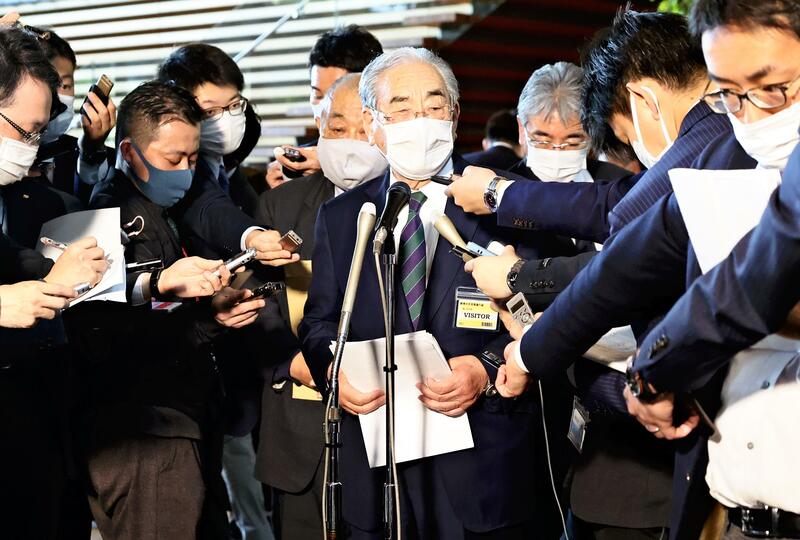
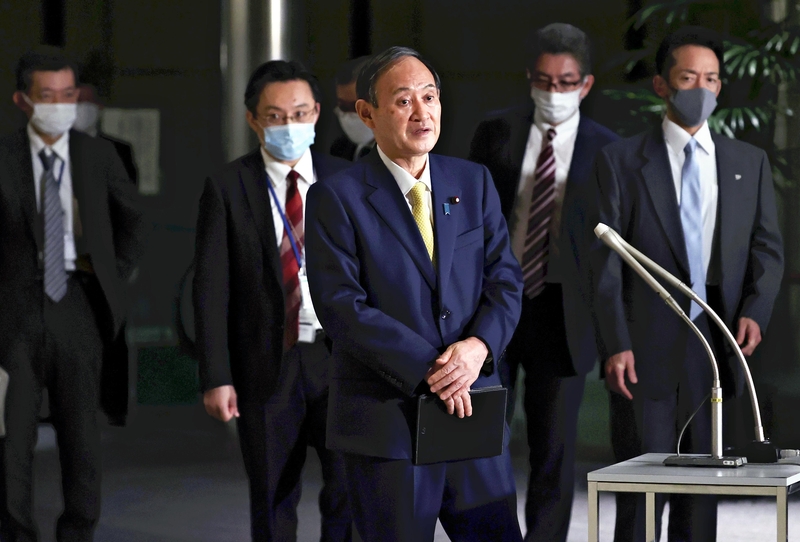
On Wednesday, Prime Minister Yoshihide Suga met with Hiroshi Kishi, President of JF Zengyoren (National Federation of Fisheries Co-operative Associations) to discuss the issue. "Disposal [of treated water] is an unavoidable task in the reconstruction of Fukushima. We want to make a decision in several days," Suga told reporters after the meeting.
Economy, Trade and Industry Minister Hiroshi Kajiyama and representatives of local fisheries cooperatives also attended the meeting. In response to the prime minister's request for cooperation, Kishi and others reportedly expressed strong concern over the government plan to release treated water -- rainwater and groundwater that was purified with special equipment after becoming contaminated with highly radioactive materials in reactor buildings.
"I have never changed the idea that I'm absolutely against [disposing of treated water in the sea]," Kishi told reporters after the meeting. On the other hand, Kishi said he would ask the government to take measures to ensure safety and prevent reputational damage in case such a release is made.
"Efforts to minimize reputational damage are absolutely necessary," Suga said.
At the Tokyo Electric Power Company Holdings Inc.'s power plant, 1.25 million tons of treated water is stored in about 1,000 tanks. If the amount of stored water increases, it is expected to become difficult to keep at the site as early as autumn.
Disposal of treated water into the sea after dilution is a method widely used at nuclear power plants in Japan and overseas.
The government sees Wednesday's meeting between the prime minister and the JF Zengyoren president as the final step toward the decision.
Suga failed to win support for the plan from Kishi in the meeting, but showed his intention to take all possible measures to deal with possible reputational damage caused by the disposal. When asked by Kishi to provide sufficient explanations to fishermen and the public, as well as to implement measures to deal with reputational damage, Suga replied, "I will comprehensively address [the issues]."
Tanks to store treated water at the power plant are nearly full. The government tried to decide on disposal in October last year, but the move had slowed due to opposition from local fisheries cooperatives.
Earlier this year, the prime minister sought a meeting with Kishi. However, it did not come about because a state of emergency was declared on Jan.7 to deal with the novel coronavirus pandemic. The emergency period fully ended on March 21, clearing the way for the meeting to finally take place.
The government move to proceed with the disposal plan has caused concern among some ruling coalition members about negative impact on the next House of Representatives election, although an aide of Suga said, "This administration makes decisions while holding responsibility."
Read more from The Japan News at https://japannews.yomiuri.co.jp/