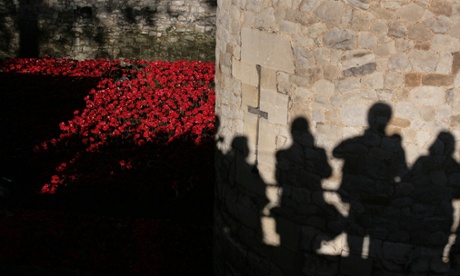
The government will be obliged to investigate the 15th-century murder of the Princes in the Tower if it gives in to demands for a public inquiry into the 1948 killing of Malayan civilians by British soldiers, government lawyers have argued.
In a submission to the supreme court, counsel for the Foreign Office and Ministry of Defence have provided a lengthy list of reasons why there is no official duty to inquire into historical allegations of misbehaviour by the security forces.
The court is hearing a judicial review challenge, brought by the relatives of 24 unarmed men killed by Scots Guards at Batang Kali on 12 December 1948, of the government’s refusal to hold an inquiry. The case has broadened out into a dispute over the “vanishing point” at which unresolved claims of injustice are allowed to disappear into the past.
Three QCs, Jonathan Crow, James Eadie and Jason Coppell, have been deployed to resist calls for a formal investigation. They have told the five supreme court justices hearing the case that it predates the Human Rights Act and is beyond the territorial jurisdiction of the European court of human rights; that responsibility for an inquiry passed to Malaysia when it became independent in 1957, and that it was beyond existing time limits for claims based on fresh evidence.
Lawyers for relatives of the Malayan victims “argue that the customary international law duty to investigate – which crystallised in the 1990s – should be understood to apply to ongoing and contemporary failures to investigate killings that pre-date that development,” the government barristers said.
But “a duty to investigate cannot be ‘ongoing’ or otherwise ‘continue’ if it did not exist at the time of the killings,” they added. “Were the position otherwise, the law would require an investigation into the deaths of the Princes in the Tower.” The reference is to the 12-year-old Edward V and his younger brother Richard who disappeared in the Tower of London in 1483. Their uncle, Richard III, has traditionally been blamed for their disappearance.
In a separate submission, John Larkin QC, the attorney general of Northern Ireland, who has intervened in the case, told the supreme court that historical killing allegations should eventually be put beyond legal scrutiny.
“In those cases where the passage of time signifies that further delay may lessen the chances of any person being made amenable [to prosecution], a public inquiry may, rather than further complying with the procedural obligation, have the effect of further frustrating it,” he argued.
“As for the recovery of historical truth – a matter of great importance – this may be a matter better addressed through the library and the archive rather than the courtroom.”
Several of the Scots Guards on patrol that day in Batang Kali have since given newspaper interviews alleging that they had been ordered to massacre villagers. Two sergeants, however, insisted the men had been shot because they tried to escape.
The hearing continues.