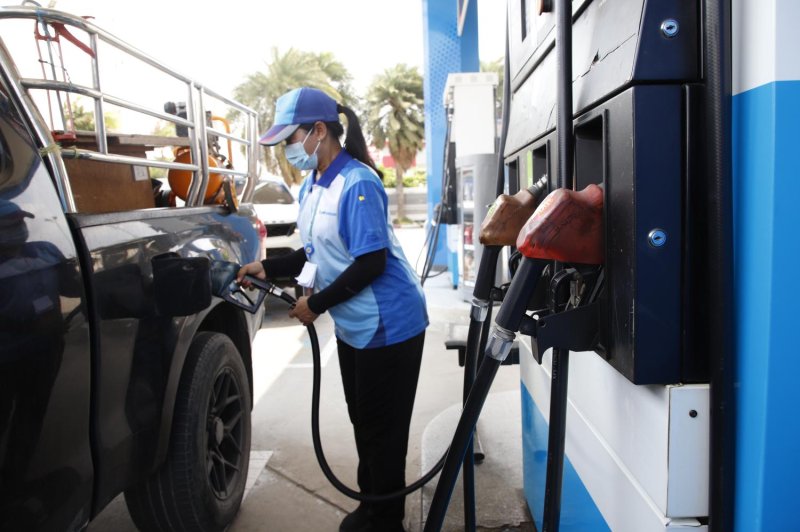
The government continues to grapple with the challenge of lowering retail oil prices, which remain stubbornly above 30 baht per litre despite recent declines in global crude markets.
An energy official who requested anonymity said authorities have limited tools at their disposal to ease the burden on motorists.
Recent measures have focused on reducing levies collected through the Oil Fuel Fund, resulting in modest cuts of 2.56 baht per litre for diesel and 2.51 baht per litre for gasoline.
However, the ex-refinery price -- a crucial component in determining retail costs -- has not been adjusted, leaving pump prices elevated.
Global crude prices fell after Washington and Tehran signed a memorandum of understanding last month aimed at easing Middle East tensions. The agreement followed a surge in prices earlier this year, triggered by the US-Israeli conflict with Iran.
While the easing of hostilities has brought some relief, the government insists it must continue collecting levies to reimburse oil retailers.
"The government needs to keep oil prices at high levels. They need money to reimburse oil retailers," the official said, noting that subsidies from the Oil Fuel Fund had previously been used to cushion the impact of soaring crude prices.
Beyond crude supply, the official pointed to deeper structural issues.
Recent conflicts have disrupted refining networks in the Middle East, further straining global refining capacity.
This comes on top of long-term declines in refinery investment and closures during the pandemic that left the industry ill-prepared to meet demand.
As a result, even when crude oil is abundant, refined fuel prices remain high due to limited processing capacity, he said.
Refineries are prioritising diesel and jet fuel to meet industrial and travel demand, leaving gasoline production constrained. This imbalance has driven pump prices higher in many countries.
"It is difficult to bring retail oil prices back to pre-conflict levels because of both domestic and international market pressures," the official said.