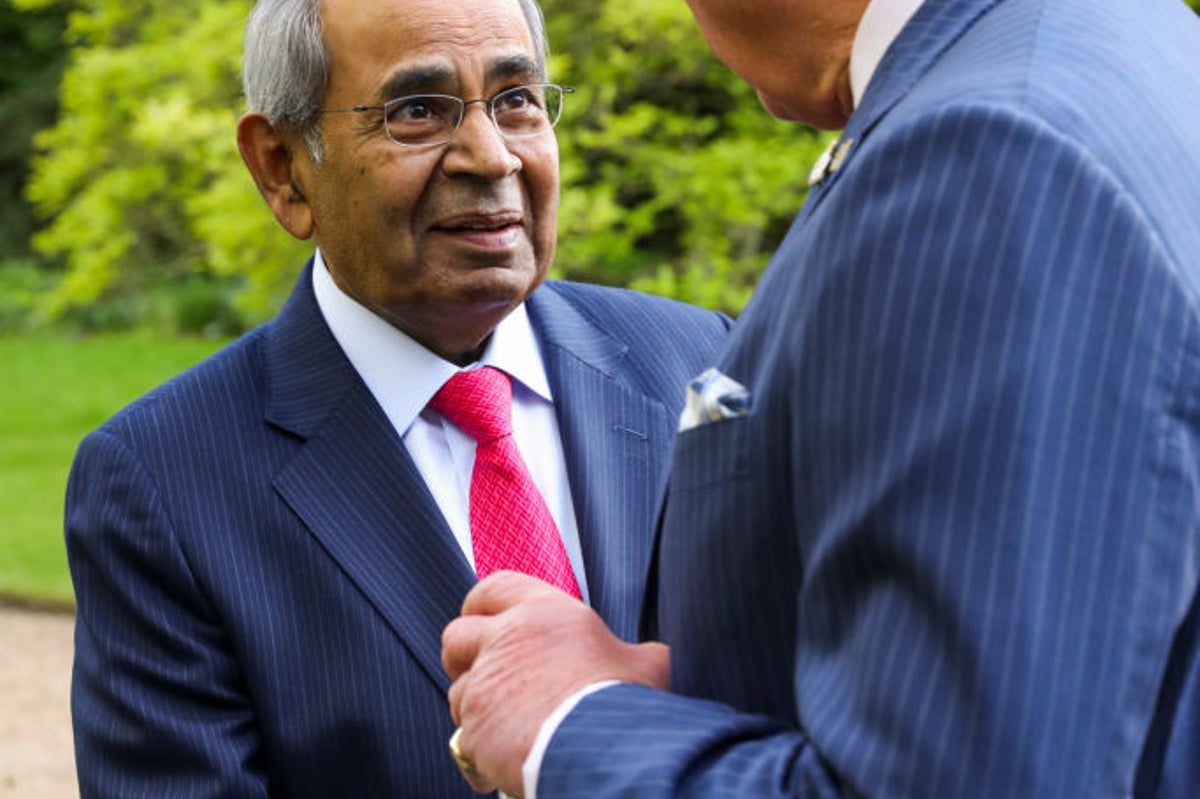
Gopichand Hinduja, the billionaire head of Britain’s richest family, died in London on Tuesday. He was 85.
Known to his friends and business associates as GP, Hinduja was credited with transforming a modest trading family business into a multinational empire along with his three brothers.
As the co-chair of the Hinduja Group, he ran the multinational conglomerate spanning automotive, banking, oil, real estate, and healthcare businesses, as well as media and entertainment.
His family confirmed his death, saying: “He will leave a deep hole at the heart of our family. He will also be remembered for his formidable work.
“Thank you, GP, for the joy and love you have brought us, for your infectious humour and your strong leadership. We will all miss you deeply, but remember you happily for ever.”
The private and modest Hinduja family has a net worth of £35.3bn, according to the latest Sunday Times Rich List. The business also ranked 11th on the Forbes list of India's 100 richest businesspeople in 2024.
Born in 1940 in a Sindhi business family in the pre-Independence India, he was the son of Parmanand Deepchand Hinduja, who founded the family business in 1914 in Sindh region, now in Pakistan. His father had expended his trading business in Iran, dealing in goods from textiles to spices while GP completed his graduation in Jai Hindi College in Mumbai.
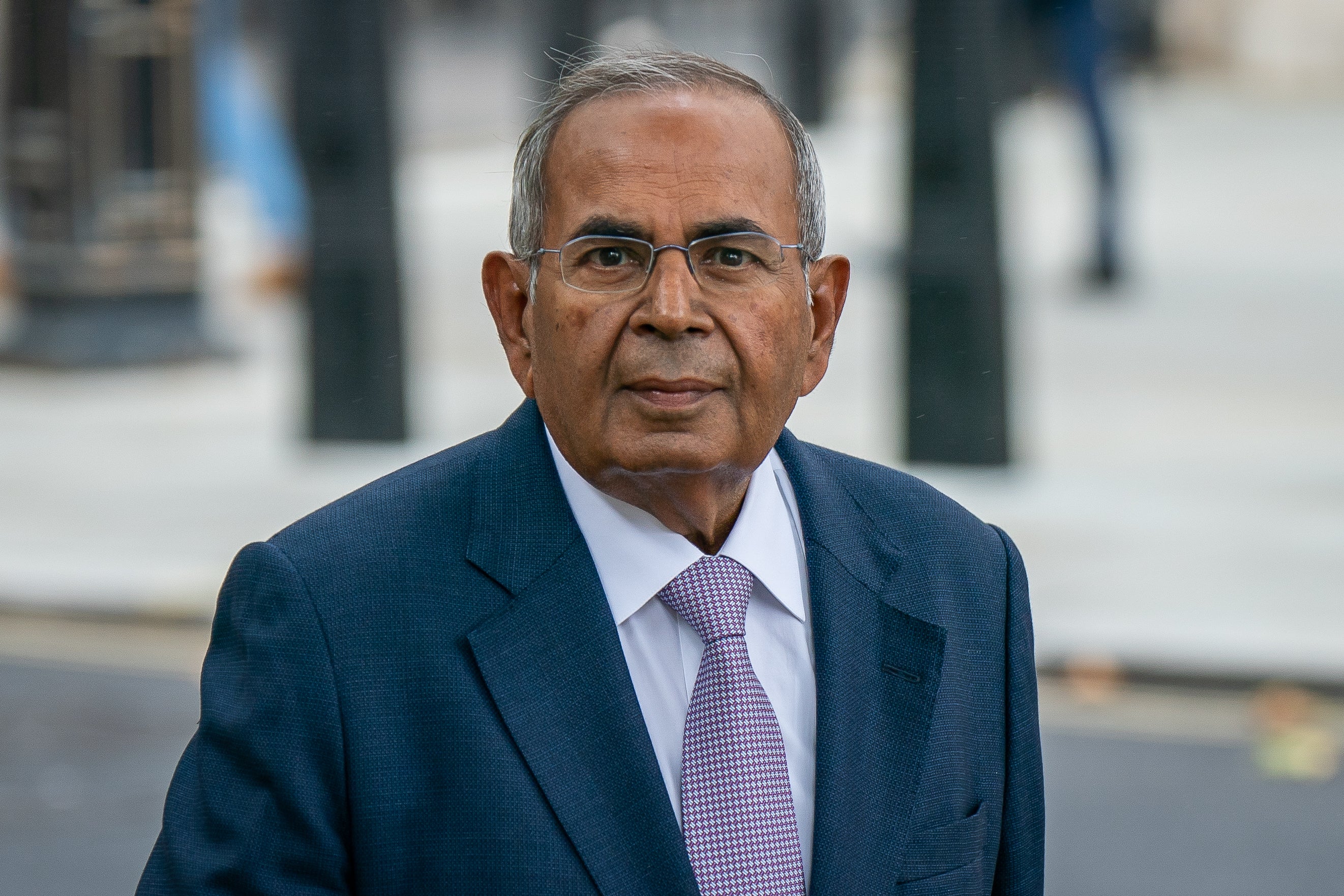
Hinduja joined the family business in 1959, beginning what would become a seven-decade span of transformation of the group from a regional trading house into a global conglomerate.
He later received honorary degrees, a Doctorate of Law from University of Westminster and a Doctorate of Economics from Richmond College, London.
They were four brothers who controlled the business for decades with Hinduja being the second eldest. The oldest brother, Srichand Hinduja, who shifted base to London and initially steered the group toward global expansion, died in 2023 at 87.
It is not known who will now take over the leadership of the conglomerate, although the youngest brother Ashok runs its operations across India including truck maker Ashok Leyland.
Under Gopichand Hinduja’s leadership, the Hinduja Group transformed from a trading firm into a global conglomerate.
Turning points came in 1980s with the acquisitions of Gulf Oil International and Ashok Leyland, marking the family’s emergence as major industrialists. In the following decades, the group expanded into automotive, energy, banking, media, healthcare, infrastructure, and hospitality, with its operations in 30 countries with 200,000 employees.
The company, with its headquarters overlooking the St James’s Park in London, was seen a symbol of Indian wealth in Britain, and the Hinduja brothers frequently topped UK rich lists.
Hinduja, who largely kept out of the public eye, was caught up in a “cash-for-passports” controversy in 2001, which led to Lord Peter Mandelson quitting as an MP.
He was a teetotaller and vegetarian like his other siblings and had strong beliefs in religion and astrology.
India’s most powerful business and political leaders expressed sorrow over his death.
Steel tycoon and Indian MP Naveen Jindal hailed him for his “remarkable leadership” that made Hinduja Group a symbol of Indian enterprise and global excellence.
N Chandrababu Naidu, chief minister of the Indian state of Andhra Pradesh, described Hinduja a “visionary industrialist”.
“He was instrumental in transforming the group into a truly global conglomerate,” Mr Naidu, who was visiting London, said on X. “His leadership saw landmark achievements, from the acquisition of Gulf Oil in 1984 to the revival of Ashok Leyland.”
The last project he oversaw was the £1.4bn luxury hotel in the former War Office on Whitehall in central London in 2023. The guests at the Old War Office (OWO) can sleep in in Sir Winston Churchill’s former office for £18,000-£25,000 a night.
He told the Financial Times: “The OWO will be my greatest legacy to London.”
He is survived by his wife, Sunita, his sons, Sanjay and Dheeraj, and his daughter, Rita.