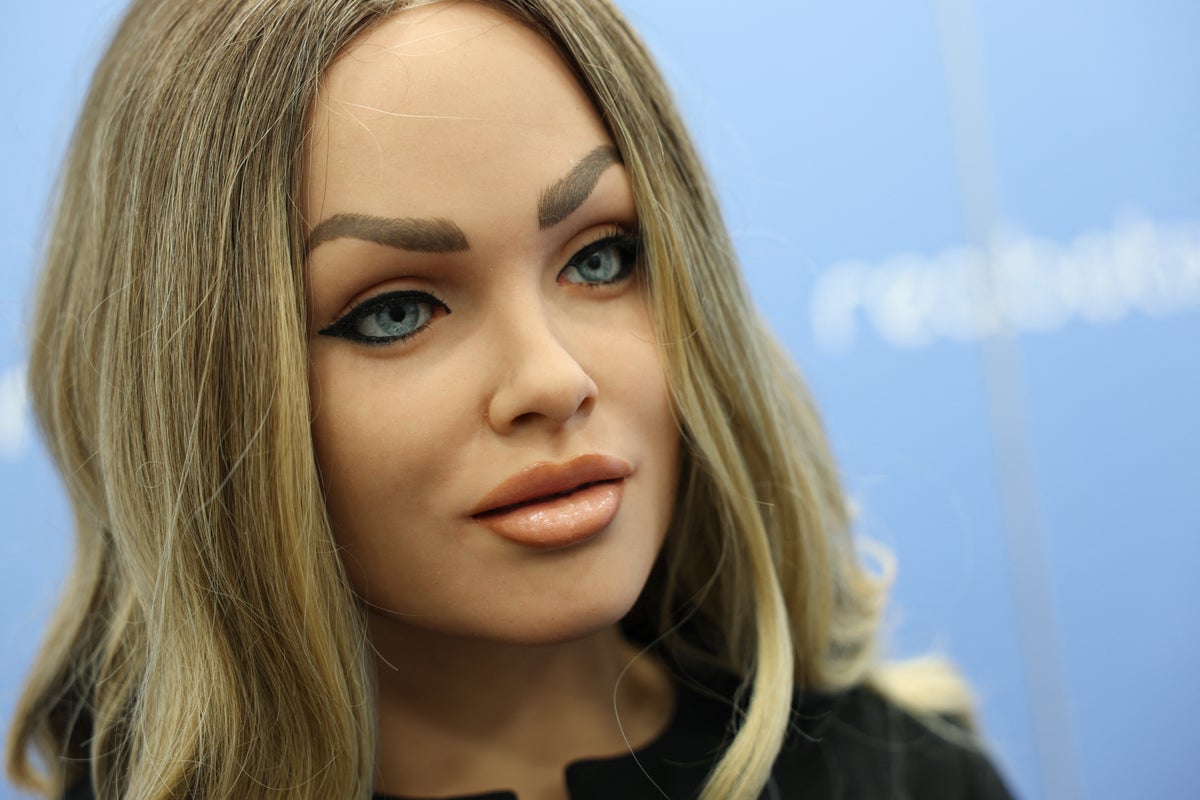
Google DeepMind has unveiled a version of its AI model Gemini that can control humanoid robots for the first time.
The Gemini Robotics 2 system brings “intelligent whole-body control” that allows humanoids to perform a wide range of tasks autonomously.
A video demonstrating the new artificial intelligence model showed robots picking up watering cans, screwing in light bulbs and tying up bin bags.
“Most robots are pre-programmed or teleoperated for narrow, repetitive task sequences. They lack the ability to truly learn for themselves or adapt to unpredictable environments,” Carolina Parada, head of robotics at Google DeepMind, wrote in a blog post detailing the new AI model.
“For the first time, our model can now control entire humanoid robots, translating intent into intelligent whole-body control.”
Gemini Robotics 2 combines a vision language model (VLM) with two vision language action (VLA) models to allow robots to both communicate with humans and understand its environment to move around and perform tasks.
Google DeepMind described its release as a “milestone” towards achieving physical AGI (artificial general intelligence), whereby robots have human-level abilities.
“Unlocking the true potential of robotics requires moving past single task automation toward general-purpose intelligence,” Dr Parada said.
“By building this core intelligence, our goal is to enable AI in the physical world that can work alongside humans to solve complex challenges.”
Google DeepMind CEO Demis Hassabis has previously outlined a vision of creating an AI system that would essentially serve as an Android operating system for robots.
By building the “brain” for humanoids, robotics companies like Boston Dynamics could focus on developing the physical hardware while relying on a common AI platform for perception, reasoning, and control – much as smartphone manufacturers build different devices on top of Android.
Last year, the company launched its first AI model for robots that allows them to operate independently without an internet connection.
The on-device system means robots can work in any location on Earth, or in space, without having to rely on far-away servers to carry out the necessary computing.