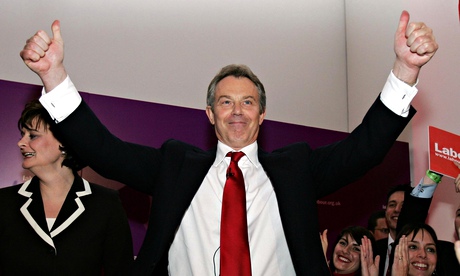
Whatever happens tomorrow, there is one post-election tradition that won’t be kept up – a political custom that was maintained until very recently. And that’s gloating.
Gloating used to be a British media ritual for the victorious party and their boisterous supporters in the press: an orgasm of ill will in which the winner gleefully rubs the loser’s nose in their humiliation. Sometimes this comes in the guise of pretending to analyse their opponents’ campaign mistakes, sometimes it’s just jeering.
A Conservative journalist once told me that the purest rush of euphoria he had ever had in his life, a crack cocaine hit of sheer joy, was gloating over Neil Kinnock losing in 1992 and exulting in the lip-wobbling misery of Labour types who had thought they were entitled to a turn in power once Maggie had gone: this took the form of thoughtfully scrutinising Labour’s PR strategy, with some exquisitely sadistic comment about how “well-meaning” it often was. However, when John Major was crushed in 1997, I heard Labour campaigners in the small hours singing “gloat on” to the tune of The Floaters’ 1977 hit Float On.
A lot of political types earned their spurs at the Cambridge Union Society, where the unofficial motto was: “In defeat, spite; in victory, revenge.” But the new reality of coalitions means that the old folk custom of gloating is dying out. David Cameron couldn’t really get his gloat on in 2010, having to share power with the likes of Nick Clegg and Danny Alexander; and Ed Miliband won’t be able to gloat as the head of a minority government whose every transaction with the SNP will be lashed in the papers. I like to think gloating is a thing of the past.
The feelbad factor
We are now a week into the global self-esteem catastrophe brought on by the how-old.net site, which puts a yellow square around your photographed face with a brutal estimated age over the top.
Before this was invented, there was a civilised convention as to how to behave when someone asks you how old they look. First, you affect an air of polite bemusement, as if you don’t know why someone so obviously young and attractive has asked the question. Then you subtract seven from the number you’re thinking and give them that, usually with a baffled shrug to indicate that, firstly, you can’t believe you’re being asked, and secondly – in case it turns out you have still been tactless – that this is just an approximation, erring on the high side.
Surely the designers of this site could tweak their algorithm so that seven (or indeed 17 or 27) is automatically subtracted, in line with universally accepted tradition. Couldn’t they put a little question mark over the number? Wouldn’t that attract more users, more advertising?
But oh no. Clearly this site is deliberately introducing a feelbad factor, the way hard-sell ad execs have done for decades, so we feel insecure and more ready to buy cosmetics or Botox injections or holidays or anything to boost our self-respect. The incoming prime minister needs to take action against this.
A gust of ‘polar plume’
“Ne’er cast a clout till May is out” was the old folk saying. Now it is, “Don’t turn off the central heating until at least the beginning of June, and get used to wearing jumpers at all times.”
Along, of course, with climate change worries, the cold weather is putting everyone’s mental sap into non-rise mode. The tone of weather forecasts makes it worse. It used to be that TV meteorologists’ most annoying mannerism was commenting on sporting events and how the weather would affect them – thus attempting to muscle in on sport’s urgent glamour.
Now they’re using the phrase “polar plume”: it is the polar plume coming down from the Arctic that is freezing us all out. The phrase “great big blast of cold air” is clearly not sufficient: “polar plume” sounds vaguely romantic, or heraldic, as well as being alliterative. So why is it so cold? It’s on account of the low temperature.