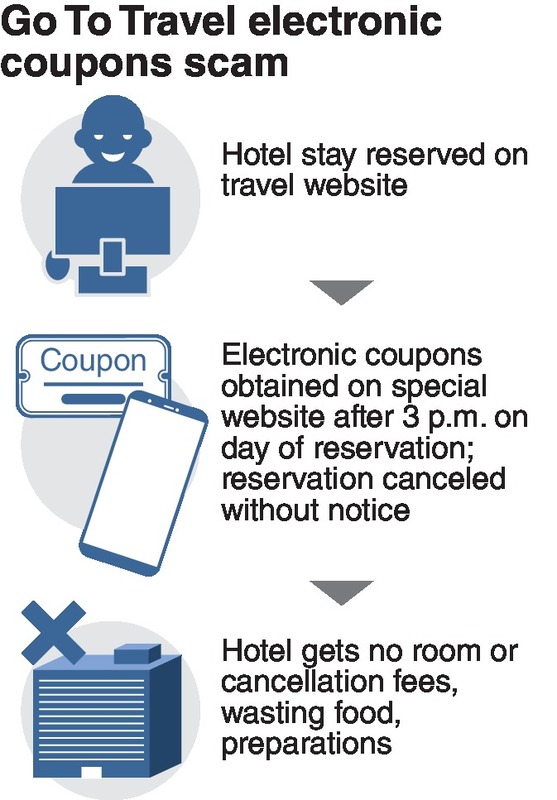
A rash of no-notice hotel reservation cancellations have been confirmed across Japan in which supposed guests are suspected of abusing a loophole in the Go To Travel tourism support program to obtain regional shopping coupons, it has been learned. The scam is hurting hoteliers because they get no room or cancellation fees but are stuck with preparation expenses such as food.
The Tourism Agency plans to assess the financial damages and take measures to close this loophole.
-- No-shows a big blow
"We were just starting to see a little bit of a return of guests after the drastic decrease caused by the coronavirus disaster. Guests' no-shows without notice are a big blow," Takashi Iida, 49, general manager of the Tateyama Resort Hotel in Chiba Prefecture said furiously.
In one case, a man claiming to be from Kokubunji, Tokyo, made a reservation via a travel website on the evening of Oct. 24 for five nights for eight people, starting Oct. 25. The total bill came to about 620,000 yen.
The hotel prepared meals for eight people and waited for the guests, but they hadn't arrived by midnight. The phone number registered on the website couldn't be reached. In the end, several days' worth of food was wasted and the hotel did not receive its cancellation fee of 250,000 yen. Iida is now considering filing a damages report with police.
The motive behind the above no-show is believed to be the fraudulent acquisition of regional shopping coupons; 95,000 yen worth of coupons were issued for the eight people's reservations.
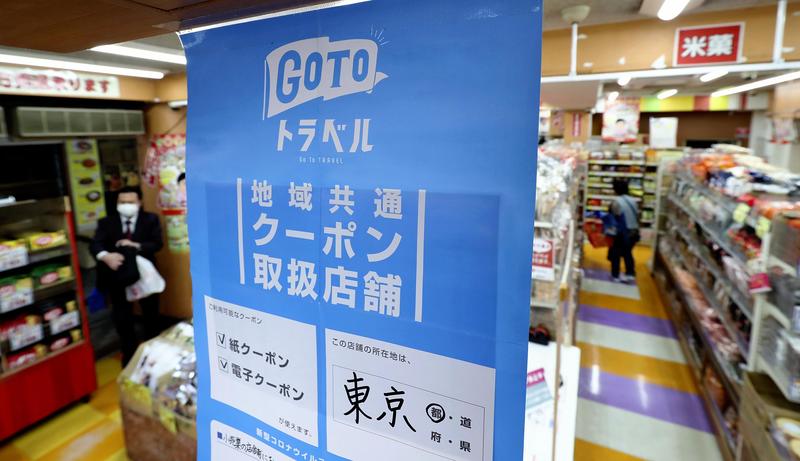
The shopping coupons are part of the Go To Travel program. Travelers are rewarded with coupons worth 15% of travel expenses, which can be used in local souvenir shops, restaurants and transportation, among other things.
There are two types of coupons: paper and electronic.
The electronic coupons can be activated with a QR code by entering the reservation number and other information on a special website after 3 p.m. on the day of the supposed stay. If a reservation is canceled, the coupon will be canceled, but the hotel usually cannot determine if a reservation has been canceled without notice until after midnight. The electronic coupons are believed to have been used in stores and other places during this period.
Such cancellations have been confirmed in Tokyo and Kanagawa Prefecture, as well as Kyoto Prefecture, all of which are highly likely to be for the sole purpose of obtaining electronic coupons. The Tourism Agency said that the system of issuing coupons before check-in was designed for convenience, as many travelers arrive at their hotels after visiting tourist spots.
-- Booking under a false name
A man in his 50s in Tokyo told The Yomiuri Shimbun that an acquaintance asked him if he was interested in the coupon scam at the beginning of this month.
"It's easy to get electronic coupons by simply booking a hotel via free email. You use a fake name so you won't get caught," he quoted his acquaintance as saying.
The following is the explanation he received. His acquaintance belongs to a group that has dozens of members, who all make reservations for consecutive nights at hotels, cancel them without notice, use electronic coupons to buy brand-name goods and liquor and sell the products for cash. He was told that the group set a target of 100 phony bookings per day.
Such unauthorized cancellations and illicit acquisitions of coupons are likely to result in fraud and other charges. The man declined the invitation on the spot.
"If the government doesn't take action soon, I think a lot of damage will be caused," he said.
In some cases, such attempted frauds have been stopped in advance.
One hotel in Yokohama was contacted by a travel website late this month regarding a three-night reservation, stating that coupons would not be issued because the reservation is suspected of being fraudulent. The reason for the suspicion is unclear, but the guests did not show up on the day of the reservation.
An operator of a major travel website pointed out that measures to prevent this kind of fraud could include changing to a method of paying for the trip in advance and confirming with prospective guests by phone, but both scenarios create extra burdens for hotels.
"It should be possible to change the timing of issuing electronic coupons to after guests check in. The Tourism Agency and travel agencies need to quickly put in place a system to prevent fraud while also considering the convenience of travelers," said Takasaki City University of Economics Professor Takao Ikado, who is an expert on tourism policy.
Read more from The Japan News at https://japannews.yomiuri.co.jp/