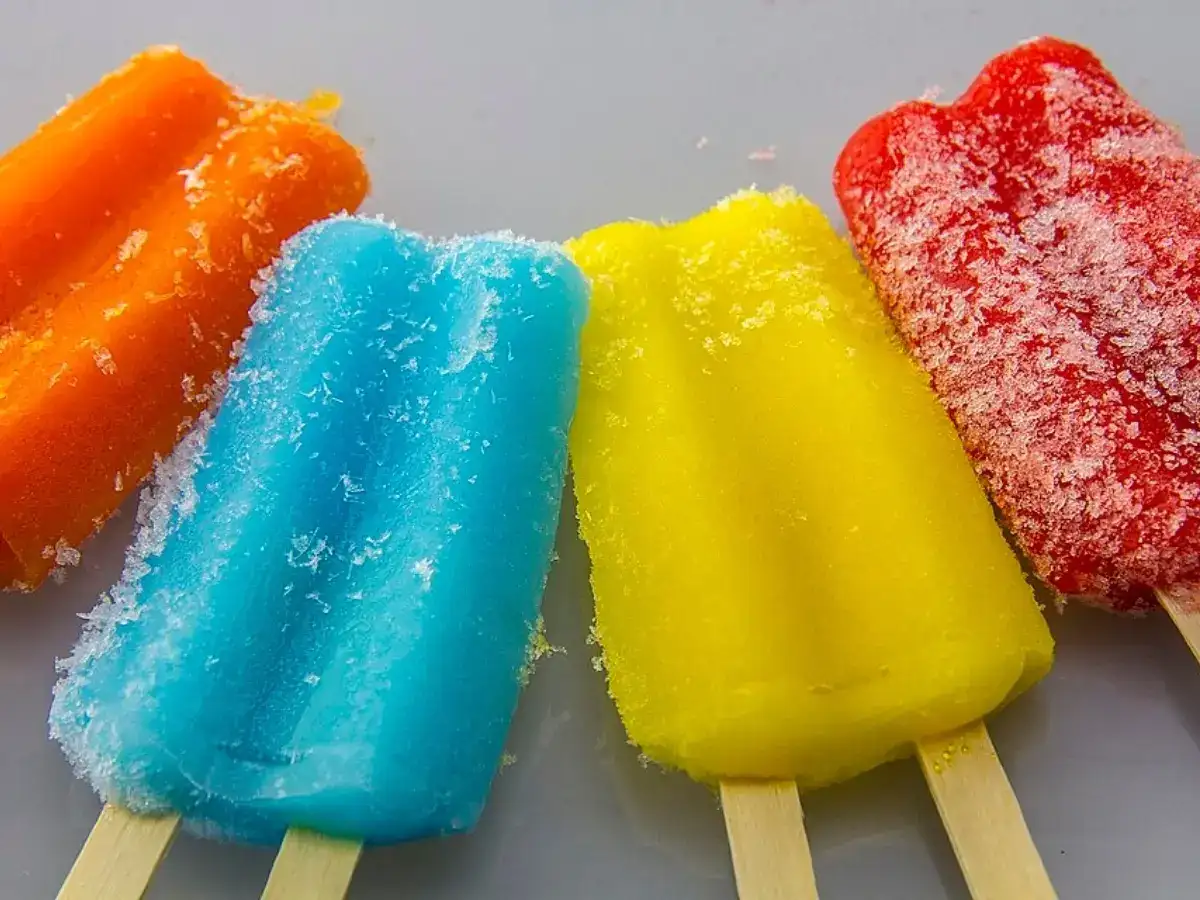
One of the most recognizable frozen products in America could have originated from a child's simple mistake. According to the widespread version of how the Popsicle was invented, an eleven-year old boy named Frank Epperson accidentally left his lemonade with a stirring stick outside overnight in San Francisco in 1905.
As a result, a few hours later, when he woke up, he found out that his lemonade had frozen along with the wooden stick stuck inside. Although the details may not be absolutely confirmed, some of the evidence from patents and business history shows that indeed Epperson managed to transform his simple invention into a marketable product.
Despite the fact that certain elements of the story may not be completely confirmed, historians believe that the core events of what happened during this fateful night are plausible enough to be considered authentic.
When the drink froze on itself
The story that is known best today can be found on the website of the Smithsonian Institution's Lemelson Center for the Study of Invention and Innovation. According to the institution, Epperson combined powdered soda with water and accidentally left the cup outside at nighttime when it was very cold, with the stir stick inside. When he woke up in the morning, he found his drink frozen.
The reason why the story has remained memorable over decades is not only its simplicity but also its resemblance to many invention stories, which later became the foundation for popular products. However, historians note that the story was told in retrospect, not as part of some preserved entry in Epperson’s diary or newspaper report from 1905.
The Smithsonian tells it in a very careful way, considering it a powerful invention story rather than well-verified historical fact. This nuance is very important because invention stories tend to change with time. As the product grows popular, different versions start emerging through company marketing.
From an accident to a patented product
The documentation gets stronger only years later. According to the U.S. National Archives, Frank Epperson filed an application for a patent on June 11, 1924, on his “frozen confectionery on a stick.” And the patent was granted two months after that. Shortly afterwards, Epperson sold the patent to the Popsicle Corporation. In this manner, the concept changed from being a mere personal recollection into something more tangible: a product, with intellectual property backing and nationwide distribution.
The latter part of the tale proves vital since the existence of an invention does not necessarily mean its success. Historians have argued that marketing, production, and trademarking are all as important in determining a product’s success as its conception.
Names such as "frozen lolly pop" and "A Drink on a Stick" have been suggested as early trademarks for the Popsicle. Ultimately, the product won people over with its simple, portable, edible, and inexpensive nature.