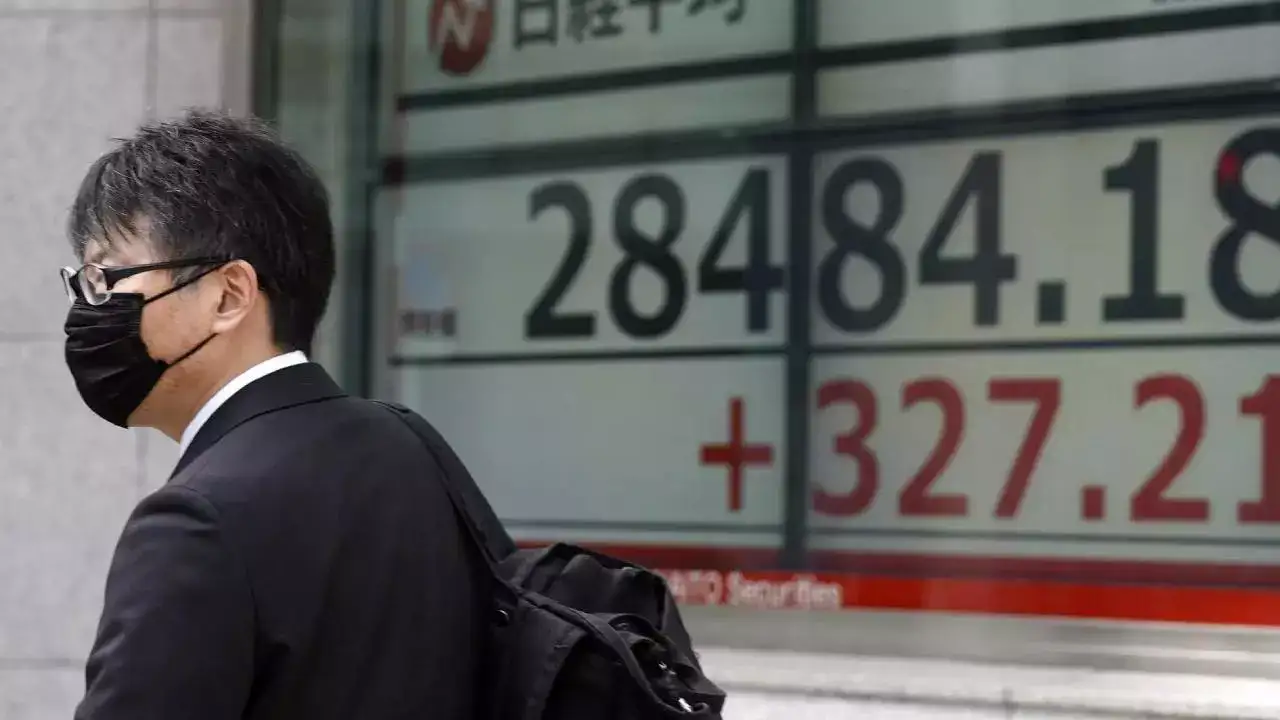
Asian stocks declined on Friday as investors grappled with a pullback in artificial-intelligence shares and hopes for a diplomatic resolution to tensions in the Middle East.
Shares in South Korea fell over 4%, sending the broader MSCI Asia Pacific Index lower 0.8%. Equity-index futures for Wall Street gauges also declined as investors rotated out of chipmakers and into a broader range of sectors, helping lift the Dow Jones Industrial Average to a record high. Contracts for the Nasdaq 100 Index fell 0.7% after the underlying gauge dropped for a second day Thursday.
Brent steadied to trade around $95.20 a barrel. Oil fell in the previous session as investors bet the US and Iran were moving closer to a diplomatic breakthrough following a conditional ceasefire between Israel and Lebanon. The optimism came even after Hezbollah’s rejection on Thursday of a US-backed truce proposal in Lebanon.
Elsewhere, gold mostly held its gains from the previous session to trade around $4,460 an ounce. Treasuries rose Thursday as investors drew optimism about the prospects for a US-Iran peace deal. Bitcoin edged up to trade around $63,700.
The blistering run in semiconductor stocks from war-driven lows took a breather as Broadcom Inc.’s forecast for sales of AI chips disappointed investors hoping for more. With chipmakers having rallied sharply on optimism around artificial-intelligence spending, some traders used the disappointment as an opportunity to lock in gains and rotate into sectors viewed as better positioned to benefit from a resilient economy.
“The rally off the March lows has been an extremely strong one. In fact, it has been parabolic, especially for the chip stocks,” said Matt Maley at Miller Tabak. “Therefore, if the earnings report from Broadcom is the catalyst for a pullback that lasts more than a day or two, it would actually be healthy for the stock market.”
Meanwhile, President Donald Trump said ceasefire talks are in the “final” stages. Earlier, Iran’s foreign minister said the negotiations had stalled. On Wednesday, Iran fired missiles and drones at Kuwait and Bahrain, killing one person and injuring dozens at Kuwait’s main airport, after the US struck an oil tanker headed to the Islamic Republic.
In Lebanon, Hezbollah militants said they refused to abide by the conditions of a ceasefire announced by the US State Department only hours before.
In Asia, traders will be watching regional foreign-exchange markets after the South Korean won fell to its weakest level since 2009, underscoring the pressure some Asian currencies face as the Iran war drags on.
Policymakers are nearing the limits of their currency defenses, with authorities in Indonesia and the Philippines also stepping up efforts to support their exchange rates.
Elsewhere, US jobs have been a particular focus for traders this week. New applications for unemployment benefits rose last week to the highest level since February. Meanwhile, data from Challenger, Gray & Christmas Inc. showed US technology companies announced the most job cuts in almost two years last month.
Now, traders await the monthly employment report, which will be released on Friday.
The US-Iran conflict and AI continue to dominate the market narrative, but Friday’s jobs report is still very important for markets, said Tom Essaye of the Sevens Report.
“A ‘too tight’ labor market would risk increasing the chances of Fed rate hikes sooner than expected,” he said.