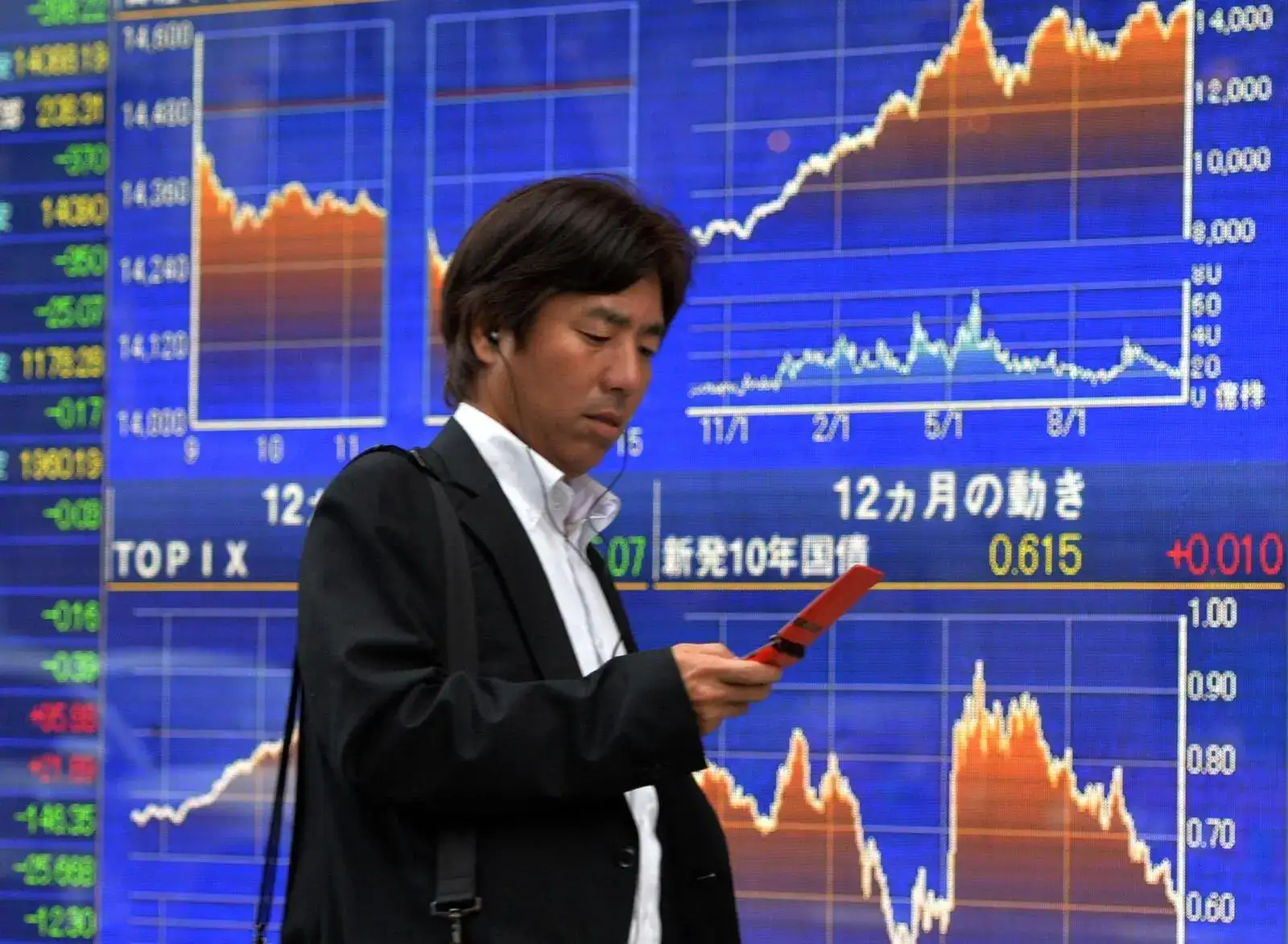
Japanese government bond yields traded mixed on Thursday as investors balanced growing expectations of a near-term interest rate hike by the Bank of Japan against persistent global inflation concerns, Reuters reported.
The benchmark 10-year JGB yield edged up 0.5 basis point to 2.645%, while the two-year yield, which is highly sensitive to changes in monetary policy, rose 1 basis point to 1.410%. The increase in the two-year yield marked its second consecutive day of gains. Bond yields move inversely to prices.
Market participants remained cautious as they assessed recent remarks from BOJ Governor Kazuo Ueda, who indicated that policymakers would need to evaluate the merits and risks of raising interest rates if inflation risks to the upside become more pronounced than potential downside risks to economic growth.
According to Reuters, Ueda's comments reinforced market expectations that the BOJ could raise its benchmark interest rate from 0.75% to 1% at its upcoming policy meeting scheduled for June 15-16.
Analysts viewed the governor's remarks as a sign of a more hawkish stance from the central bank. Reuters reported that market strategists believe the BOJ may not only deliver a rate hike this month but also signal its intention to continue normalising monetary policy in the months ahead.
Meanwhile, concerns over inflation continued to weigh on global debt markets. U.S. Treasury yields climbed overnight as renewed hostilities involving the United States and Iran pushed oil prices higher, fuelling worries that inflationary pressures could remain elevated.
The outlook for Japan's ultra-long-term bonds also remained challenging. Reuters reported that market participants continue to monitor risks linked to inflation and concerns over potential fiscal expansion, factors that have contributed to ongoing pressure on longer-dated government debt.
The mixed movement in JGB yields highlights the complex environment facing investors as expectations of tighter monetary policy in Japan intersect with global inflation risks and geopolitical uncertainties.