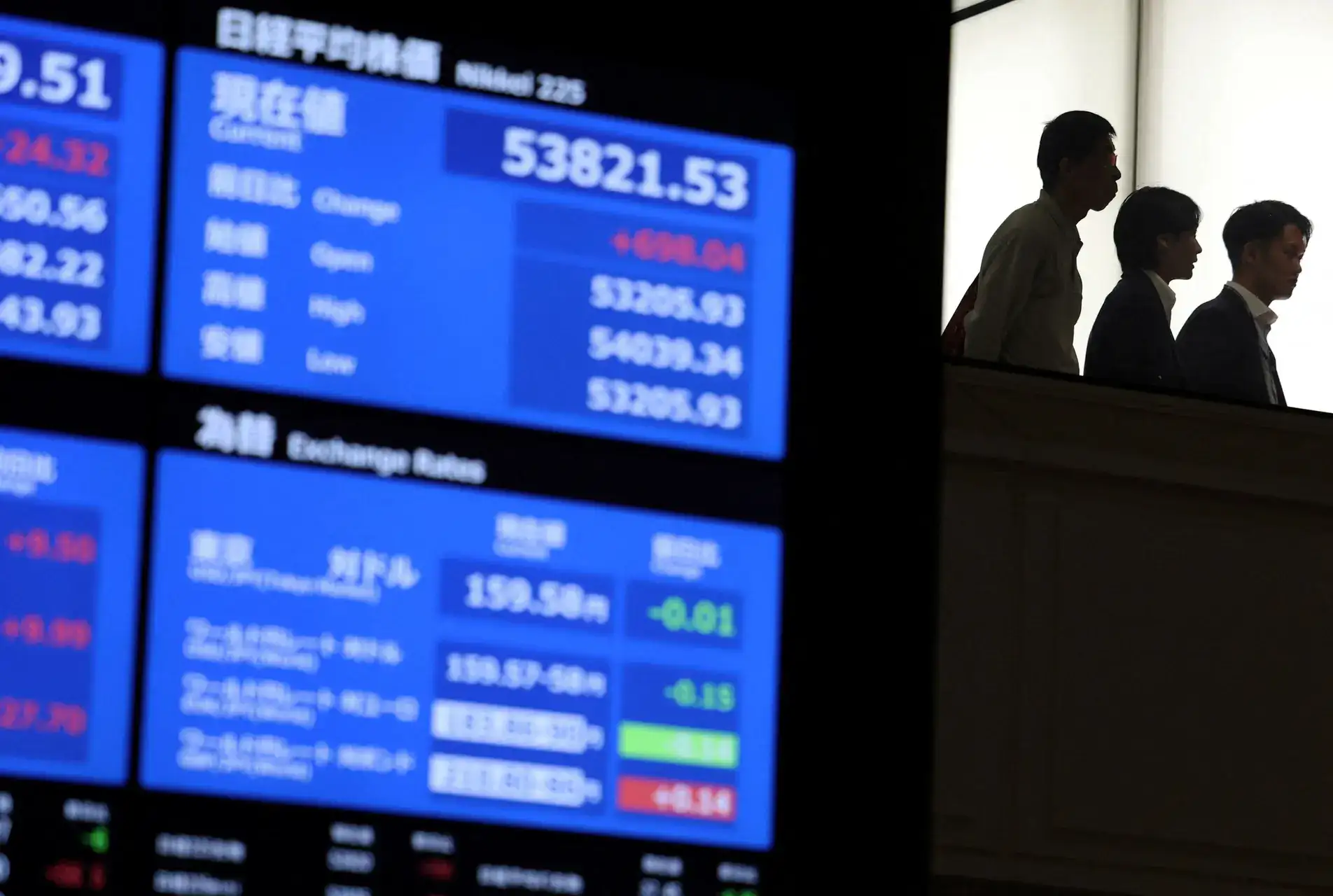
Japan’s wholesale inflation accelerated at its fastest pace in nearly three years in April, strengthening expectations that the central bank could move ahead with an interest rate hike as early as June. Rising energy and commodity prices linked to the ongoing Iran conflict have intensified inflationary pressures across the economy.
The latest data from the Bank of Japan showed the corporate goods price index (CGPI), which tracks prices that companies charge each other for goods and services, climbed 4.9% year-on-year in April. The increase was significantly above market expectations of a 3% rise and marked the strongest annual gain since May 2023.
The sharp acceleration follows growing concerns within financial markets that the central bank has been too slow in responding to inflationary risks. Bond markets reacted strongly, with Japan’s benchmark 10-year government bond yield rising to 2.665%, its highest level in 29 years.
According to Reuters, investors increasingly believe the BOJ may be forced to tighten monetary policy sooner than previously anticipated as inflationary pressures broaden beyond imported energy costs.
A senior policymaker at the BOJ recently argued that interest rates should be raised “at the earliest stage possible” as higher fuel and import prices continue to feed through the economy. Markets are now pricing in roughly a 70% probability of a rate hike during the BOJ’s June 15-16 policy meeting, according to Reuters.
The inflation surge has been driven largely by the sharp rise in import costs following disruptions to oil supplies from the Middle East. The effective closure of the Strait of Hormuz has intensified supply concerns for Japan, which remains heavily dependent on imported crude oil and energy products.
Data showed petroleum and coal product prices rose 5.3% in April from a year earlier, reflecting increased costs for crude oil and jet fuel. Chemical goods prices surged 9.2%, the fastest rise since September 2022, while naphtha prices jumped 79.4%. Prices of aluminum, copper and other nonferrous metal products also climbed sharply, as per Reuters.
The yen-based import price index rose 17.5% in April compared with a year earlier, marking the steepest increase since December 2022. The weaker yen has compounded inflationary pressures by making imported commodities and fuel more expensive for Japanese businesses.
On a monthly basis, wholesale prices increased 2.3% in April after a 1% rise in March, indicating that cost pressures continue to intensify.
Economists believe the BOJ now faces a difficult balancing act between controlling inflation and supporting economic growth. According to Reuters, concerns are also mounting that the Japanese government’s consideration of additional fiscal stimulus to offset rising household fuel costs could complicate the central bank’s efforts to normalize monetary policy.
Former BOJ Governor Haruhiko Kuroda also warned this week that a prolonged Iran conflict could force the central bank to accelerate the pace of future rate hikes. He additionally cautioned against expanding fiscal spending at a time when inflation risks remain elevated.
Market participants fear that a combination of delayed monetary tightening and expansionary fiscal measures could lead to further weakness in the yen and additional volatility in Japan’s government bond market.
The wholesale inflation figures are expected to play a key role in shaping discussions at the BOJ’s upcoming policy meeting, as policymakers assess whether inflationary pressures are becoming more broad-based and persistent across the Japanese economy.