EU governments are under mounting pressure to "urgently tax fossil fuel profits" to slash energy bills and speed-up investment in home-grown renewables.
A new study from NGO Greenpeace found that oil giants in the EU are raking in an extra €81.4 million in profits every single day, as the war on Iran sends prices soaring. This works out at around €2.5 billion in additional profit for March alone.
The EU has already warned that oil and gas prices will not go down anytime soon, even if the conflict in the Middle East comes to an end. Member states have since been told to outline measures to reduce oil and gas use, particularly in the transport sector.
At the current rate of extra profits, the study found that governments could provide 60 million free monthly public transport passes every month, or give all 40 million people struggling to pay their energy bills in the EU €60 every month to bring down expenses.
Which country would benefit the most from a windfall tax?
According to Greenpeace, the highest total windfall profits in the EU, since the start of the Iran war, were in Germany, France, Spain and Italy.
As the largest fuel market in the EU, Germany tops the list and shows an above-average expansion of profit margins in March for both diesel and petrol.
The highest profit margin increase per litre of diesel was in the Netherlands, Sweden, Denmark and Austria, and for petrol it was in Germany, Austria, Spain and Denmark.
"While people are dying in the Middle East and millions in Europe struggle with skyrocketing fuel prices, governments are letting oil companies line their pockets," says Ariadna Rodrigo, Greenpeace EU's political campaigner.
"They need to urgently introduce higher taxes on all fossil fuel profits and use the money to cut people’s energy bills, deploy cheap, safe and home-grown renewables, and support communities impacted by climate breakdown."
Could the EU cut tax on renewables?
The long term solution to cutting energy bills, which is already being demonstrated in Spain, is investing in homegrown renewables, leading to less reliance on imported fossil fuels. Inflated prices meant these cost the EU an extra €2.5 billion in the first 10 days of the Iran war.
The short term solution, which governments could implement overnight, is to cut the tax that ordinary people pay.
Last year, 28 per cent of the average European consumer’s electricity bill went on taxes and levies, according to the IEA.
Many see this as particularly unfair because taxes on electricity are much higher than on fossil fuels - despite these being the leading cause of the climate and biodiversity crisis. In Spain, taxes on electricity were 4.2 times higher than those on fossil gas in 2025 while Germany’s were 3.2 times higher.
With the five oil majors earning more than €88 billion in 2024, higher taxation would still leave them in the green.
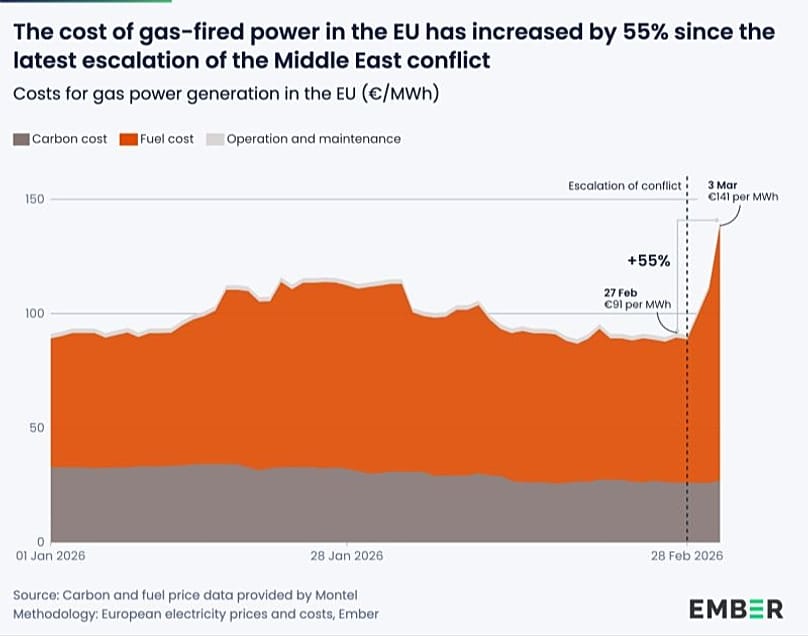
European governments are finding clever ways to cut tax on electricity
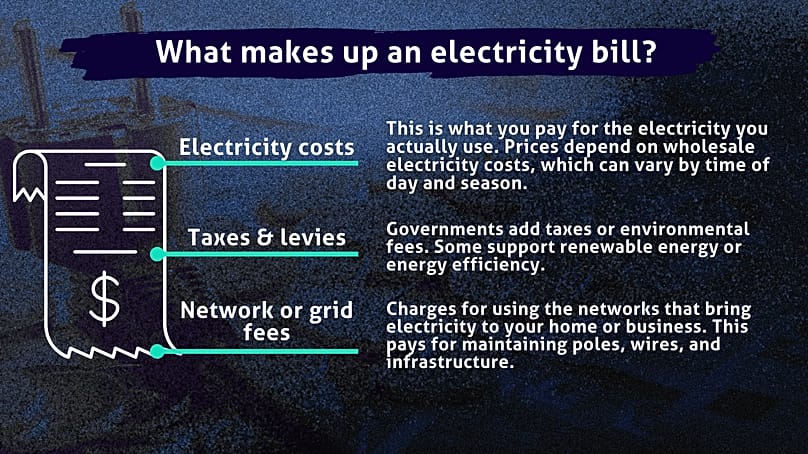
Your electricity bill is made up of three parts: energy costs, network or grid fees and taxes. As Climate Action Network (CAN) Europe points out, every component of your bill “depends on policy choices made by governments”.
Energy costs are what you pay for the electricity you actually use and are determined by many variable factors, such as wholesale electricity costs, time of day and weather conditions. Network or grid fees go towards maintaining the poles, wires and infrastructure that bring electricity into your home or business. While the taxes added to your bill are decided by governments.
If the average home or business owner is paying less tax, governments will likely need to make up the shortfall. The solution, argues CAN Europe, is “rebalancing taxation away from electricity and toward fossil fuels”.
Some governments have already successfully reduced electricity prices through tax changes. Germany, which has the highest electricity bills in Europe, managed to reduce annual bills by 16 per cent by taking a levy for renewables off electricity bills and onto general tax bills.
Denmark came up with the clever solution of making electricity for heating cheaper, thereby rewarding home and business owners who installed heat pumps.
“The Danish government considers that the tax exemption was in part responsible for the large increase in heat pump installations from 2019-2021 and in 2023,” according to a report from the NGO Regulatory Assistance Project.
'Start taxing companies that fuel the climate crisis'
In response to the current energy crisis, caused by the effective closure of the Hormuz Strait and reduced Middle East energy exports, dozens of countries - including most of Europe - agreed to release a record amount of oil from their emergency reserves.
Fanny Petitbon of environmental organisation 350.org argues that this is like putting a “band-aid on a gaping wound”.
“If G7 countries are serious about stabilising the market, they need to stop protecting profits and start taxing companies that fuel the climate crisis,” she says.
“Working people shouldn’t be paying the price while oil majors treat the war in the Middle East like a winning lottery ticket.”
Do fossil fuel giants pass taxes onto consumers?
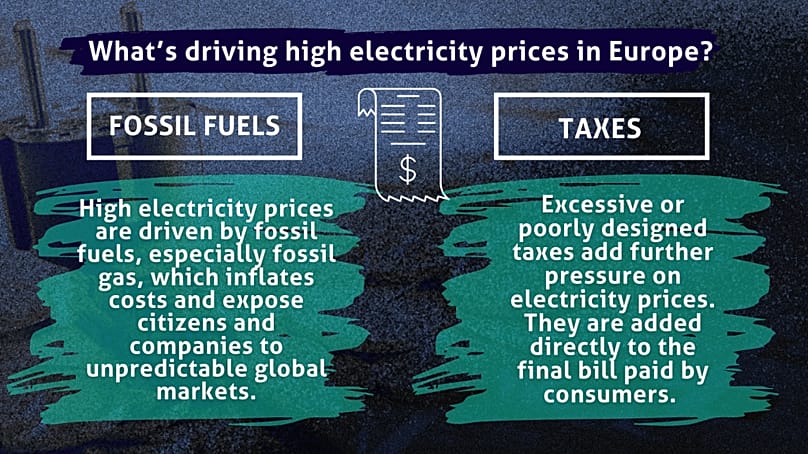
It’s logical to worry that if fossil fuel giants, like Aramco and Gazprom, had reduced profits due to higher tax they would charge their customers more to make up for the shortfall - resulting in higher bills for consumers.
But analysis from CAN Europe found this is unlikely to happen: “Economic evidence shows that profit taxes, unlike consumption taxes, are generally not passed on to consumers or other companies, as prices are driven primarily by fuel costs, market design and infrastructure constraints rather than corporate taxation. And there is no significant correlation between higher corporate taxes and higher electricity prices across EU countries.”
Permanent windfall taxes are the answer
During Europe’s last big energy shock, after the outbreak of the Ukraine war in 2022, the bloc introduced a ‘solidarity contribution’ - a temporary windfall tax on fossil fuel profits to help shield households and companies from inflationary energy prices. It raised €28bn, mostly used by EU member states to financially support energy consumers, particularly vulnerable households.
Many climate-aligned organisations have called for this windfall tax to be brought back and made permanent, creating funds to drive the clean energy transition.
“In the short term, cutting electricity taxes and introducing targeted support measures funded by taxing the excess profits being made by the fossil fuel industry can give people breathing space for now. But in the long run, fossil fuel profits should be taxed permanently which can be used for future proofing Europe’s energy system through investing in renewables, efficiency, grids and electrification,” says Seda Orhan, Head of Energy at CAN Europe.