Heart failure is often seen as the point of no return, but new approaches to diagnosis, mechanical circulatory support and heart transplants are changing the outlook for patients once considered beyond saving.
Yet success increasingly depends on recognising the condition early, before the window for life-saving treatment closes.
Cardiovascular disease remains the world's leading cause of death, claiming an estimated 19.2 million lives in 2023, or around one in every three deaths worldwide, according to the World Health Organization.
Figures from Thailand's Department of Disease Control show that 70,000 people died from cardiovascular disease in 2022, equivalent to about eight deaths every hour.
Data from the Thai Heart Failure Registry show that 73% of patients are readmitted to hospital with the same condition within a year, highlighting the progressive nature of the disease and the importance of early intervention.
UNDERLYING CONDITIONS
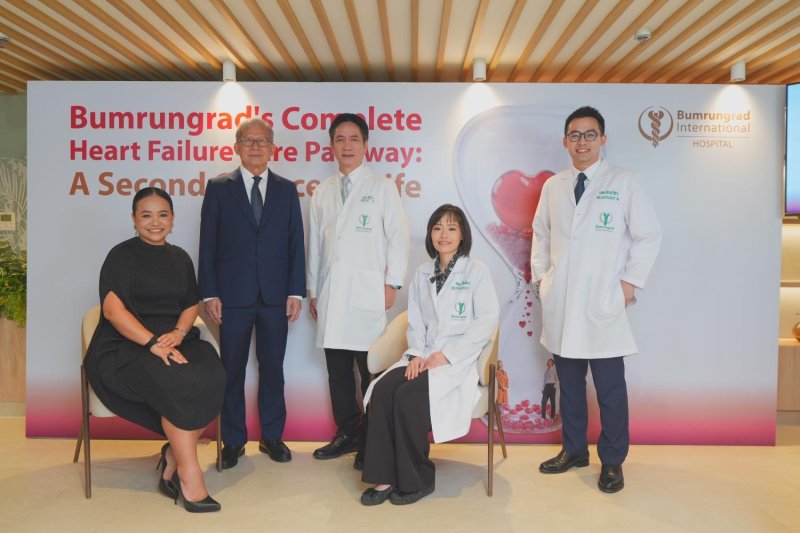
Specialists from Bumrungrad International Hospital highlighted the need to view heart failure not as a disease, but as the result of many underlying heart conditions.
"Heart failure is actually the endpoint of many diseases," said Dr Piyachat Pipatpongsopon, a general cardiologist specialising in advanced heart failure and heart transplantation.
She said many cases can be prevented or detected earlier if people recognise the warning signs and seek medical attention before the condition progresses.
Coronary artery disease remains one of the leading causes, particularly when patients delay seeking treatment after experiencing chest pain. Other causes include inherited heart disease, valve disorders, infections and chronic conditions such as diabetes, hypertension and kidney disease.
"If those diseases are not well controlled, the heart muscle gradually weakens until heart failure develops."
Patients who develop swollen legs, persistent breathlessness or difficulty lying flat -- and who need to sleep sitting upright -- should seek medical attention, doctors said.
A RACE AGAINST TIME
One such patient reported by Bumrungrad was Timothy, a 64-year-old Canadian who had lived with heart failure since 2009.
Over 15 years, he was repeatedly admitted with fluid in his lungs, swollen legs and episodes of kidney and liver failure.
A procedure to repair a leaking heart valve briefly improved his condition, but within months he was hospitalised again.
Married to a Thai woman with a teenage son, Timothy eventually sought advanced treatment in Thailand in the hope of regaining his health and being able to care for his family.
By the time Timothy arrived at Bumrungrad, medication was no longer enough to stabilise his condition, leaving only a narrow window for doctors to turn to advanced life support.
Pol Capt Dr Sakolwat Montrivade, an interventional cardiologist who specialises in minimally invasive heart procedures, said temporary mechanical circulatory support can stabilise patients while doctors determine whether the heart can recover or whether a transplant offers the best chance of survival.
In Timothy's case, doctors used extracorporeal membrane oxygenation (ECMO), which adds oxygen to and circulates blood outside the body, allowing the heart and lungs to rest while maintaining blood flow to vital organs.
They also combined ECMO with an Impella, a type of percutaneous ventricular assist device, in an approach that can serve as a bridge to heart transplantation.
IT TAKES A VILLAGE
But technology alone, the specialists stressed, does not determine the outcome.
"These technologies are only part of the treatment," Dr Sakolwat said.
"The most important thing is the team."
Once a patient is considered for a transplant, cardiologists, surgeons, anaesthetists, perfusionists, nurses, rehabilitation specialists, pharmacists, dietitians and transplant coordinators begin working together around the clock.
"It takes a village to do a heart transplant," said cardiothoracic surgeon Dr Pat Ongcharit.
"The surgeon isn't the main character. We are only one part of the process."
Once the Thai Red Cross Society identifies a suitable donor heart, surgeons have around four hours from the moment blood flow to the donor heart stops until circulation is restored in its new recipient.
"A tyre puncture, a motorcycle cutting across your path, the lift not arriving, equipment being dropped while people are running. Every delay adds time. The longer it takes, the more the heart is damaged and the longer the patient's recovery," he said.
Beyond the operating room, Dr Pat said public awareness of organ donation has grown steadily over the past three decades, contributing to a rise in organ donation.
According to the Thai Red Cross Organ Donation Centre's 2025 data, 545 deceased donors enabled 1,176 organ transplants, while 8,115 patients remained on the national waiting list for an organ transplant.
However, Thailand has a relatively small national waiting list for heart transplantation.
Heart transplantation presents additional challenges because donor hearts must be carefully matched according to several criteria, including blood type and body size. As a result, some donor hearts cannot be used simply because there is no suitable recipient waiting.
While technology and teamwork have transformed heart failure treatment, specialists said experience and clinical judgment remain just as important.
For Dr Achirawin Jirakamolchaisiri, senior associate chief medical officer of Medical Operations and Quality, caring for patients is built on two factors.
"Scientific evidence and the art of caring for patients. Knowing what to do is just as important as knowing what not to do."
That judgement, he said, comes from experience, multidisciplinary discussion and treating patients from around the world.
Bumrungrad was ranked first in Thailand for cardiology and cardiac surgery in Newsweek and Statista's Best Specialised Hospitals Asia Pacific 2026 rankings. It was also named among the World's Best Specialized Hospitals 2026 for cardiology, making it the only hospital in Thailand to be included in the global ranking for this specialty.
A key strength of Bumrungrad Heart Institute is its Complete Heart Failure Care, covering the full spectrum of treatment -- from medical therapy and interventional cardiology to cardiac surgery, mechanical circulatory support and heart transplantation.
With more than 20 years of experience in successful heart transplantation, Bumrungrad remains Thailand's only private hospital authorised by the Thai Red Cross Society to perform heart transplants.
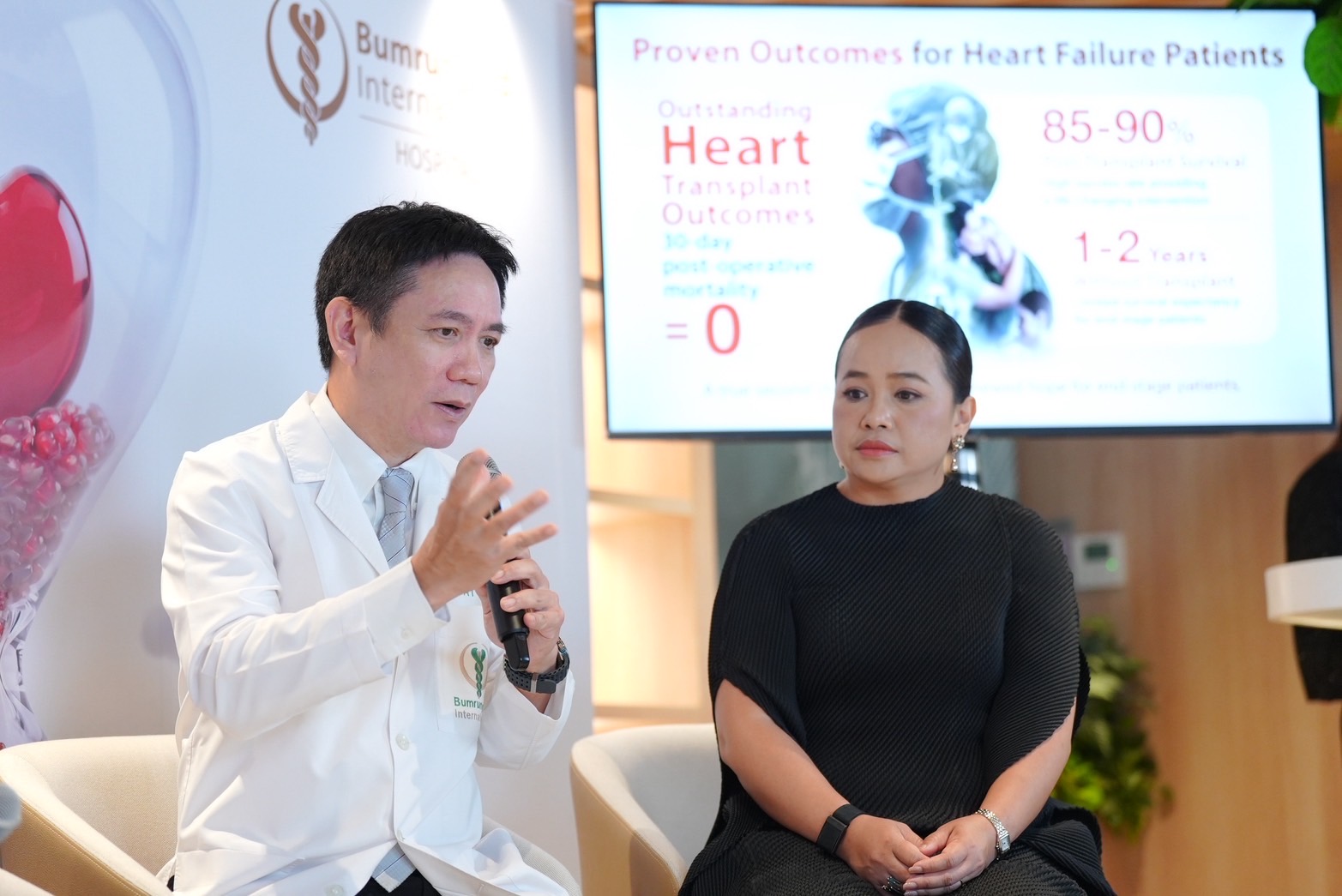
Its outcomes include a 0% mortality rate within 30 days of heart transplantation and a post-transplant survival rate of approximately 85-90% among patients with heart failure.
It has also received JCI Heart Failure certification from the United States, reflecting its commitment to internationally recognised standards of heart failure care.
LONG ROAD TO RECOVERY
For patients, however, heart transplants mark the beginning rather than the end of treatment.
"Successful surgery is not the finish line. It's just the beginning," said Rujira Songprakhon, division director of Clinical Service Line OPD 1, who oversees transplant coordination.
Patients continue rehabilitation with a multidisciplinary team, while coordinators remain available around the clock to guide families through medication, nutrition, home preparation and long-term follow-up.
This family-centred approach recognises that recovery extends beyond the patient, involving family members as important partners in care and helping them prepare to support the patient throughout recovery and life after transplantation.
"We care for patients as if they were family," she said.
Despite remarkable advances, the specialists said preventing heart failure remains the best way to improve survival.
Managing diabetes, hypertension and high cholesterol, avoiding smoking, moderating alcohol consumption and attending regular health checks remain the most effective ways of reducing risk.
"Don't assume that because one health check was normal, you'll always be fine," Dr Piyachat said.
"Monitoring your health over time helps us identify risks early, before they develop into more serious disease."