A dozen years ago, Andre Schurrle crossed, Mario Gotze volleyed and Germany became World Cup winners for the fourth time. There was a normality to do it: this was what Germany did, and if not they reached at least the quarter-finals, because they had done that in every tournament from 1954 onwards.
There have been some unexpected developments since then and not merely because Schurrle retired before his 30th birthday and now spends some of his time in winter climbing icy mountains wearing only shorts, shoes and a supersized rucksack, and also runs marathons.
Perhaps Germany have a mountain or two of their own to climb this summer, including ones they normally ascended as a matter of routine. It was a seismic shock when the defending champions exited the 2018 World Cup in the group stage, the sense they lost their way summed up by the sight of Manuel Neuer losing the ball 80 yards from his own goal seconds before South Korea’s Son Heung Min slotted his shot into the unguarded net. It was an ignominious as well as an early end to their campaign.
But there was an action replay of sorts in 2022; Germany, caught out by Japan’s comeback in their opener, could not remedy the damage. They may at least welcome a new format where third-place teams stand a chance of progressing to the knockout stages. Their last game beyond the group remains the 2014 final against Argentina.
The reputation as the Turniermannschaft, the ultimate tournament team, rather requires restoring. It is notable that Germany failed first under Joachim Low, a World Cup-winning manager and then Hansi Flick, formerly his sidekick, his unsuccessful spell in charge of the national team sandwiched by spells of terrific success at Bayern Munich and Barcelona.
The old formula suddenly stopped working. Good managers suddenly had bad times with Germany. It perhaps signalled the end of a project that had lasted almost 20 years, spanning the reigns of Jurgen Klinsmann, Low and Flick. After victory over Costa Rica in 2022, which nevertheless led to elimination, Flick addressed wider failings in the German game. “For years we have been talking about new goalkeepers, new wing-backs,” he said. “What was always good in German football was we were able to defend well. We need the basics.”
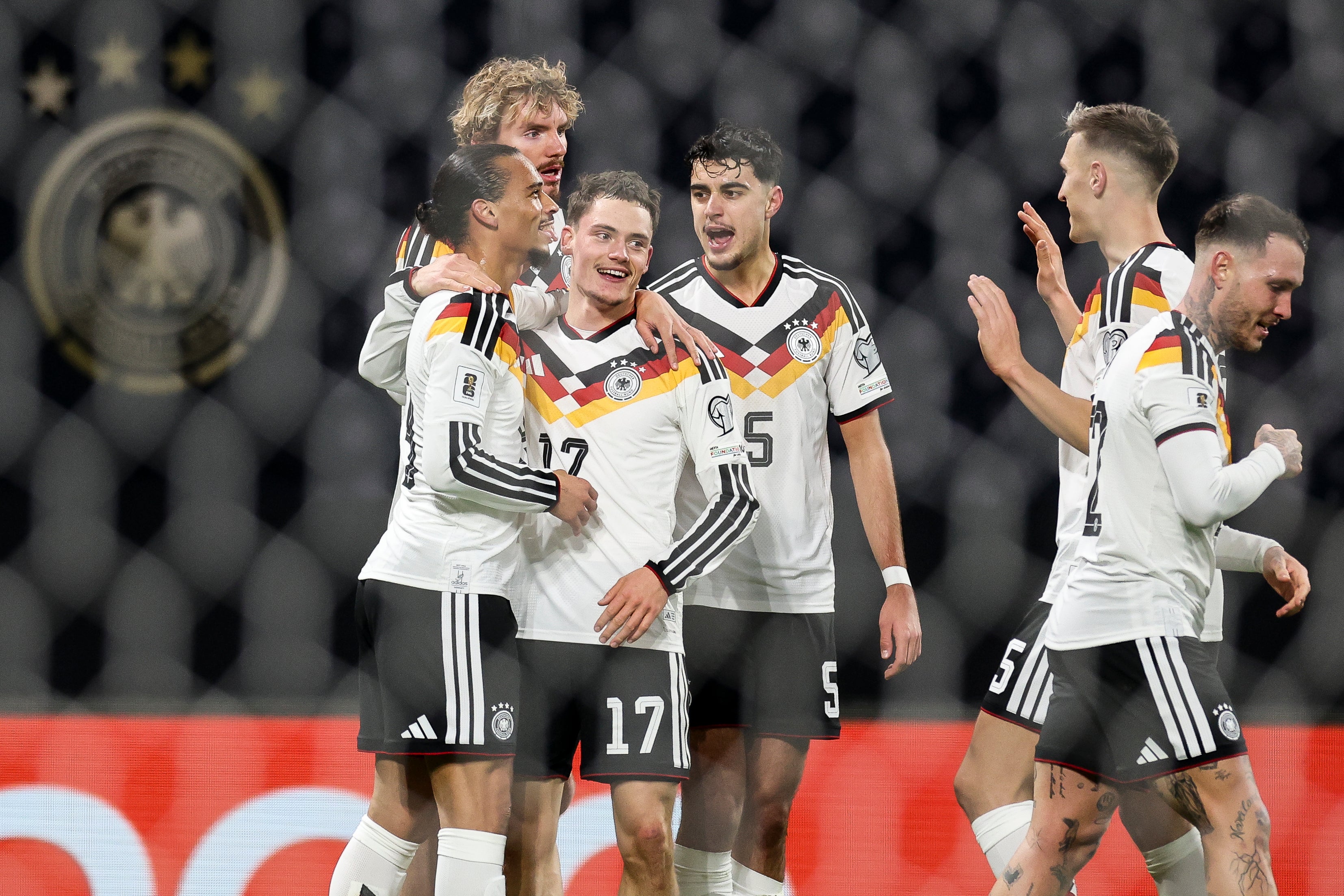
Four years on, Germany have gone back to an old goalkeeper. Neuer’s wanderlust has taken him back into the Germany goal, two years after his international retirement. Manager Julian Nagelsmann has a goalkeeper older than him, and the hope Neuer’s past exploits will prove inspirational. “He has many titles, he has an aura, a big name,” said the man who replaced Flick, first at Bayern and then with the national team.
Nagelsmann’s Euro 2024 had a semblance of Klinsmann’s 2006 World Cup, the hint of a start of a revival on home soil, where Germany’s campaign was ended by the eventual winners. There is a case they were the second best team, behind only Spain, but they exited in the quarter-finals.
Yet some of that optimism disappeared amid three successive defeats last summer, to Portugal and France in the Nations League and Slovakia in September; that was Germany’s first-ever loss away from home in World Cup qualifying.
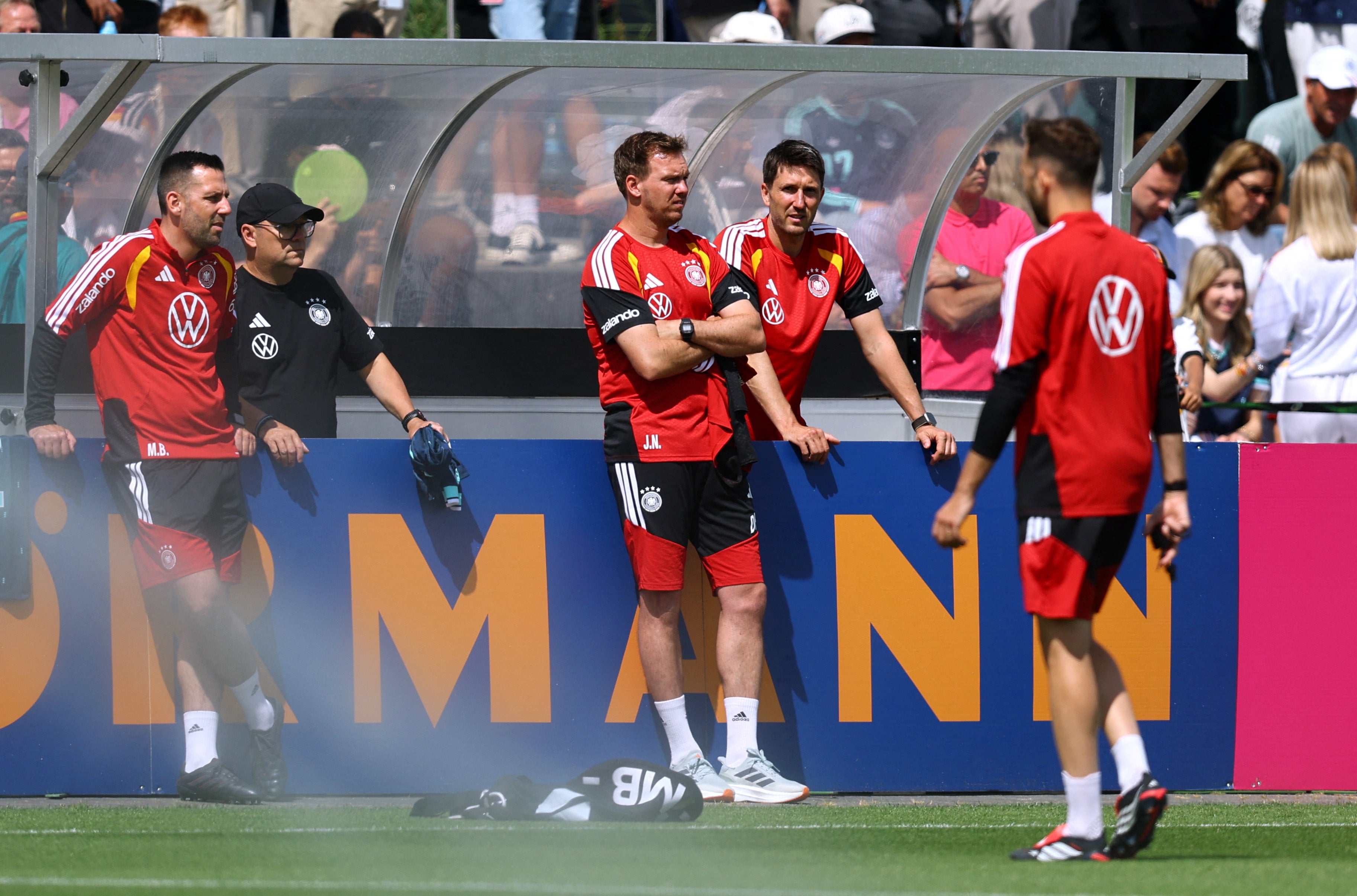
Perhaps it was too soon to address the shortcomings Flick identified in the profile of players. The captain and midfielder Joshua Kimmich may be used at right-back in the absence of high-class specialists. Nico Schlotterbeck is at least an elite centre-back, with Jonathan Tah his likeliest partner.
But there has been the sense that Germany lost their traditional strengths as they developed technical players, to the exclusion of other types. Gerd Muller scored 10 goals in a World Cup in North America and, if he was unique, Germany could do with a second Klinsmann, who got five in 1994.
But they have never really replaced Miroslav Klose, though Niclas Fullkrug prospered as a cult hero for Flick in 2022. Now, even with Serge Gnabry injured, Nagelsmann has a surfeit of potential No 10s; it irritated Nagelsmann that Nick Woltemade was being played in midfield by Newcastle when he was a potential striker for Germany. Kai Havertz, another who can play deeper, may instead fill that role.
There is still Jamal Musiala, Germany’s standout player in the last World Cup, and Florian Wirtz. Nagelsmann’s fortunes may hinge on how he harnesses the talents of Germany’s creative contingent.
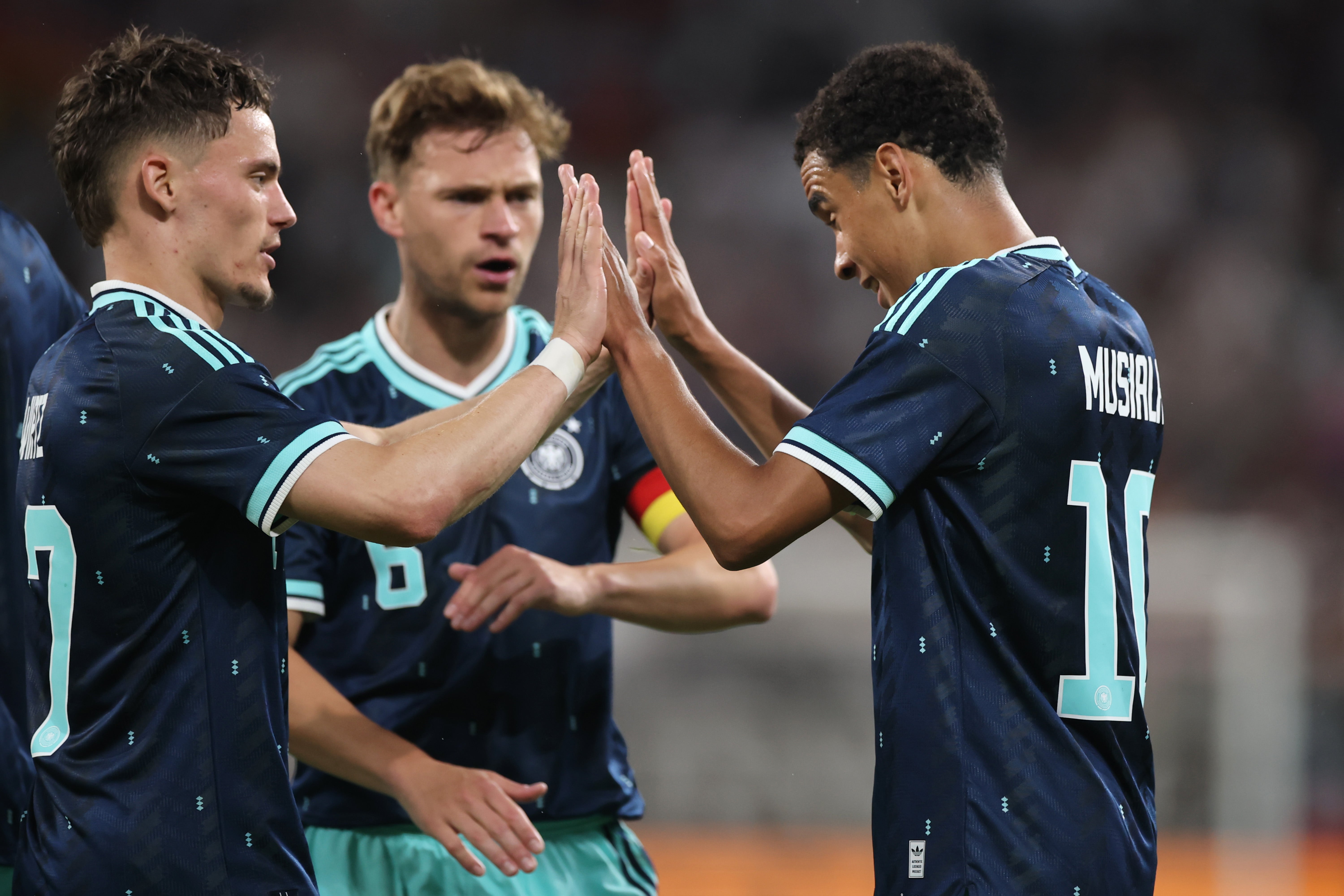
While Neuer has returned, there has been a generational switch: after Euro 2024, Ilkay Gundogan, Toni Kroos and Thomas Muller retired from international football. A younger group have less experience at the business end of tournaments but many are also untainted by the failures of 2018 and 2022.
A pool with Ecuador, Curacao and Cote d’Ivoire offers a chance for a first knockout tie in 12 years; win Group E and Germany face a third-place finisher next. But that may be operating on the assumption that this is the Germany of stereotype, not the side whose last two World Cup groups ended up being topped by Sweden and Japan respectively.
The last time a World Cup was held west of the Atlantic, the most spectacular scoreline was Germany’s 7-1 thrashing of the hosts Brazil. They have often travelled west well: they were winners in 2014, runners-up in 1986, semi-finalists in 1970. But that was the Germany that had a certain inevitability about them. And after 2018 and 2022, they no longer do.