The coronavirus pandemic is likely to take about two years to run its course, the head of Germany's public health agency said on Tuesday, adding that much depended on the speed with which a vaccine against the virus was developed.
Lothar Wieler, president of the Robert Koch Institute, said that eventually some 60% to 70% of the global population would have been infected, recovered and acquired immunity, but it was impossible to say how fast that would happen.
"Our working assumption is that it will take about two years," he told a news conference on Tuesday, adding that the timing depended on how long it takes to get a vaccine developed and deployed.
"We do not yet know what the death rate will look like in the end," he told reporters.
The institute said the number of confirmed cases in Germany had risen by more than 1,100 to 7,156 with 13 deaths.
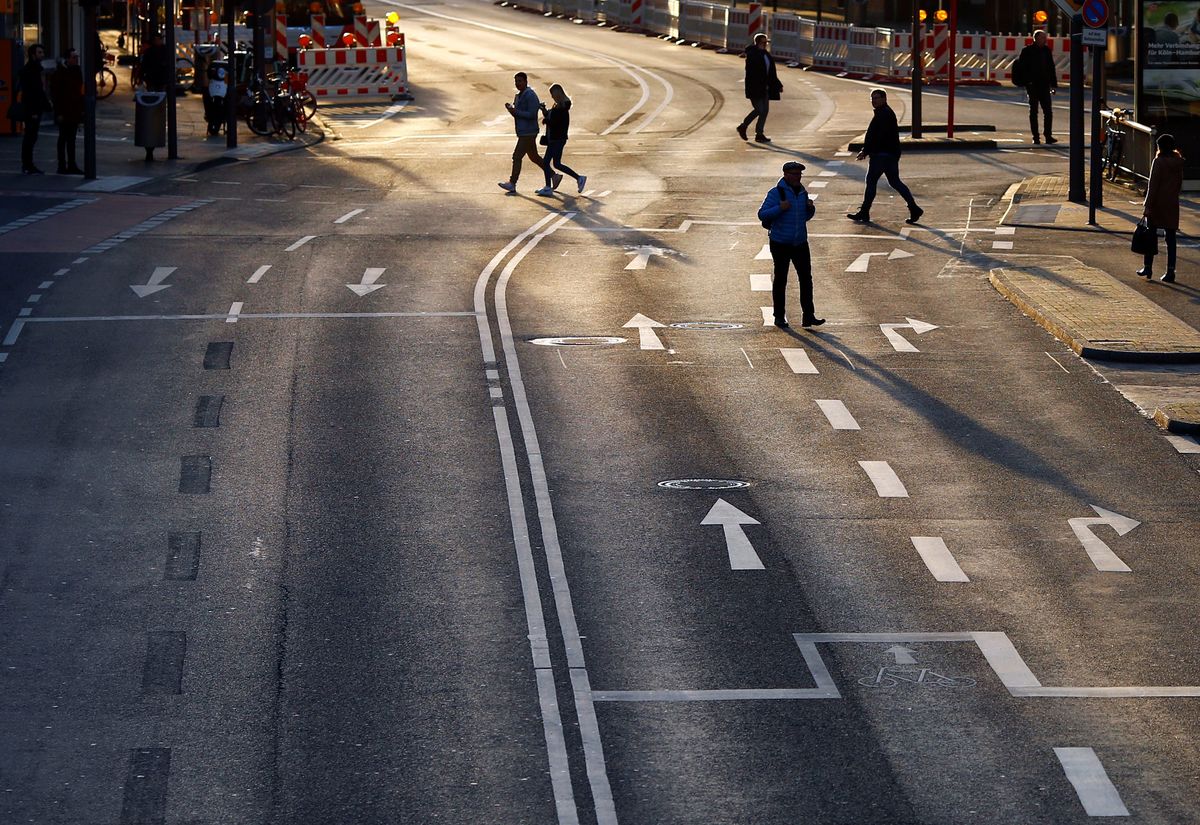
Chancellor Angela Merkel, whose government on Monday announced strict social distancing measures to slow the spread of the virus, urged Germans to avoid panicking about food and money shortages.

"I would like to urge the public to stick to the official statements instead of believing the many rumors that are unfortunately circulating around," Merkel said. "We are doing everything to inform (the public) in a transparent way. Such fears are baseless."
Wieler said that without the strict measures Germany could end up facing millions of coronavirus cases.
"We want to avoid that," he said, adding the institute was raising the risk level in Germany to "high." He said hospitals would have to at least double their intensive care capacity as one in five cases was serious.
(Reporting Thomas Escritt; Writing by Madeline Chambers and Joseph Nasr; Editing by Leslie Adler)