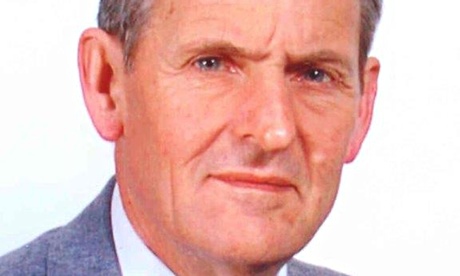
My friend and colleague, George Farebrother, who has died aged 77, was a deeply committed member of the global anti-nuclear movement who was intricately involved in moves to mount legal actions against governments that possess nuclear weapons.
From 1991 to 2004, George and I worked together as secretary and chair, respectively, of the UK affiliate of the World Court Project, an initiative that used the International Court of Justice at the Hague to challenge the legality of nuclear weapons. After the court confirmed in 1996 that the threat or use of nuclear weapons should generally be regarded as illegal, George sustained the project virtually single-handedly until his death.
For many years he had been a history teacher, but from the moment he learned about the World Court Project in 1991 he took early retirement and dedicated the rest of his life to its activities. Applying his Quaker beliefs and teaching experience, he came up with the idea of collecting individual “declarations of public conscience” against nuclear weapons, which were accepted by the International Court of Justice as “citizens’ evidence”. This characteristically inventive concept was taken up all over the world, especially in Japan, and George helped present nearly four million declarations to the Court before its historic judgment.
He never gave up trying to engage with decision-makers and their advisers, and became a familiar figure in the corridors of the Foreign and Commonwealth Office, the Ministry of Defence, parliament and London embassies. His cogent writing, networking flair and grass roots appeal brought in enough funds to allow him to travel to key United Nations events in New York and Geneva. Constantly devising fresh ways of using the law to mobilise against nuclear weapons, he became adept at producing computerised publicity material.
George was born in Streatham, south London, to Robert, a docker, but never knew his mother, who died when he was very young. He went to Mitcham County grammar school and met his future wife, Jean (nee Rudd), a neighbour in Mitcham, in 1956. On his return from Leeds University, where he studied history and philosophy, he began teaching at Baughurst secondary modern school in Hampshire in 1960 and married Jean, who also went into teaching, a year later. George subsequently had spells at secondary schools in Newmarket, Letchworth and Kingston upon Thames, and for his final 20 years in teaching was head of history at what is now Hailsham community college in East Sussex.
George’s favourite recreation was countryside walks, which helped him explore how history had shaped the British landscape. Enthusiastic about amateur theatre, he also enjoyed an annual pilgrimage to Shakespeare’s Globe in London.
He is survived by Jean, by their two sons, John and James, and by five grandchildren.