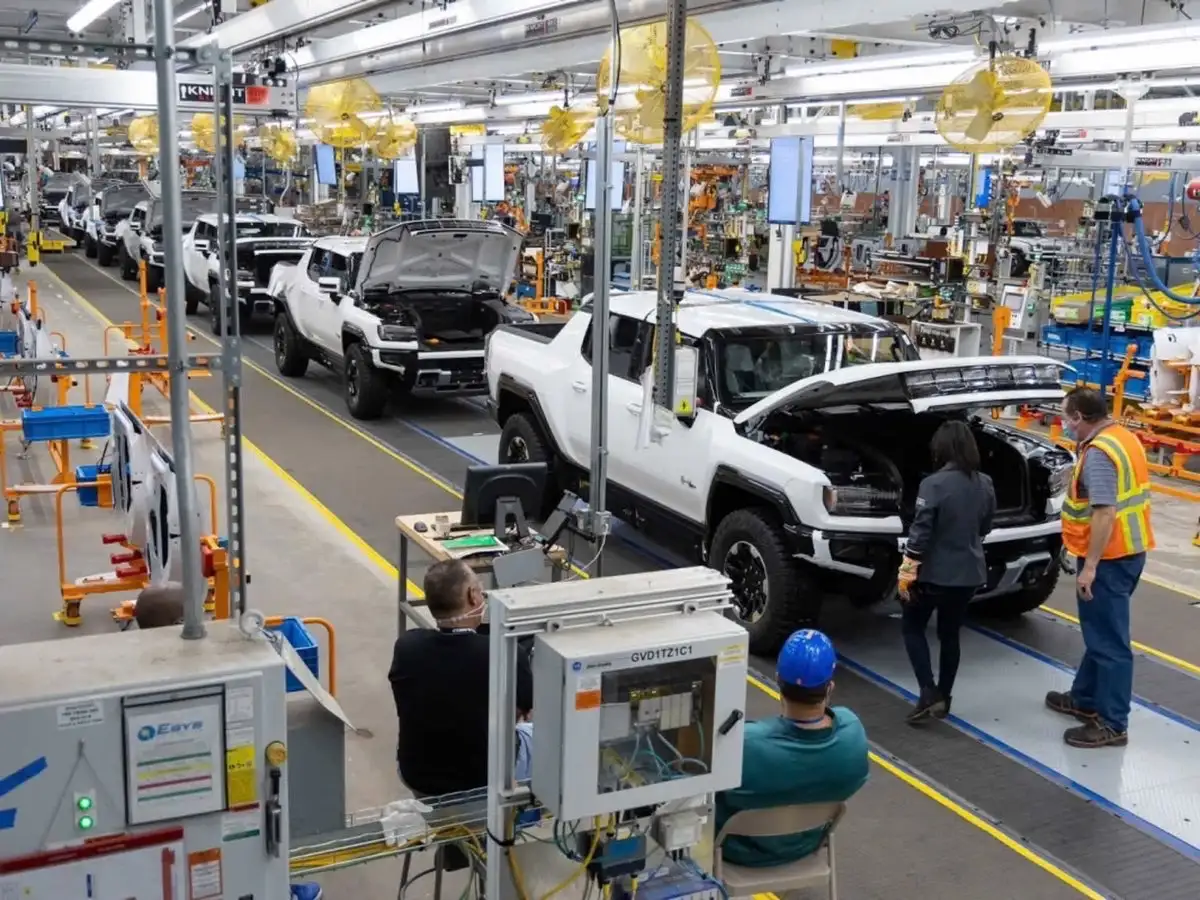
General Motors Detroit plant robots: General Motors has taken a major step in its automation push, deploying 50 collaborative robots at its Factory Zero facility in Michigan. The shift, now widely discussed as the General Motors Detroit plant robots move, has also led to the elimination of more than 1,000 jobs at the site, triggering fresh debate over the future of manufacturing work in the US.
The development comes amid wider restructuring at GM, including earlier layoffs in its engineering and IT divisions, as the automaker continues to streamline operations and invest in automation and AI-driven production systems.
ALSO READ: The billionaire tech founder behind the $10 billion plan to bring back extinct animals
What is happening at GM’s Factory Zero plant?
At the centre of the General Motors Detroit plant robots rollout are “cobots” — collaborative robots designed to work alongside human employees on the assembly line.
According to reports, these robots are now actively assisting in tasks such as attaching body panels to vehicles. While GM describes them as support tools, their introduction has coincided with significant workforce reductions at the facility.
The Factory Zero plant, which plays a key role in GM’s electric vehicle production, has reportedly seen more than 1,000 workers affected as part of the restructuring linked to automation.
GM says robots are meant to support workers
Defending the move, GM emphasized that the General Motors Detroit plant robots are intended to enhance efficiency and improve working conditions rather than fully replace employees.
“We’ve been installing cobots across our manufacturing footprint as part of a broader push to bring more advanced technology into our operations,” GM spokesperson Kevin Kelly told the New York Post. “At Factory ZERO, we are implementing them alongside our team — helping improve safety and ergonomics, while keeping our operations flexible and competitive,” he said, adding that the affected workers have been temporarily laid off.
However, no clear timeline has been provided for when those employees might return to work, leaving uncertainty around job recovery.
Strong backlash from the United Auto Workers
The deployment of General Motors Detroit plant robots has drawn sharp criticism from labour unions, particularly the United Auto Workers (UAW), which argues that automation is directly reducing employment opportunities.
“Our manpower is being taken away from us,” said James Cotton, president of UAW Local 22. “From top to bottom, we’re disgusted that they have cobots in our plants,” he added.
The union has also questioned GM’s claims that the technology improves safety, and has reportedly filed grievances over the robot installations. UAW president Shawn Fain described the broader trend as a struggle over workers’ future, saying workers are “in a fight for humanity.”
GM’s broader workforce restructuring
The shift toward General Motors Detroit plant robots is part of a wider transformation inside the company.
In recent months, GM has also cut roles in its IT and engineering divisions, including more than 600 layoffs in its tech unit and over 200 Computer-Aided Design (CAD) engineers in earlier rounds.
The company has said it is “transforming its Information Technology organization to better position the company for the future,” signalling a broader move toward automation and AI-based systems.
EV demand pressure and automation strategy
GM’s automation push comes at a time when demand for electric vehicles has been weaker than expected, forcing the company to adjust production schedules at Factory Zero multiple times over the past year.
Despite operational challenges, GM reported strong financial results, posting first-quarter 2026 profits of $4.25 billion, a 22% increase year-on-year.
Industry analysts now describe the shift as a “skills swap,” where traditional roles are reduced while companies invest more heavily in robotics and AI talent.