
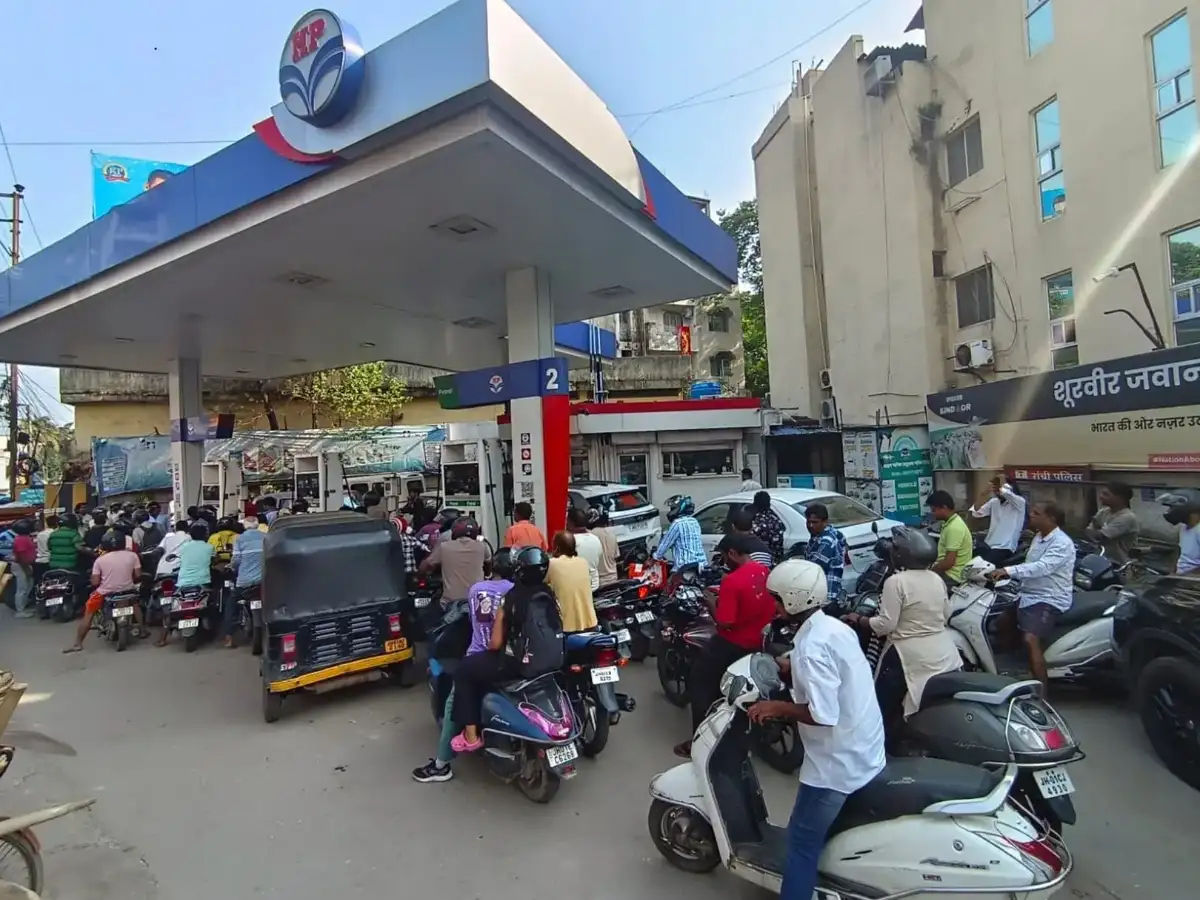
Fuel prices across India were raised on Friday by up to Rs 3 per litre, a move driven primarily by a sustained surge in global crude oil prices and tightening energy supplies following the prolonged conflict in West Asia.
In Delhi, petrol now costs Rs 97.77 per litre after a Rs 3 increase, while diesel has risen to Rs 90.67 per litre.
Also Read | Petrol Diesel Price Hike: Fuel prices raised by up to Rs 3/litre
Similar revisions were carried out across major cities, with adjustments reflecting both higher international crude costs and rising pressure on domestic fuel retailers.
LNG prices were also raised by Rs 2 per kg, adding to the broader pressure across the energy basket.
"This was a long-anticipated move in light of the sharp rally in global crude prices and rising burden of these costs on domestic oil marketing companies as well as the fiscal books. Higher pump prices are likely to moderate demand and consequently the import burden," said Radhika Rao, Senior Economist & Executive Director, DBS Bank.
She estimated that a 3-5% rise in petrol and diesel prices could add around 15-25 basis points to headline inflation, apart from broader second-round effects on transport and other costs.
Petrol diesel price in metro cities
The increase has been fairly uniform across cities, with petrol rising by roughly Rs 2.80 to Rs 3.30 per litre and diesel by about Rs 2.80 to Rs 3.10 per litre.
Also Read | CNG Price Hike: Natural gas gets costlier by Rs 2 per kg after petrol, diesel rate shock
Kolkata saw one of the sharpest revisions, with petrol climbing to Rs 108.74 per litre after a Rs 3.29 increase. Mumbai and Chennai also recorded increases of over Rs 3 and Rs 2.80 per litre respectively.
Diesel prices followed a similar pattern, rising across metros to reflect higher import and refining costs.
The real trigger: Global crude oil shock
The core reason behind the price hike is the sharp escalation in global oil markets, where Brent crude has remained elevated, at times crossing the $100 per barrel mark, since the outbreak of the US-Israel-Iran conflict earlier this year.
The disruption has tightened global supply chains, especially through critical routes like the Strait of Hormuz, a key corridor for global oil shipments, that remains blocked by Iran, though not "fully". According to energy market assessments, disruptions in this corridor have sharply reduced flows from parts of the Gulf.
Any uncertainty in this region immediately pushes crude prices higher, increasing the cost of imported fuel for countries like India. Data from global agencies indicates that oil output from the Gulf has fallen by over 14 million barrels per day below pre-conflict levels, with countries dependent on the Strait facing the sharpest impact.
With India importing over 80% of its crude oil requirement, higher international prices directly translate into increased procurement costs for oil marketing companies, and to layoff some of that extra cost, increased prices for consumers.
Why oil companies had to pass on the increase
Initially, state-run fuel retailers had been absorbing part of the rise in crude costs for months to prevent sudden shocks for consumers. However, as global prices stayed elevated and inventories of cheaper crude were exhausted, as such, this buffer weakened significantly.
Oil Minister Hardeep Puri has also flagged the growing strain on state-run refiners, noting that it is becoming increasingly difficult for them to continue absorbing losses.
Speaking at an industry conference, he said, “How long will the oil companies be able to take it? Frankly, that worries me,” underlining concerns about the sustainability of the current pricing gap.
Industry estimates by Bloomberg News suggest public sector oil companies are now facing losses of nearly Rs 10 billion per day on fuel sales, as retail prices have not fully matched rising import costs.
This growing gap between international costs and domestic pump prices left companies with limited room, forcing a gradual pass-through to consumers through the latest hike.
Why the pressure is unlikely to ease quickly
The situation remains sensitive because global crude prices are being shaped more by geopolitics than demand fundamentals.
Brent crude has risen sharply from around $72 per barrel before the conflict to above $100 at its peak, underscoring the scale of supply risk being priced into markets.
Every sustained rise in crude oil adds billions of dollars to India’s import bill, increasing pressure on both inflation and fiscal management.
Meanwhile, according to an ET bureau report, recent estimates from commodities data firm Kpler show India’s crude oil stocks have fallen about 15% since the conflict began in late February, slipping from roughly 107 million barrels to around 91 million barrels. These inventories include commercial stocks, refinery storage and strategic reserves, though they exclude pipeline stocks.
Likely triggers behind the fuel price hikes
- West Asia conflict triggered a global oil shock, pushing Brent crude prices above $100 per barrel.
- Disruptions in the Strait of Hormuz tightened global oil supplies and shipping routes.
- India imports over 80% of its crude oil, making domestic fuel prices highly sensitive to global markets.
- State-run oil companies were absorbing losses for months, but rising crude costs and exhausted cheaper inventories weakened that buffer.
- Public sector fuel retailers are facing massive daily losses, leaving limited room to hold prices steady.
- Falling crude oil reserves in India and rising import costs increased pressure on the government and oil companies to raise prices.
Govt's balancing act
Alongside the price revision, the government has been trying to manage demand. Prime Minister Narendra Modi has urged citizens to cut down on fuel consumption and rely more on public transport, highlighting the need for energy conservation during a period of global uncertainty.
In a recent address, the Prime Minister called for austerity measures similar to those adopted during the Covid pandemic, saying Indians should reduce petrol and diesel consumption through carpooling, greater use of public transport, work-from-home arrangements and online meetings wherever possible.
He also appealed to citizens to avoid “non-essential” gold purchases and overseas holidays for a year in order to conserve foreign exchange reserves, while encouraging people to buy locally manufactured products instead of imported goods.
The PM Modi further urged farmers to reduce chemical fertiliser use by half, adopt natural farming methods and shift toward solar-powered irrigation pumps to reduce diesel dependence in agriculture.









.jpg?w=600)




