
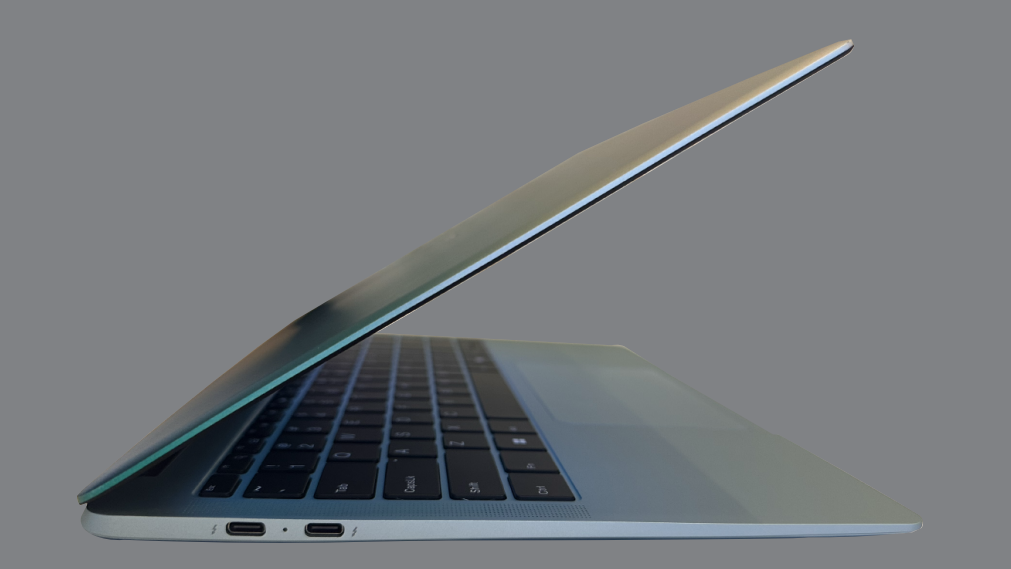
How do you compete with Apple’s shockingly affordable and premium-feeling MacBook Neo, while maintaining a competitively slim and fanless design? Well, if you’re Intel, you work with Frore Systems to add one of its solid-state Airjet modules to your new Wildcat Lake reference design. Wrapped in a vapor chamber, it delivers a reported 15 watts of sustained cooling, while allowing the laptop to remain just 11.3mm thick and silent, just like the Neo.
We’ve been closely covering Fore’s solid-state cooling tech for years, which uses piezoelectric membranes that vibrate ultrasonically (well beyond the limits of human hearing), to move air without fans, and inside a chip that is just 2.65mm thick in this iteration. We’re still trying to track down the Wildcat Lake laptop in person here at Computex 2026. But Frore provided us with plenty of details and materials at their suite at the convention center.
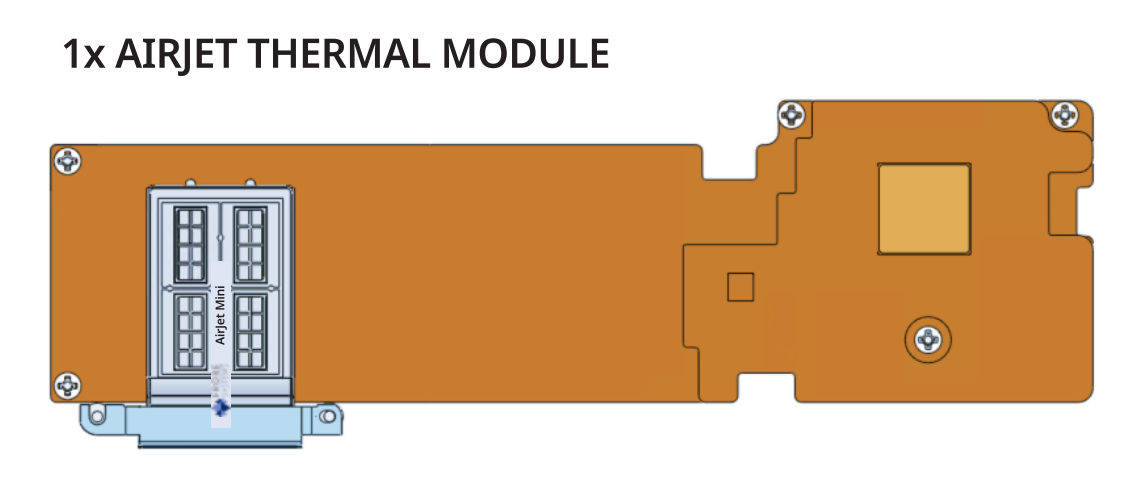
Below, you can see an illustration of the AirJet, surrounded by the vapor chamber as it’s implemented in the Intel laptop reference design.
Frore says this cooling setup will allow for sustained workloads of 15W, and PL2 bursts of up to 30W. At the moment, the company has measured 28 dBA from the laptop’s cooling, and the company thinks an even lower 24 dBA is possible with further refinements. For some general perspective, the lowest noise floor we’ve generally been able to achieve in our own fan testing is 33.2 dBA, and keep in mind sound is measured on a logarithmic scale. If you can hear the Airjet in this setup, you probably have excellent hearing, and you might also need to be in an anechoic chamber.
Frore says its AirJet delivers 1750 pascals of backpressure, which allows for the use of dustproof, water-resistant filters, which should help extend the life of portable devices like the Wildcat Lake reference design. And because the Airjet’s power needs scale with system workloads, and can power down completely when doing tasks like streaming video, the company says you can expect up to 16 hours or more of battery life.
Of course, Intel’s Wildcat Lake reference design is just that – a reference system designed to help laptop partners (and the public) see what is possible with its silicon (and Frore’s Airjet). There’s no word yet about the AirJet making its way into retail Wildcat Lake laptops like Dell’s XPS 13. But the company is hopeful that Intel’s demo unit will impress its partners enough to opt for AirJet in future lower-cost premium laptop designs.
And if companies can deliver solid-state cooling like this in a laptop that’s also slim, premium, and affordable, I’m all for it. Fans are an ancient technology, with moving parts and bearings that can fail, get gunked up, and definitely get noisy when they’re working hard and small enough to fit into devices this thin. We’ll be keeping an eye out to see if AirJet and laptop makers pair up to bring solid-state cooling into the mainstream computing space in the coming months and years.